The global economy is entering 2026 with growth patterns that are increasingly uneven rather than universally fragile. Instead of a synchronized slowdown or recovery, economic momentum is redistributing across regions. At the center of this rebalancing stands the United States, where domestic demand continues to offset softness elsewhere.
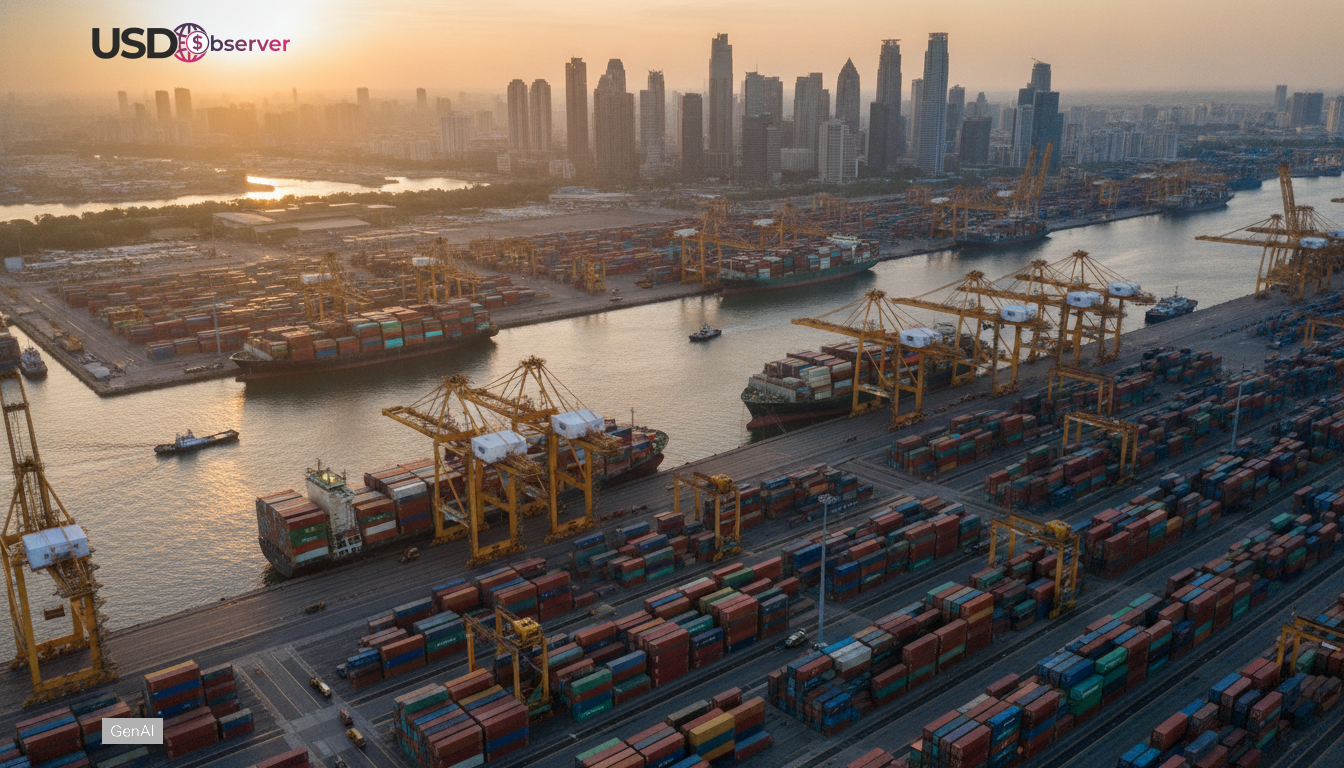
Manufacturing-heavy and export-dependent economies are facing pressure from slowing trade volumes, tighter financial conditions, and weaker external demand. At the same time, consumption-driven economies, particularly the U.S., are showing greater resilience. This divergence is reshaping how investors, policymakers, and businesses assess global growth risks.
U.S. Domestic Demand Anchors Global Growth Stability
The most important factor shaping the current global cycle is the strength of U.S. domestic demand. Household consumption in the United States remains supported by steady employment, real income growth, and a services sector that continues to expand. This internal momentum is allowing the U.S. economy to absorb external shocks without significant disruption.
Unlike export-led models, consumption-driven growth is less vulnerable to global trade slowdowns. As a result, the U.S. is functioning as a stabilizing force within the global system, even as other regions struggle to regain momentum. This role does not imply acceleration, but it does provide a floor under global demand.
For the broader world economy, this matters because the U.S. remains a key destination for goods, services, and capital. When U.S. demand holds, it mitigates the impact of weakness elsewhere, preventing localized slowdowns from becoming systemic.
Trade-Dependent Regions Face Structural Headwinds
In contrast, economies heavily reliant on manufacturing exports are experiencing a more challenging environment. Slowing global trade growth, coupled with higher financing costs and cautious corporate investment, is compressing margins and limiting expansion.
These pressures are particularly visible in regions where growth depends on external demand cycles rather than domestic consumption. Even where inflation has eased, policy flexibility remains constrained by fiscal limits or currency considerations. This leaves less room to stimulate growth without risking financial instability.
As a result, global growth is not evenly slowing. It is fragmenting. Some economies are adjusting to lower trend growth, while others are recalibrating toward internal demand. This divergence is a defining feature of the current cycle.
Capital Flows Reflect a Preference for Growth Durability
Global investors are responding to this imbalance by favoring economies with predictable demand and policy stability. Rather than chasing high growth projections, capital is flowing toward markets that offer durability and resilience.
U.S. assets continue to benefit from this shift. The depth of U.S. financial markets, combined with relatively stable economic performance, reinforces their appeal in a world where uncertainty remains elevated. This dynamic strengthens the dollar’s role in global capital allocation, even without aggressive growth acceleration.
Importantly, this is not a flight to safety driven by crisis. It is a strategic reallocation toward economies perceived as structurally resilient. That distinction explains why financial conditions remain orderly despite uneven global performance.
Fiscal Constraints Shape the Global Adjustment
Fiscal capacity is another factor influencing how different economies are navigating this rebalancing. Many governments entered 2026 with elevated debt levels and limited room for countercyclical spending. This restricts their ability to offset slowing growth through fiscal expansion.
In contrast, the U.S. benefits from greater fiscal flexibility and a broader domestic revenue base. While fiscal discipline remains a topic of debate, the ability to sustain demand through private sector activity reduces immediate pressure on public finances.
This asymmetry reinforces global divergence. Economies with limited fiscal space must adjust more quickly to external weakness, while those with stronger domestic engines can absorb shocks more gradually.
Conclusion
The global growth cycle in 2026 is not defined by contraction, but by redistribution. As trade-driven economies adjust to weaker external demand, the U.S. continues to anchor global stability through resilient domestic consumption. This rebalancing favors durability over acceleration and reinforces the central role of the U.S. growth model in an increasingly segmented global economy.