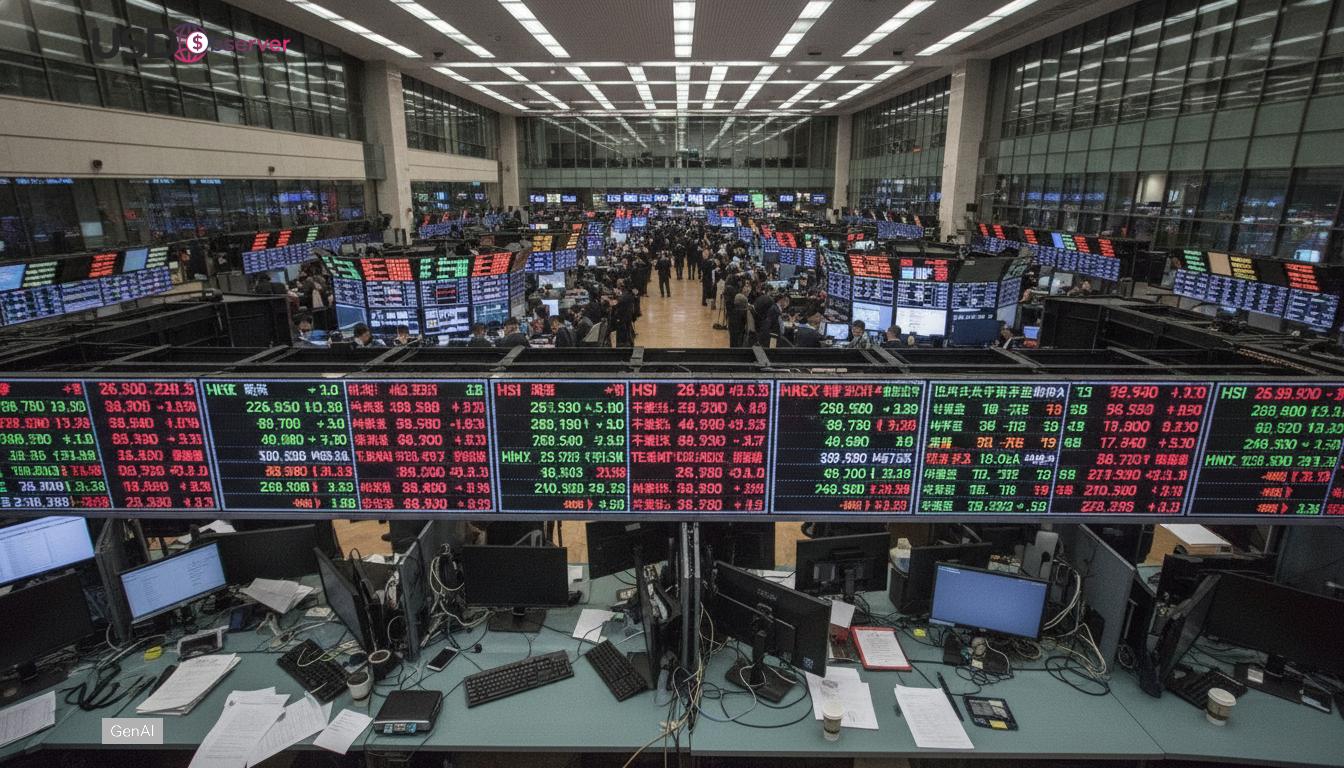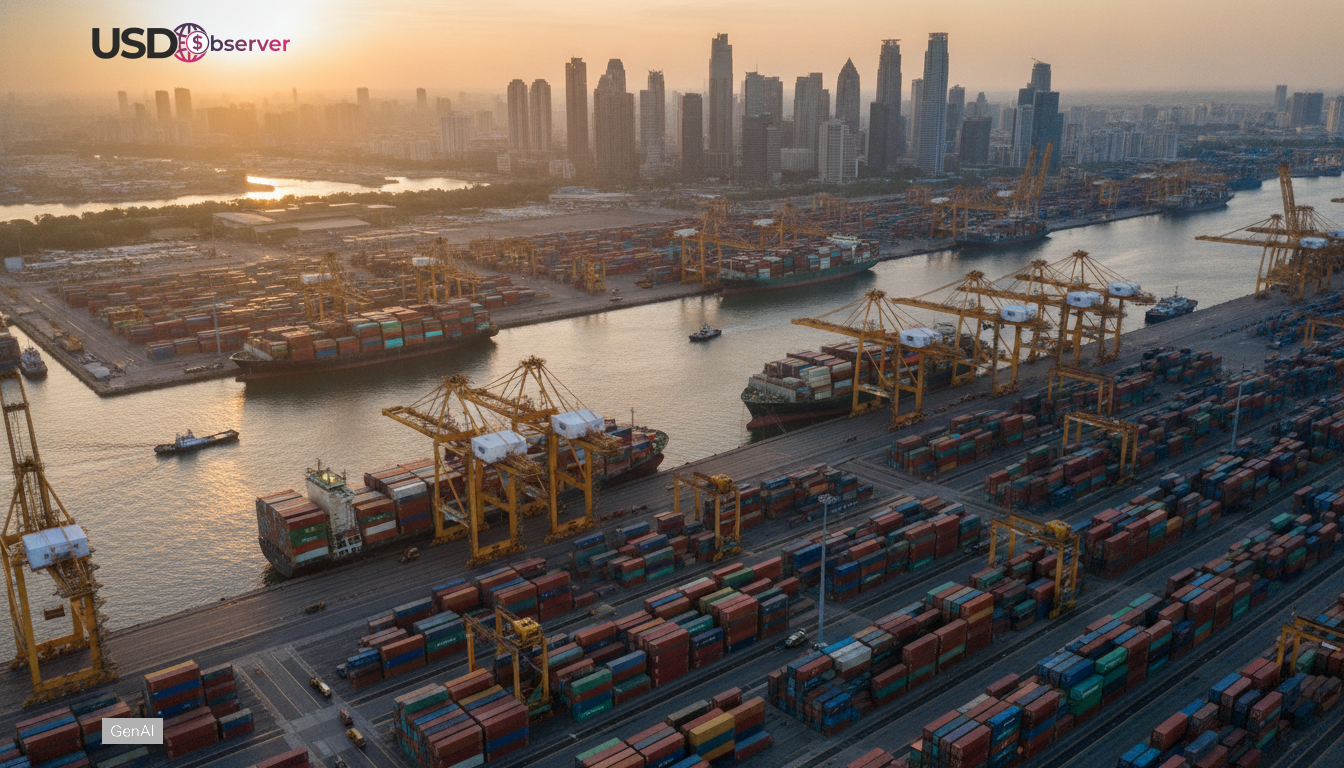
Economic momentum across much of the world has softened as 2026 begins. Manufacturing activity remains under pressure, services growth has cooled, and confidence indicators point to a cautious global outlook. Yet in foreign exchange markets, the U.S. dollar continues to hold firm, defying the assumption that slowing growth should automatically weaken the currency.
This resilience reflects a disconnect between global economic conditions and currency pricing. While growth is an important variable, it is not the only driver of dollar demand. In the current environment, divergence rather than synchronization is shaping outcomes, and the dollar is benefiting from being on the stronger side of that divide.
Growth Divergence Is Supporting Relative Dollar Strength
The most important dynamic underpinning the dollar is the divergence in growth performance across major economies. While global indicators show deceleration, the U.S. economy continues to outperform many peers on a relative basis. Even modest outperformance matters in currency markets, where relative conditions drive capital allocation.
Foreign exchange pricing compares economies against each other rather than against an absolute benchmark. When growth slows everywhere but slows less in the United States, the dollar can strengthen rather than weaken. Investors are responding to comparative resilience rather than headline global weakness.
This divergence has become more pronounced as several large economies grapple with structural challenges, including demographic constraints, weak productivity, and limited fiscal flexibility. Against that backdrop, the U.S. still appears comparatively stable.
Weak Global PMIs Are Reinforcing Defensive Allocation
Purchasing managers indices across multiple regions have signaled contraction or stagnation, particularly in manufacturing. These readings have reinforced a defensive posture among global investors, favoring assets perceived as liquid and resilient.
In currency markets, defensive allocation often translates into increased dollar demand. The dollar remains the primary settlement and funding currency, making it the default choice when uncertainty rises. Rather than rotating into higher beta currencies, investors are prioritizing capital preservation.
This behavior helps explain why weaker global data has not translated into broad dollar weakness. Instead, it has strengthened the currency’s role as a macro hedge during periods of uncertainty.
Dollar Demand Extends Beyond Growth Expectations
Another reason the dollar is not reacting to slower global growth is that demand for it extends beyond growth linked flows. The dollar underpins global trade, debt issuance, and financial infrastructure. These uses generate steady demand that is not directly tied to economic expansion.
Corporations continue to transact and hedge in dollars regardless of growth conditions. Governments and institutions maintain dollar reserves to manage liquidity and stability. These structural flows create a baseline level of demand that cushions the currency against cyclical slowdowns.
As a result, the dollar does not need strong global growth to remain supported. Its role in the system ensures continued relevance even when economic momentum fades.
Policy and Stability Are Outweighing Expansion
In the current cycle, markets appear more focused on stability than on expansion. Predictable policy frameworks and credible institutions have taken precedence over aggressive growth strategies. This shift favors economies that offer consistency rather than acceleration.
The United States benefits from this preference. Even as growth moderates, policy signaling remains relatively clear and institutional structures remain intact. That combination supports confidence and reduces risk premia demanded by investors.
By contrast, economies facing policy uncertainty or constrained policy space see their currencies penalized despite similar or even better short term growth prospects. Stability, not speed, is being rewarded.
Slower Growth Does Not Mean Immediate Dollar Weakness
Historically, global slowdowns have not always coincided with dollar declines. In many cases, they have produced the opposite outcome, particularly when the slowdown is uneven. The current environment fits that pattern.
Markets are not ignoring growth risks. They are repricing them through allocation choices rather than through a wholesale shift away from the dollar. Until global conditions stabilize or convergence reemerges, the dollar remains well positioned.
Conclusion
Global growth is clearly losing momentum, but currency markets are responding to divergence, stability, and structure rather than headline slowdown. The dollar continues to benefit from relative resilience, defensive flows, and its central role in the financial system. Until global growth paths realign, the dollar is unlikely to get the memo.