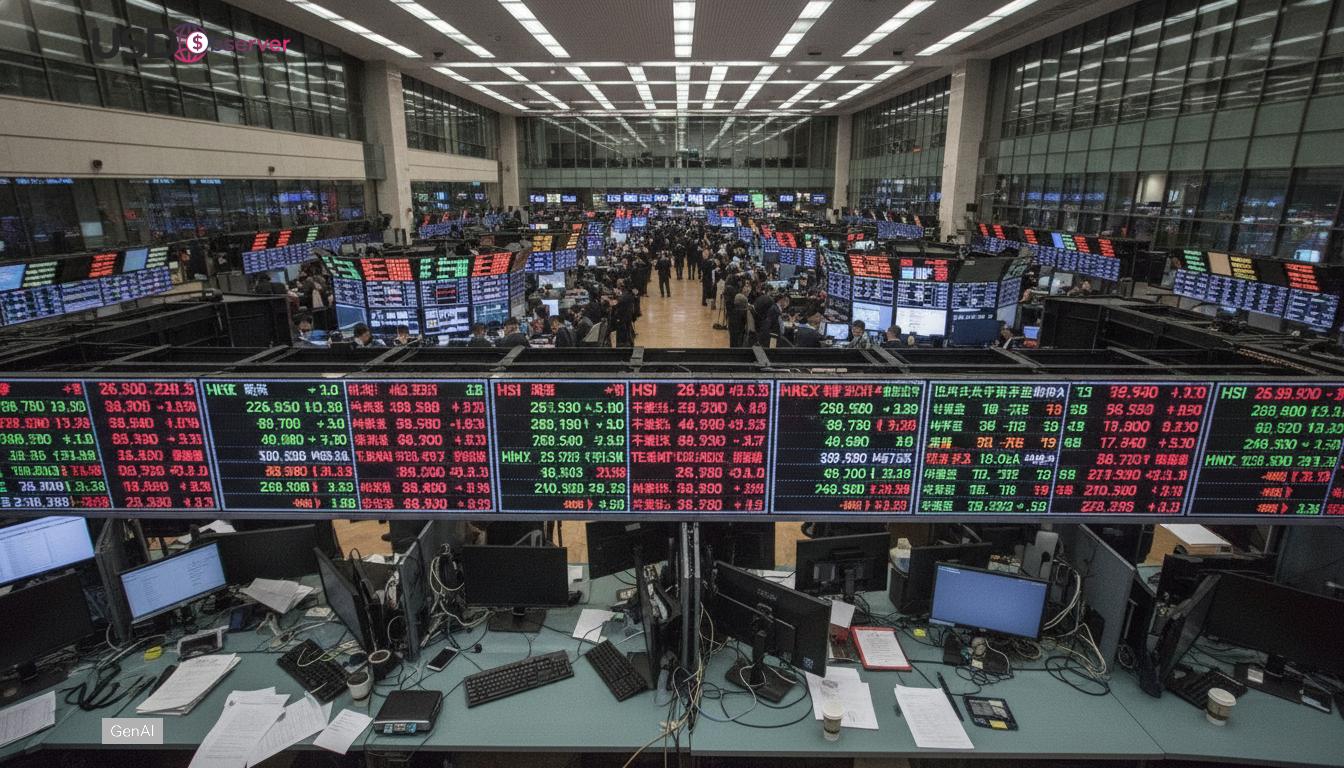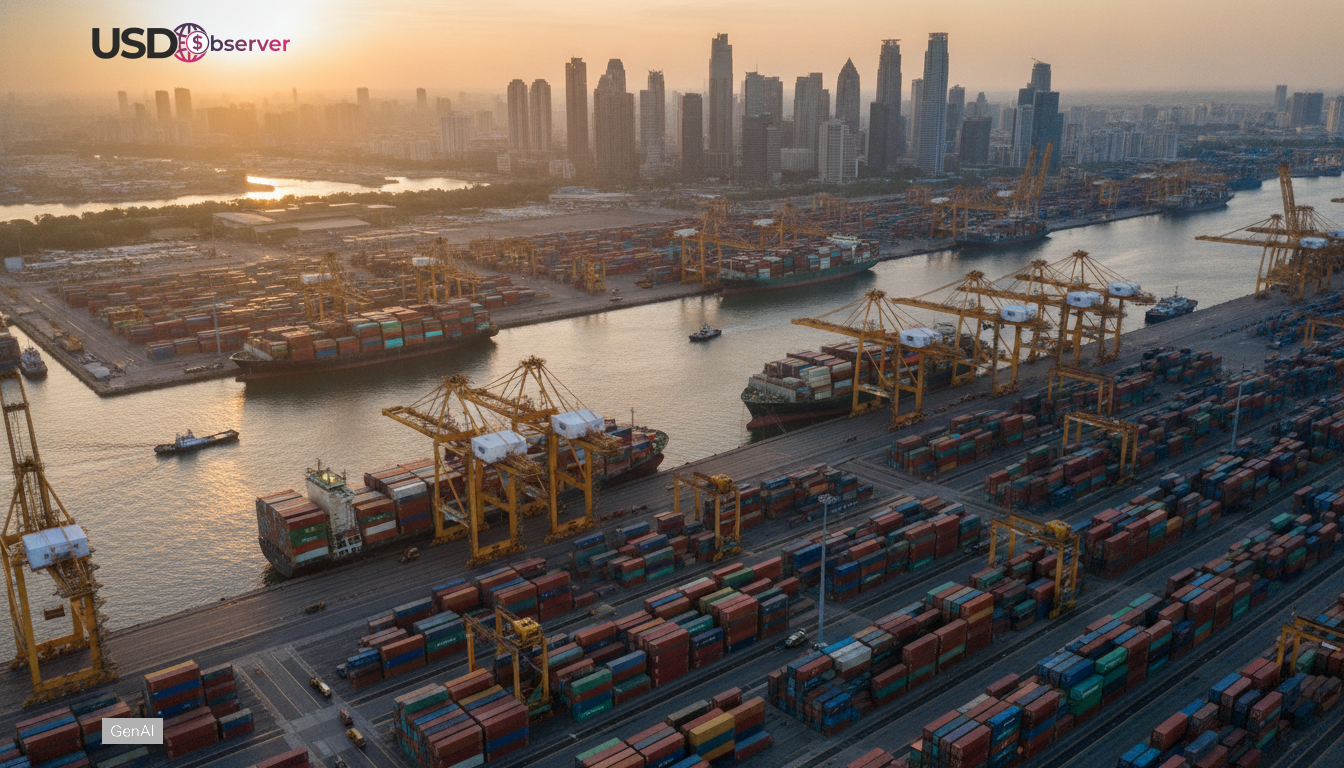
The global economy is entering a phase of slower and more uneven growth. Manufacturing activity has softened across regions, trade volumes are losing momentum, and investment decisions are becoming more cautious. Under normal circumstances, such an environment might be expected to weaken the US dollar as risk appetite declines and growth differentials narrow.
Instead, the opposite is happening. Demand for dollars is accelerating even as global growth slows. Capital continues to flow toward dollar denominated assets, funding markets remain biased toward dollar liquidity, and FX markets are pricing resilience rather than retreat. This divergence highlights an important shift in how global slowdowns interact with currency dynamics.
The current environment is not defined by synchronized weakness. It is asymmetric. Some economies are slowing faster than others, financial conditions are tightening unevenly, and global capital is responding selectively. In that setting, the dollar is benefiting not from strength everywhere, but from relative stability and structural centrality.
Slower growth is no longer automatically negative for the dollar. In many cases, it is reinforcing its appeal.
Asymmetric global slowdown is favoring the dollar
The most important driver behind rising dollar demand is the uneven nature of the global slowdown. Growth deceleration is more pronounced in economies with higher external vulnerabilities, heavier debt burdens, or weaker financial buffers. Meanwhile, the United States continues to offer deep capital markets, strong institutional credibility, and unmatched liquidity.
This divergence encourages global investors to concentrate capital rather than diversify it. When growth slows unevenly, capital does not spread out. It consolidates. The dollar benefits from this consolidation because it sits at the center of global financial intermediation.
FX markets reflect this preference through sustained demand for dollars against a wide range of currencies. The move is not driven by optimism, but by selectivity. Investors are choosing where risk feels manageable, and the dollar remains the primary destination.
Dollar assets attract capital in low growth environments
Slower global growth increases the importance of capital preservation. In such conditions, investors prioritize liquidity, transparency, and the ability to exit positions without disruption. Dollar denominated assets continue to meet these criteria better than alternatives.
US Treasury markets, high grade credit, and dollar based money markets provide scale that few other systems can match. Even when yields are not rising, the combination of depth and legal certainty attracts capital during periods of uncertainty.
This demand is structural rather than tactical. It does not depend on short term forecasts or policy speculation. As long as global growth remains fragile, the preference for dollar assets tends to persist.
Trade and funding channels are reinforcing dollar usage
Slowing growth also affects how trade and funding operate. When economic momentum weakens, companies and governments become more cautious about currency risk. This often leads to greater reliance on established invoicing and settlement currencies rather than experimentation.
The dollar continues to dominate trade invoicing, commodity pricing, and cross border financing. As trade volumes soften, participants focus on efficiency and risk reduction, reinforcing dollar usage rather than diluting it.
At the same time, funding conditions outside the United States are becoming more selective. Access to dollar liquidity matters more when growth slows and margins tighten. This reinforces the currency’s role as the primary funding anchor in the global system.
Emerging markets face tightening external conditions
The effects of slowing global growth are most visible in emerging markets. Economies with high reliance on external financing face more constrained capital inflows as global investors reassess risk. This shift often increases demand for dollars as borrowers seek to service obligations and stabilize balance sheets.
As the dollar strengthens, external financing becomes more expensive in local currency terms, tightening financial conditions further. This dynamic feeds back into FX markets, reinforcing dollar demand and widening performance gaps across currencies.
Emerging markets with strong reserves and credible policy frameworks are better positioned to manage this environment. However, the overall effect remains supportive of the dollar as global capital becomes more selective.
Why slower growth does not weaken the dollar anymore
Traditional models assume that slower global growth should reduce demand for the dollar. In reality, slower growth today increases the importance of financial resilience, liquidity access, and settlement reliability. These factors favor the dollar rather than undermine it.
The global economy is more leveraged and interconnected than in past cycles. Slower growth raises concerns about debt servicing, refinancing, and funding stability. In response, market participants gravitate toward the currency that underpins these systems.
As a result, dollar demand can accelerate even as global output slows. The relationship between growth and currency strength has shifted from cyclical to structural.
Conclusion
Global growth is slowing, but dollar demand is accelerating because the slowdown is uneven and the financial system remains dollar centered. Capital is consolidating rather than dispersing, trade and funding channels continue to rely on the dollar, and investors are prioritizing liquidity over yield. In this environment, slower growth is not a headwind for the dollar. It is a reinforcing force.