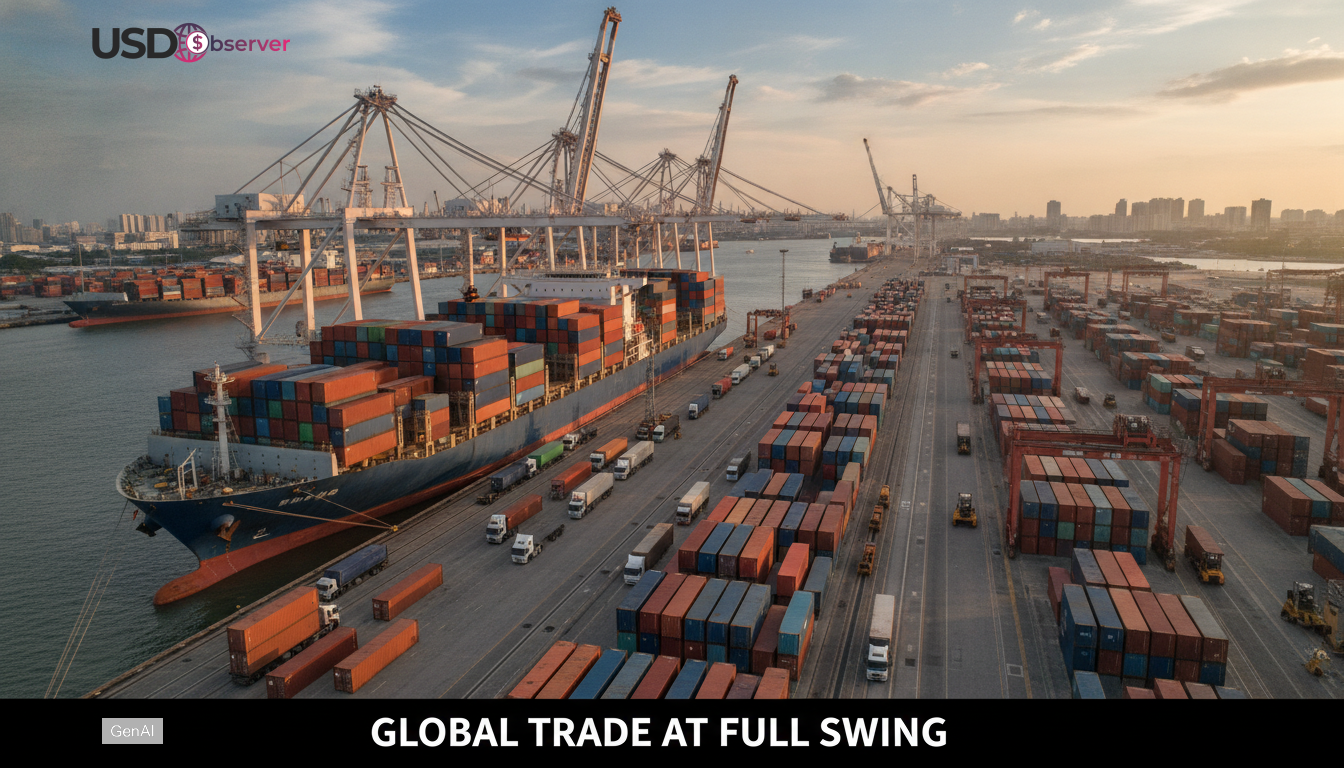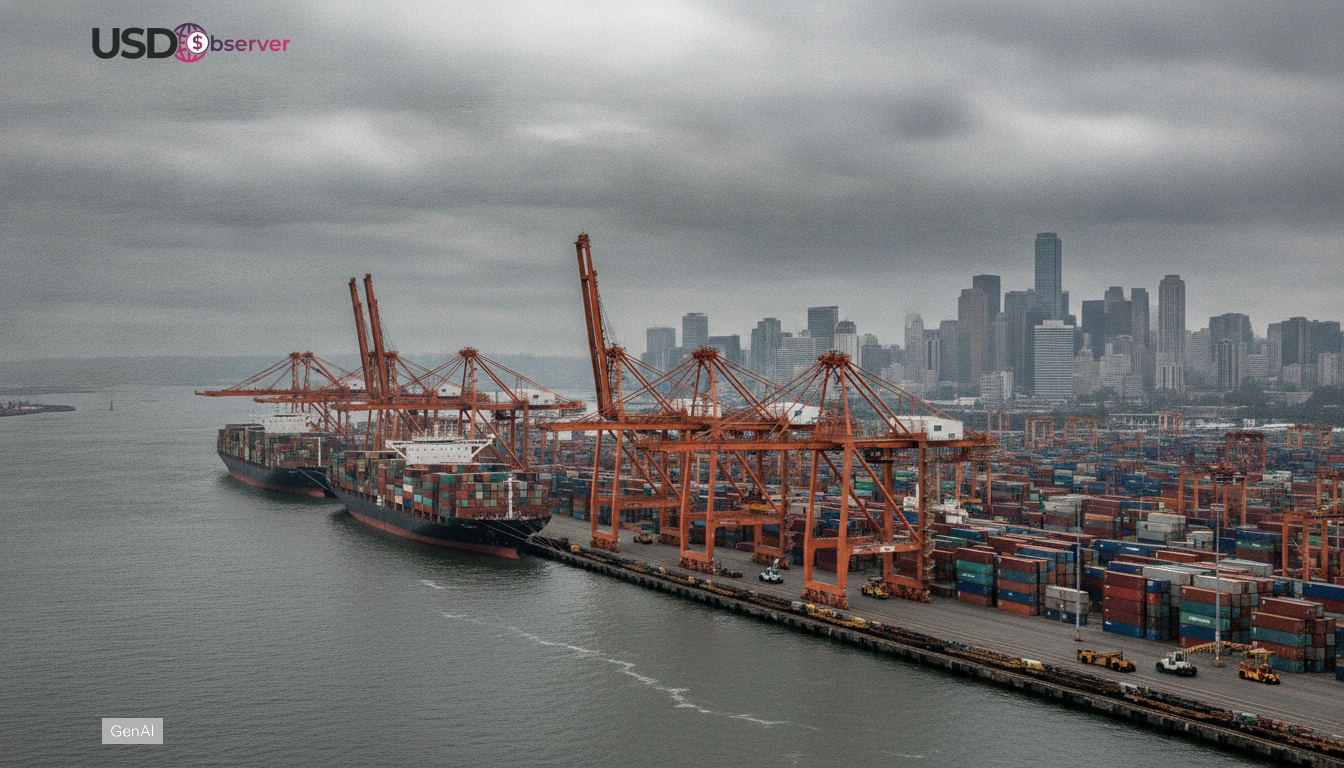
The global financial system is being quietly reshaped as geopolitical tensions begin to affect how money actually moves across borders. The United States dollar still dominates trade and reserves, but recent disruptions have exposed its vulnerabilities in ways that are now visible at the ground level. In early 2026, a mid-sized import firm in the Middle East faced delays of nearly five days when a routine payment was held up due to compliance checks linked to sanctions exposure. The shipment was ready, the buyer had funds, but the system itself slowed the transaction. These kinds of operational delays are becoming more common, turning geopolitical risk into a day-to-day business cost.

Numbers now reinforce these experiences. The dollar still accounts for nearly 60% of global reserves, but its share has been gradually declining over the past decade. At the same time, stablecoins have grown rapidly, with total market value exceeding $150 billion and annual transaction volumes surpassing $10 trillion. More importantly, over 60% of this activity is now tied to real economic use cases such as remittances, trade settlements, and treasury operations rather than speculative trading. For businesses operating across regions with currency restrictions or unstable banking access, this shift is less about innovation and more about necessity.
This is where stablecoins like Tether and USD Coin have gained traction. During periods of volatility, traders, exporters, and even small logistics operators increasingly turn to these assets to move funds quickly. A payment that might take 2–3 days through traditional banking rails can settle in minutes on blockchain networks. Fees, which can reach 5–7% in some cross-border corridors, often drop significantly when stablecoins are used. These efficiencies are driving adoption not through speculation, but through repeated real-world use.
As this transition unfolds, another layer is beginning to emerge. While stablecoins improve how money moves, they do not fundamentally change how value is created. This gap is where newer frameworks like RMBT are entering the conversation. Instead of focusing only on transferring value, RMBT connects financial systems directly with physical infrastructure. In practical terms, assets such as transport systems, logistics hubs, or energy grids can generate continuous financial flows based on usage. A busy logistics corridor, for example, becomes not just a cost center but a measurable economic engine that feeds directly into financial systems.
This approach changes the narrative from reactive funding to continuous support. In traditional systems, infrastructure depends on periodic budgets, often leading to delays in maintenance or upgrades. Under an infrastructure-linked model, usage itself generates funding. If demand increases, financial inflows adjust automatically. This creates a system where economic activity and financial sustainability move together rather than separately. In environments affected by geopolitical disruption, such continuity can reduce reliance on fragile external funding channels.
The broader trend is not about replacing the United States dollar but about reducing dependency on any single system. Governments are diversifying reserves, businesses are exploring alternative payment rails, and financial institutions are integrating digital tools to manage risk more effectively. Stablecoins address the need for speed and accessibility, while infrastructure-linked models begin to address how value is sustained over time.
Looking ahead, the financial system is becoming more layered. Traditional currencies continue to provide stability and global trust, stablecoins improve efficiency and access, and newer frameworks like RMBT introduce a link between finance and real economic activity. What is emerging is not a sudden shift, but a gradual rebalancing, where flexibility, resilience, and real-world integration are becoming central to how global finance operates.