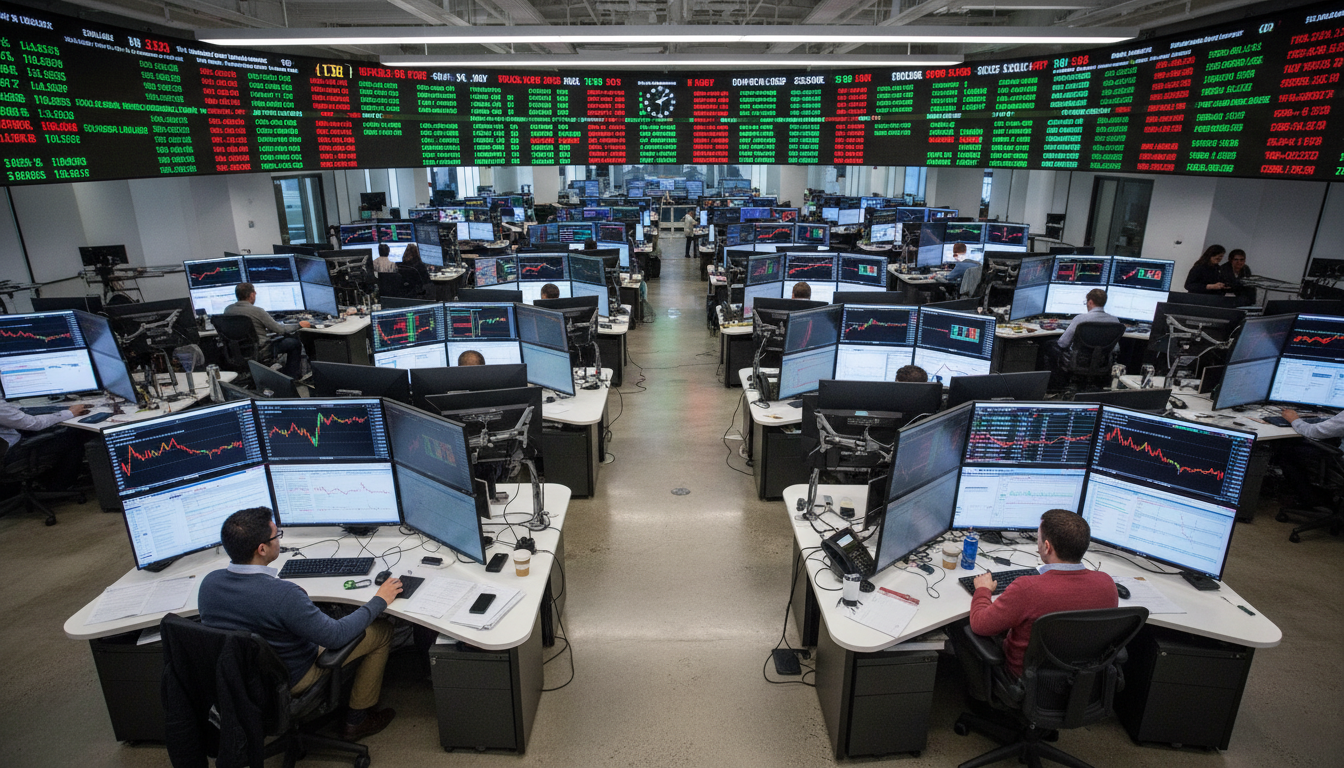
Understanding Economic News Impact
Volatility spikes can be traced back to scheduled releases that affect liquidity almost instantly. Trading desks are increasingly seeing each report as a directional test for the dollar. Currently, the most significant moves often occur within the first minute of a headline announcement, followed by a second wave as dealers adjust prices in the next five minutes. During this period, forex markets experience gaps as spreads widen and algorithms sweep resting orders. Investopedia highlights that execution, rather than prediction, poses the greatest challenge when prices react to unexpected data. On the charts, live pricing may appear stable, but order books thin right when retail traders look to enter, a point emphasized by Investopedia in discussing execution risk. An update to the calendar frequently shifts expectations even before data is published.
Influential Indicators for USD
The immediate market tone is largely influenced by labor and inflation metrics, which drive rate expectations. Notably, today’s pivotal reference is the BBC report on strong US jobs data, acting as a proxy for growth momentum and the Federal Reserve’s policy stance. Throughout the session, the robust jobs report kept USD strength in the spotlight, underpinning advantageous rate differentials. Live future pricing typically conveys this impulse to major currency pairs first, subsequently impacting higher-beta currencies. Revising previous data can abruptly alter the market narrative, underscoring that market reactions outweigh the headline figures.
Effective Trading Strategies in Forex
Execution strategies are becoming more stringent due to the punishing nature of headline whipsaws on wide stops and late entries. A recommended approach is to define a “no trade” zone ahead of the release, acting solely after the initial impulse indicates direction and liquidity returns. Within this approach, traders should construct forex market setups based on spread movements rather than mere candle size, adjusting their position sizes to reflect anticipated ranges post-release. To grasp why the greenback maintains robust liquidity even during volatile moments, Why the US Dollar Still Anchors Global Reserves provides insights into reserve demand and settlement habits that channel currency flow. Effective risk measures incorporate preset limits on slippage and rigid rules for canceling unfilled orders. Each revision of expectations should prompt a reassessment of the trading plan.
Examining Tactical Scenarios
Take a standard macro sequence: a strong data surprise can elevate Treasury yields, causing immediate upward pressure on the dollar. However, the subsequent movement is often more about positioning. Traders closely observing forex markets around US data frequently await the first retracement to assess whether buyers defend the level, rather than chasing the immediate spike. In that context, the interaction with crypto-linked liquidity is relevant, particularly when stablecoin flows are robust—they may align with broader dollar demand in cross-asset hedging. A pertinent discussion on this topic can be found in Stablecoin Growth Brings New Risks for Markets Now, which outlines structural risks that might amplify short-term dislocations. Ongoing evaluation of correlated assets is essential to determine if the price movement is widespread or isolated. An update from policymakers could easily override these dynamics.
Refining Risk Management Practices
Risk management protocols are tightening as intraday ranges broaden and false breaks become increasingly common. Traders can mitigate risk by confining trades to specific release windows and scaling back their position size whenever spreads surpass a pre-established threshold—an essential point highlighted by Investopedia regarding news-driven execution risk. In the midst of any risk strategy, participants in forex markets also keep an eye on correlation shifts, as a sudden decoupling can indicate failing liquidity or that the movement is driven more by positioning than fundamentals. Effective stop placement today is less focused on pip counts and more about avoiding the noise zones where stop orders tend to cluster, such as the critical 10-20 pip area around key figures like 1.1000 in EUR/USD. Maintaining a live journal of slippage and fill quality can provide valuable insights into the reliability of a broker’s setup. After every significant release, an update to volatility assumptions is crucial.