Current Challenges to the US Dollar
Today, policymakers and traders are reacting to a dollar that no longer feels like a one way bet in every risk episode. In the middle of this cycle, the US dollar international role is being tested by the rapid growth of nonbank payment rails and by governments that want more insulation from US jurisdiction. The pressure is coming from political uncertainty, sanctions spillovers, and the rising cost of hedging dollar funding in stressed markets. Live pricing across rates and FX has reflected that sensitivity, with tighter correlations between fiscal headlines and currency moves. Update briefings from major banks now frame dollar strength less as a default and more as an outcome that must be earned through policy credibility.
Impact on Global Markets and Trade
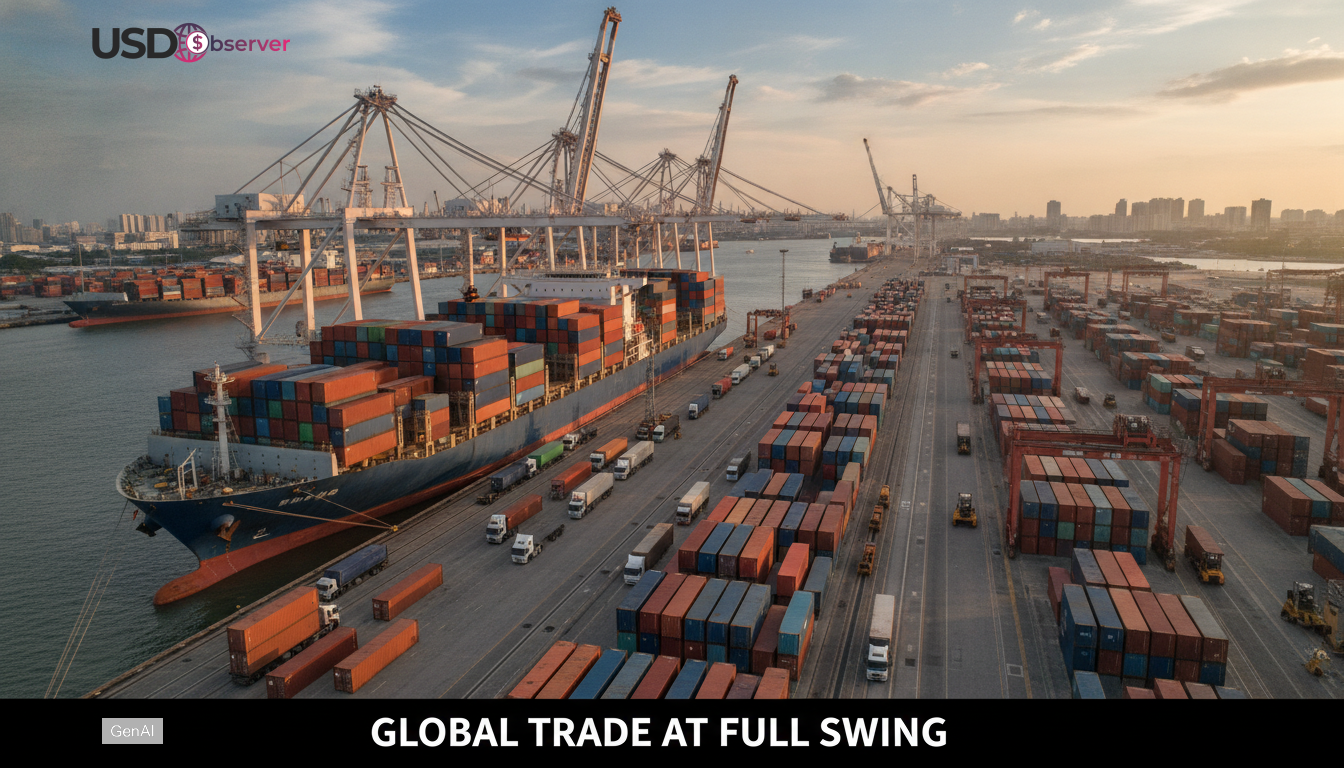
Live market conditions are showing how quickly currency shifts can transmit into trade finance, commodity pricing, and corporate margins. A stronger dollar can raise local currency import costs, while a weaker dollar can loosen financial conditions for borrowers with dollar liabilities, depending on hedges. In that context, a portal view on stablecoin demand and Treasury collateral is relevant, as Tether US Treasury holdings have become part of how some investors think about dollar linked liquidity at the margin. The BBC has also highlighted how energy logistics can hit airlines and pricing, linking macro stress to real economy effects in the threat to summer holidays from jet fuel shortages. Today, desks treat each Update as a potential catalyst for repricing cross border flows.
Historical Context of the Dollar’s Role
Update discussions in central bank circles increasingly compare the current moment with prior periods of strain, when confidence in the monetary system depended on policy coordination and deep markets. Since the postwar era, the dollar has been anchored by US Treasury market depth and the network effects of invoicing and settlement, but history also shows that status is not static. The global reserve currency function has endured because participants could move size with low friction, even during crises. For a recent look at positioning dynamics, US dollar slides as Sell America trade builds fast tracks how narrative and flows can reinforce each other. Live attention has shifted to how fast diversification can happen without breaking liquidity. Today, the goal for many reserve managers is optionality rather than a sudden break.
Potential Alternatives to the US Dollar
Today, the most credible alternatives are not a single replacement currency, but a portfolio of instruments that reduce single point dependence. The euro gains from large trade links, yet fragmentation and limited safe asset supply still constrain it, as ECB officials have noted in speeches and policy statements. The yuan is expanding in invoicing through bilateral arrangements, but capital controls and governance questions limit its use for large scale reserves. Live experiments with tokenized deposits and stablecoins aim to move value faster across borders, but they still lean on trusted collateral and regulatory clarity, including frameworks discussed by the BIS in 2023. Update cycles in banking supervision have emphasized that new rails do not erase credit and liquidity risk, they just repackage it. In this environment, economic stability becomes the deciding criterion for which alternatives scale beyond niche corridors.
Future Outlook for the Global Reserve Currency
Live strategy notes now treat the next phase as a competition between resilience and fragmentation, with reserve managers balancing safety, yield, and geopolitical exposure. For the US, sustaining deep markets and predictable rules matters as much as interest rate differentials, and each Update on fiscal negotiations can ripple into term premiums and FX hedging costs. The US dollar international role is still reinforced by the scale of dollar debt, dollar pricing in commodities, and the infrastructure around clearing and custody, but those advantages can be dulled if policy uncertainty persists. Today, the realistic path is gradual diversification rather than abrupt displacement, because shifting reserve portfolios takes time and liquidity. The key signal to watch is whether private sector invoicing and settlement choices start moving as fast as official reserves, since that is where network effects can change direction.