Argentine financial markets moved cautiously on Monday as investors weighed a mix of political uncertainty and a newly unveiled fiscal regularization framework aimed at drawing undeclared US dollars into the formal economy. The combination of legislative risk and policy experimentation has kept traders focused on short and medium term implications rather than near term price moves.
Attention is centered on a key Senate debate over a labor reform bill backed by President Javier Milei. The proposal is a cornerstone of the government’s broader push to liberalize the economy, but its fate in Congress remains uncertain. Investors see the outcome as an important signal of Milei’s ability to advance reforms and sustain political momentum after a turbulent start to the year.
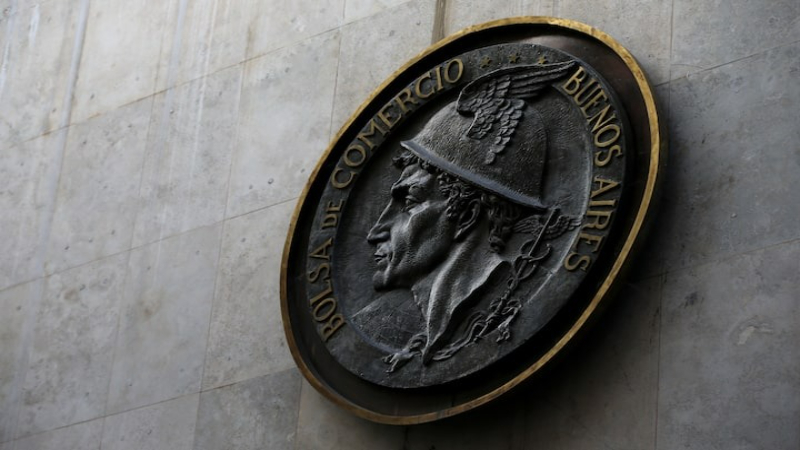
Argentina’s benchmark S&P Merval index initially opened higher before reversing course and ending the session down around two percent. The pullback followed a sharp decline last week, when the index lost nearly seven percent amid a global selloff in risk assets. In dollar terms, the Merval remains under pressure, underperforming several regional peers despite early year optimism around reform prospects.
Market analysts say uneven economic recovery across sectors has contributed to the cautious tone. While some export oriented industries have benefited from improved competitiveness, domestic demand remains fragile, and delays in rolling out structural reforms have weighed on equity valuations. Investors are increasingly selective, favoring companies with clearer earnings visibility and balance sheet strength.
Sovereign bonds showed modest gains in local over the counter trading, suggesting that fixed income investors are taking a more measured view than equity traders. Bonds have generally held up better than stocks in recent sessions, supported by expectations that fiscal discipline and tighter monetary management could gradually stabilize Argentina’s macro outlook.
A major focus for markets is a new regulatory framework announced by the government to encourage the use of undeclared US dollars held outside the banking system, often referred to locally as mattress dollars. Authorities estimate Argentines hold around $170 billion in cash savings outside formal channels, a legacy of decades of inflation and financial instability.
Under the new scheme, individuals will be allowed to carry out annual transactions below 100 million pesos with fewer reporting requirements. The government emphasized that the plan is not a traditional tax amnesty and does not involve retroactive scrutiny of assets. Instead, it aims to facilitate limited use of undeclared dollars within defined thresholds, potentially allowing up to about $65,000 to enter the formal economy without proof of origin.
In currency markets, the peso remained broadly stable near 1,432 per dollar. The Central Bank of Argentina continued to intervene by purchasing dollars to strengthen international reserves. Last week, the central bank bought $317 million, bringing total net purchases so far this year to nearly $1.5 billion.
For investors, the coming days will be crucial. The Senate vote on labor reform and early reactions to the dollar regularization scheme are expected to set the tone for Argentine assets. Until greater clarity emerges on both fronts, markets are likely to remain volatile, with sentiment swinging on political signals as much as on economic data.