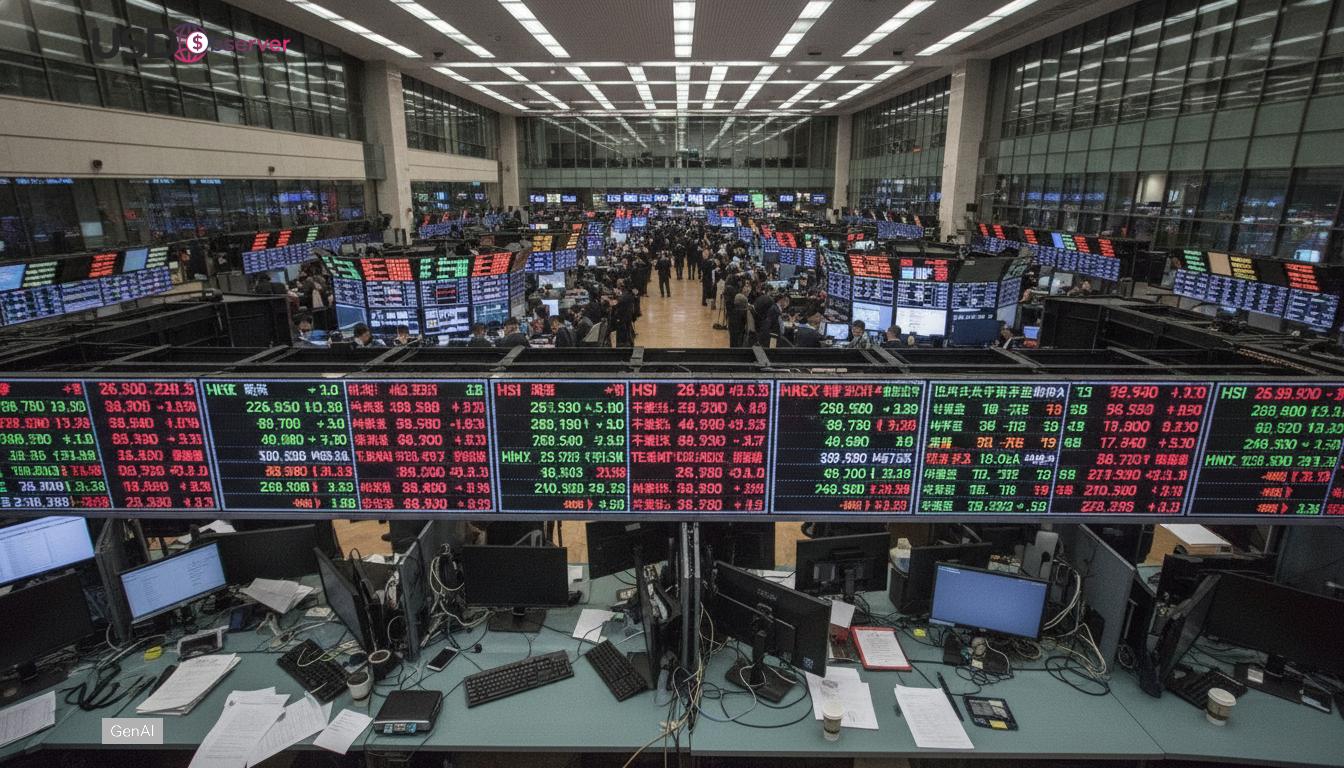
China’s role in global commodity markets remains as influential as ever, but the signals coming from prices at the end of 2025 are more nuanced than simple demand revival or collapse. Market participants are increasingly separating headline narratives about China’s growth from the reality embedded in commodity pricing. As 2026 approaches, that distinction is becoming critical for interpreting global economic momentum.
Throughout 2025, expectations around China swung repeatedly between optimism and caution. Periodic improvements in data sparked rallies, while structural concerns limited follow through. Commodity markets absorbed these cross currents, resulting in prices that reflect stabilization rather than acceleration. The message is not one of renewed boom, but of recalibration.
Reading China’s Demand Signals Beneath the Headlines
China’s demand profile in 2025 showed signs of bottoming rather than rebounding sharply. Industrial activity avoided contraction, infrastructure spending provided selective support, and consumption stabilized without surging. These trends produced demand that was steady but restrained.
For commodities, this translated into predictable baseline consumption rather than incremental growth. Import volumes remained sufficient to prevent oversupply, but not strong enough to tighten markets meaningfully. As a result, prices settled into ranges that reflected balance instead of scarcity.
This matters because commodity markets often price marginal change rather than absolute levels. When demand stops deteriorating, prices can stabilize even if growth remains modest. That is precisely what played out through much of 2025.
Why Commodity Prices Are Not Confirming a Demand Boom
Despite occasional rallies, most major commodities failed to sustain upside momentum. This was not due to weak supply discipline alone. It reflected the absence of strong incremental demand from China. Producers continued to deliver, inventories remained manageable, and buyers did not rush to rebuild stockpiles aggressively.
Energy markets offered a clear example. While China’s energy consumption remained substantial, it did not accelerate fast enough to overwhelm supply. Industrial metals followed a similar pattern. Usage was consistent, but project pipelines did not expand rapidly enough to change the demand trajectory.
Markets responded by pricing commodities as functional inputs rather than speculative growth proxies. This reduced volatility and capped upside, signaling that traders were no longer betting on a China driven supercycle revival.
The Difference Between Stabilization and Reacceleration
Stabilization is often mistaken for recovery. In reality, it simply marks the end of deterioration. China’s economy in 2025 achieved stabilization through targeted policy measures and gradual adjustments. That was enough to stop demand from falling, but not enough to ignite a new expansion phase.
Commodity pricing reflects this difference clearly. Stabilization supports floors, while reacceleration drives breakouts. As 2025 closed, floors held, but ceilings remained intact. This suggests that markets are comfortable with current demand levels but skeptical about near term upside.
For global growth, this distinction is important. Stable China demand reduces downside risk for commodity exporters, but it does not guarantee stronger global momentum. It supports balance, not expansion.
What 2026 Pricing Is Starting to Imply
Looking forward, current pricing patterns suggest cautious optimism rather than renewed enthusiasm. Futures curves across several commodities imply modest expectations for demand growth without pricing in tight supply conditions. This indicates that markets expect China to remain a stabilizer, not a catalyst.
That outlook aligns with broader macro conditions. Financing constraints, demographic trends, and policy discipline limit the pace of acceleration. China can support global demand, but it is unlikely to drive a synchronized upswing on its own.
For producers and investors, this environment rewards efficiency and cost control over volume expansion. Margins matter more than scale when demand grows slowly. This logic is already influencing capital allocation decisions in resource sectors.
Implications for Global Markets and FX
Commodity pricing tied to China’s demand outlook also feeds back into currencies and global markets. Exporters benefit from reduced volatility but face limited upside. Currencies linked to commodities may trade more on yield and policy differentials than on raw material prices.
For global markets, the absence of a China driven commodity surge lowers inflation risk while also limiting growth acceleration. This balance reinforces the broader theme of repricing rather than regime change. Markets are adjusting expectations, not rewriting them.
As 2026 approaches, the key risk would be a shift in either direction. A sharper slowdown would pressure prices, while a coordinated stimulus push could reignite demand. At present, neither outcome dominates market pricing.
Conclusion
Commodity markets at the end of 2025 are delivering a clear message about China. Demand has stabilized, but it has not reignited. Prices reflect balance rather than optimism, setting realistic expectations for 2026. China remains a central force in global commodities, but the era of demand driven breakouts has given way to a more measured and disciplined phase.