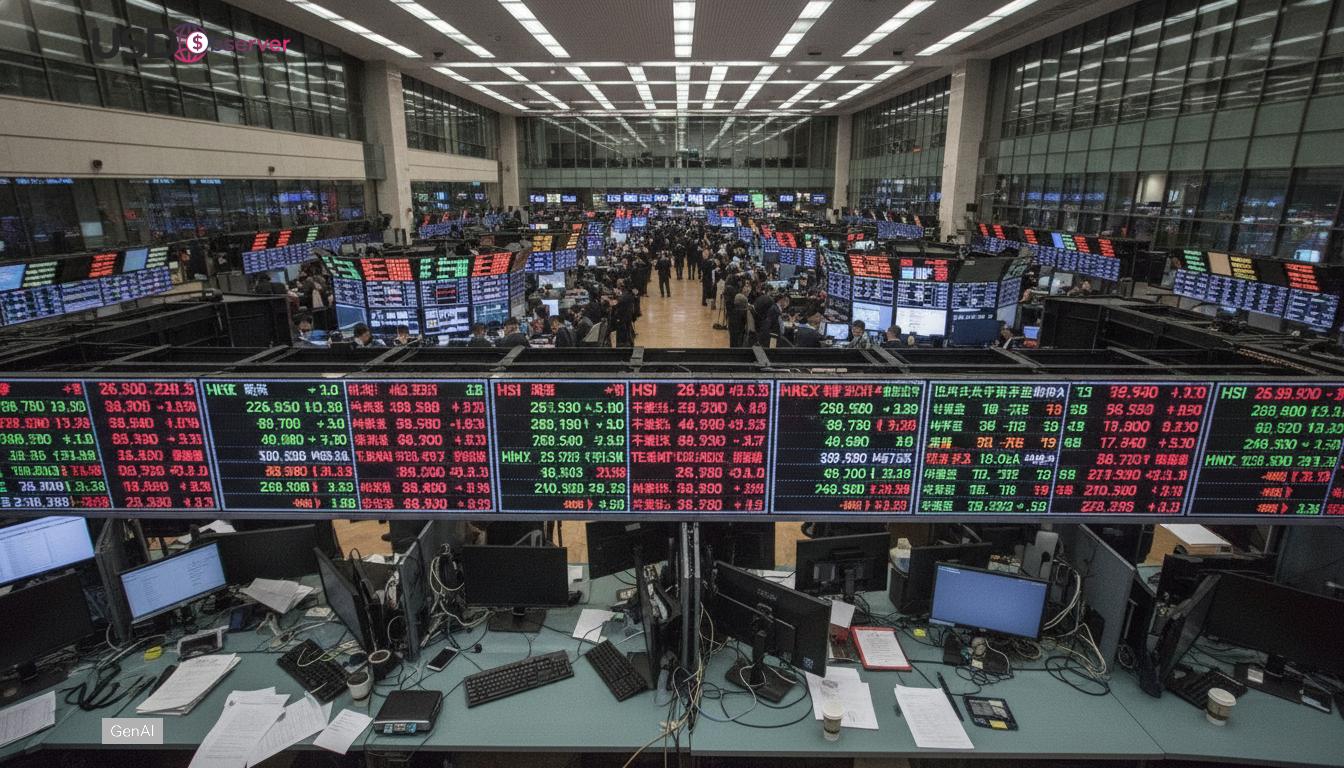
Global markets have spent much of 2025 debating whether the world economy is headed for a soft landing or something less reassuring. Inflation has eased, financial stress has been contained, and outright recession has largely been avoided. Yet growth remains subdued, productivity gains are limited, and confidence is fragile. This combination has given rise to a third outcome that markets appear increasingly comfortable with.
Rather than betting on a strong rebound or a sharp downturn, investors are pricing a muddle through scenario. This outlook assumes that economies avoid major shocks but fail to regain strong momentum. It is neither optimistic nor pessimistic, but it has become the baseline expectation shaping asset prices, policy assumptions, and risk behavior.
Why Markets Prefer the Muddle Through Outcome
The most important reason markets favor a muddle through scenario is risk management. After years of volatility, investors value stability even if it comes at the cost of lower returns. A low growth environment with contained inflation reduces the likelihood of abrupt policy moves or financial disruptions.
This scenario allows central banks to remain cautious without being forced into aggressive tightening or emergency easing. For markets, that predictability is valuable. It lowers tail risk and supports steady, if unspectacular, performance across asset classes.
The muddle through outcome also aligns with recent data patterns. Growth has been positive but uneven, inflation has moderated without collapsing demand, and labor markets have softened gradually rather than abruptly. These conditions reinforce the idea that the economy can keep moving forward without accelerating.
Soft Landing Expectations Have Been Gradually Revised
Earlier in the cycle, a soft landing implied a return to trend growth once inflation pressures eased. Over time, that expectation has been scaled back. Markets now interpret soft landing less as a rebound and more as an avoidance of crisis.
This subtle shift matters. Instead of anticipating stronger investment and productivity, investors are assuming slower expansion with fewer shocks. Earnings expectations have adjusted accordingly, and valuation multiples reflect lower growth but reduced volatility.
As a result, the soft landing narrative has merged with low growth reality. What remains is a steady but constrained outlook that prioritizes balance over momentum.
Low Growth Does Not Mean High Stress
One reason the muddle through scenario has gained acceptance is that low growth has not translated into widespread stress. Corporate balance sheets remain manageable, households have adjusted spending patterns, and financial systems have remained functional.
This resilience has reassured markets that weak growth can be absorbed without triggering instability. Credit spreads have stayed contained, and default rates have not surged. These signals support the idea that the economy can operate below potential without breaking.
However, this stability comes with tradeoffs. Investment tends to be cautious, innovation slows, and long term growth potential may erode. Markets are implicitly accepting these costs in exchange for near term calm.
Policy Implications Reinforce the Middle Path
Economic policy has also reinforced the muddle through outlook. Governments have avoided aggressive fiscal tightening but have also shown limited appetite for large stimulus. This leaves growth supported but constrained.
Monetary policy fits the same pattern. Central banks remain data dependent and cautious, aiming to preserve gains against inflation while avoiding unnecessary damage to activity. This approach reduces the risk of policy errors but also limits upside surprises.
Together, these policy choices anchor expectations around a narrow range of outcomes. Markets respond by pricing continuity rather than change.
Asset Pricing Reflects Acceptance, Not Optimism
The way assets have performed in 2025 reflects acceptance of low growth rather than confidence in recovery. Equities have risen selectively, favoring stability and pricing power. Bonds have stabilized as inflation risks recede. Currencies have moved in response to relative conditions rather than broad growth themes.
This pattern is consistent with a muddle through environment. Investors are not chasing rapid expansion, but they are not preparing for contraction either. Instead, portfolios are built around durability and diversification.
Such positioning can persist for extended periods. As long as no major shock disrupts the balance, markets are likely to continue favoring this middle ground.
Risks to the Muddle Through Scenario
While markets have embraced this outcome, it is not guaranteed. Structural challenges such as weak productivity, demographic pressures, and fragmented trade could gradually undermine even modest growth. At the same time, unexpected shocks could upset the fragile equilibrium.
The danger lies in complacency. A prolonged period of low growth can reduce resilience over time, making economies more vulnerable when stress eventually arrives. Markets that price stability may be slow to adjust if conditions deteriorate.
Recognizing these risks does not invalidate the current narrative, but it highlights its limitations.
Conclusion
Markets in 2025 are not choosing between a strong recovery and a downturn. They are choosing to muddle through. This scenario reflects a preference for stability over momentum, low growth over high risk, and predictability over ambition. While it avoids immediate pain, it also caps potential. Understanding this balance is essential for interpreting market behavior and the economic outlook ahead.