Global economic forecasts for 2026 are increasingly shaped by forces that receive less attention than interest rates or inflation. While headline indicators suggest moderate growth, underlying structural pressures are quietly redefining expectations. Among the most influential are tariffs, persistent policy uncertainty, and the ongoing reconfiguration of global supply chains.
These factors do not always show up immediately in growth numbers, but they affect investment decisions, trade volumes, and productivity trends over time. As businesses and governments adapt, the macro outlook for 2026 is being reshaped in ways that are gradual, uneven, and difficult to reverse.
Trade Policy Uncertainty Is Becoming a Structural Constraint
The most important macro force influencing forecasts is the persistence of trade policy uncertainty. Unlike temporary shocks, uncertainty around tariffs and trade rules has become a long term feature of the global economy. Firms are no longer waiting for a return to stable, predictable trade frameworks.
This uncertainty discourages large scale cross border investment. Companies delay expansion, limit exposure to unfamiliar markets, and prioritize flexibility over efficiency. While this behavior reduces short term risk, it also lowers potential growth by constraining capital formation and innovation.
For macro forecasters, this means trend growth assumptions are being revised lower. Even if tariffs do not rise further, the lack of clarity itself acts as a drag on long term economic planning.
Tariffs Are Reshaping Costs Rather Than Halting Trade
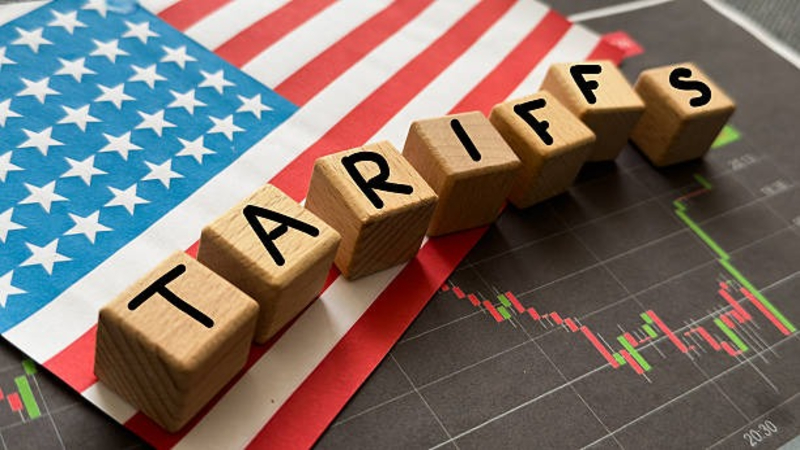
Tariffs have not stopped global trade, but they have changed its structure. Instead of eliminating flows, tariffs have raised costs and altered sourcing decisions. Firms absorb some of the impact through margins while passing the rest on through higher prices or reduced investment.
These adjustments show up gradually. Input costs rise unevenly, productivity gains slow, and efficiency losses accumulate over time. The macro effect is subtle but persistent, contributing to a lower potential growth path rather than a sharp contraction.
As tariffs become embedded in business models, their influence shifts from shock to baseline. This makes them harder to remove from forecasts and easier to underestimate.
Supply Chain Reconfiguration Has Long Term Tradeoffs
Supply chain diversification has been one of the most visible responses to recent disruptions and policy shifts. Companies have reduced reliance on single production hubs and expanded regional manufacturing. This has improved resilience but introduced new costs.
Shorter or duplicated supply chains often sacrifice scale efficiencies. Production becomes more expensive, logistics more complex, and coordination harder. While this reduces vulnerability to shocks, it also dampens productivity growth.
For 2026 forecasts, this tradeoff matters. Economies may appear more stable, but at the cost of slower efficiency gains. Growth becomes steadier but less dynamic, altering assumptions about long term output and competitiveness.
Why These Forces Matter More Than Cyclical Signals
Traditional macro forecasting often focuses on cyclical indicators such as demand, employment, and inflation. Tariffs, uncertainty, and supply chain shifts operate on a different timeline. Their effects accumulate quietly and influence the economy’s structure rather than its immediate performance.
This is why forecasts for 2026 are being shaped well before new data confirms the shift. Analysts are adjusting expectations based on behavior changes rather than headline numbers. Investment patterns, trade intensity, and productivity trends are sending early signals.
Ignoring these forces risks overestimating future growth potential. Recognizing them leads to more cautious and realistic projections.
Implications for Global Economic Balance
As these structural pressures persist, the global economy is likely to see more fragmented growth. Regions with stable policy environments and efficient logistics may attract investment, while others face higher risk premiums.
This fragmentation reduces the synchrony of global cycles. Growth paths diverge, capital flows become more selective, and forecasting becomes more complex. For currencies and trade dependent economies, this adds another layer of uncertainty to the outlook.
The result is a macro environment where stability does not necessarily translate into strong expansion. Forecasts for 2026 increasingly reflect this nuanced balance.
Conclusion
Tariffs, policy uncertainty, and supply chain restructuring are quietly redefining the global macro outlook. Their influence is gradual but powerful, shaping investment behavior and long term growth assumptions well ahead of 2026. While these forces rarely dominate headlines, they are central to understanding why forecasts are becoming more cautious and why the global economy may look steadier but slower in the years ahead.