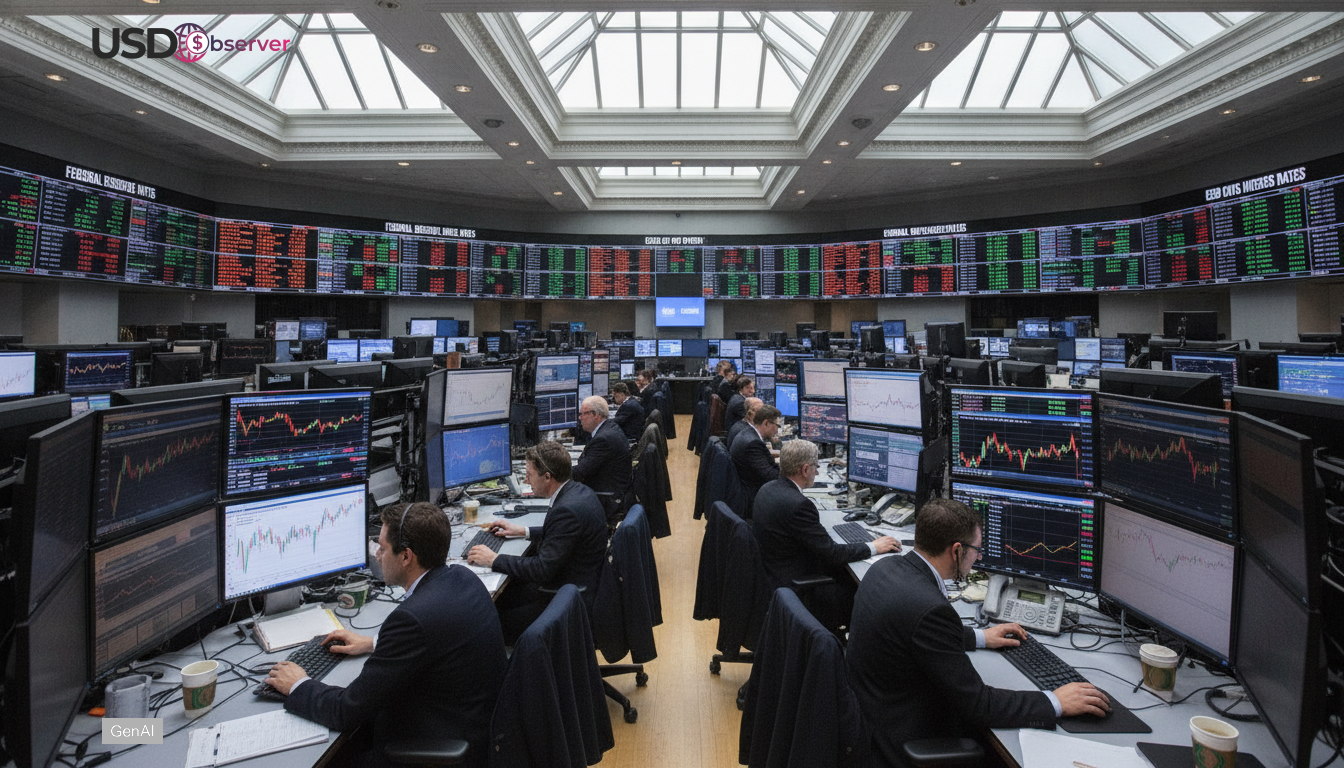
The global economy is often described as multipolar, with growth, production, and political influence spread across multiple regions. Asia, Europe, the Middle East, and emerging markets all play meaningful roles in shaping economic outcomes. Yet beneath this surface diversity lies a striking imbalance. While economic power has diversified, the flow of money through the global system remains heavily concentrated around the US dollar.
This contrast defines one of the most important structural features of the modern economy. Multipolar growth has not translated into multipolar finance. Capital, liquidity, and settlement continue to move primarily through dollar based channels, shaping outcomes far beyond the United States itself. Understanding this imbalance is essential for interpreting currency markets, financial stability, and global policy dynamics.
Dollar Flows Remain Central to Global Finance
The most important reason dollar flows remain dominant is the structure of global finance itself. Cross border lending, trade settlement, reserve management, and financial contracts are overwhelmingly denominated in dollars. These systems were built over decades and are deeply embedded in legal, regulatory, and institutional frameworks.
Even as new economic centers emerge, they plug into an existing financial architecture rather than replacing it. Using the dollar allows participants to access deep liquidity, standardized documentation, and mature risk management tools. These advantages are difficult to replicate at scale.
As a result, dollar flows continue to act as the circulatory system of global finance. Economic activity may be multipolar, but the channels through which money moves remain highly centralized.
Capital Mobility Favors a Single Anchor
Global capital mobility reinforces this concentration. Investors allocate capital across regions, but they often do so through dollar denominated instruments. Equities, bonds, and alternative assets across the world are frequently financed, hedged, or benchmarked in dollars.
This behavior is driven by efficiency rather than ideology. A single anchor currency reduces friction, lowers transaction costs, and simplifies portfolio management. In a world of complex and fast moving markets, simplicity carries a premium.
As capital moves between regions, it repeatedly passes through dollar markets. This creates persistent demand for dollar liquidity regardless of where growth originates, reinforcing the dominance of dollar flows even in a diversified global economy.
Trade Diversity Has Not Changed Settlement Norms
Trade patterns have become more diverse, with supply chains spanning multiple regions and partners. However, the currency used to settle this trade has not diversified at the same pace. The dollar remains the preferred unit for invoicing and settlement across a wide range of goods and services.
This persistence reflects trust and convention. Changing settlement currency introduces operational and financial risk, particularly when margins are tight and volatility is high. Firms engaged in global trade prioritize predictability over experimentation.
As trade becomes more complex and fragmented, the appeal of a common settlement currency increases. Rather than encouraging diversification, multipolar trade has strengthened the case for a single financial reference point.
Financial Stress Reveals the True Center
Periods of financial stress make the imbalance between economic multipolarity and dollar centric finance especially visible. When volatility rises or liquidity tightens, demand for dollars increases sharply. This response occurs regardless of where the shock originates.
Dollar funding markets become the focal point during adjustment phases. Institutions seek safety, liquidity, and access to established channels. This behavior underscores the dollar’s role as the ultimate backstop in the global system.
These episodes reinforce existing structures. Each stress event deepens reliance on dollar flows, making future diversification even more difficult despite ongoing efforts to build alternatives.
Implications for Policy and Markets
The persistence of dollar centric flows has important implications. Policymakers in non dollar economies must manage exposure to a system they do not control. Exchange rates, reserves, and financial stability are all influenced by conditions in dollar markets.
For markets, this means that global developments often transmit through the dollar before appearing elsewhere. Growth, risk sentiment, and policy shifts in one region can affect currencies and assets globally through dollar liquidity channels.
Recognizing this structure helps explain why the dollar retains influence disproportionate to the US share of global output. Power in finance is not only about production, but about connectivity and control of flows.
Conclusion
The world economy may be multipolar in growth and production, but global finance remains centered on dollar flows. Capital mobility, trade settlement, and financial stress all reinforce a system where money moves through a single dominant currency. This imbalance explains why the dollar continues to shape outcomes across regions, even as economic power disperses. Multipolarity in the real economy has not yet translated into multipolarity in the flow of money.