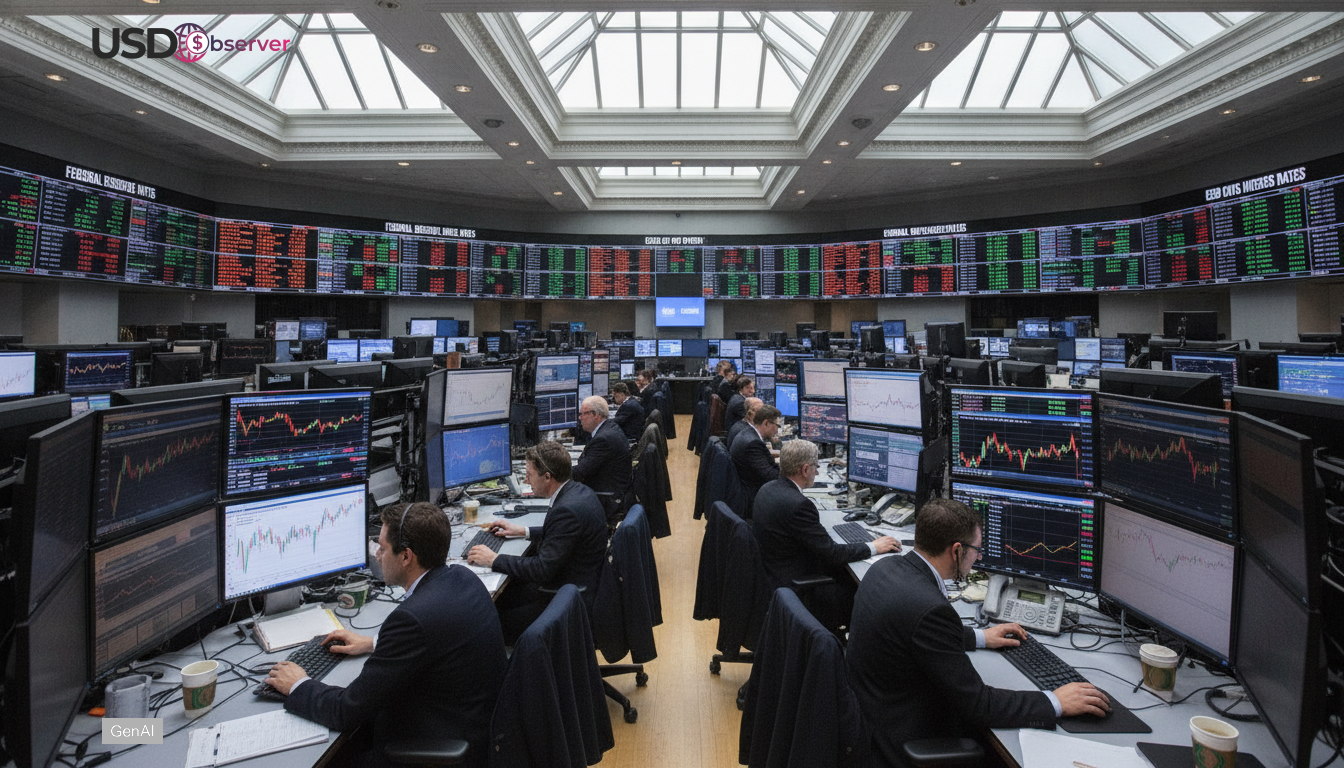
Economic tensions between China and the United States are resurfacing, but not where most observers initially look. Instead of appearing first in headline growth numbers or official trade statistics, the earliest signals are emerging in currency markets and global freight activity. These channels tend to react faster to risk, policy uncertainty, and shifts in expectations.
This pattern reflects how modern economies transmit stress. FX markets and logistics networks respond in real time to changes in trade conditions and political signals, while GDP data arrives with delays and revisions. As a result, tensions often register in prices and volumes well before they appear in macroeconomic aggregates.
Why FX markets react before the real economy
Currency markets are forward looking by design. Exchange rates adjust not only to current data but to expectations about policy, trade access, and capital flows. When tensions rise between major economies, FX pricing reflects anticipated friction rather than realized losses.
For China and the United States, this means that even modest policy signals can move currencies. Concerns about tariffs, export controls, or regulatory barriers influence hedging behavior and capital allocation quickly. These adjustments occur long before companies change production plans or investment levels.
As a result, FX volatility often increases ahead of measurable changes in output or employment, making it an early indicator of geopolitical stress.
Trade sensitivity amplifies currency signals
Both economies are deeply integrated into global trade and finance. Changes in bilateral relations affect supply chains, investment confidence, and funding conditions across regions.
Currencies linked to trade exposure respond as investors reassess risk. Even without immediate policy action, the possibility of disruption alters expectations. This leads to gradual repricing rather than abrupt moves, which can be easy to overlook.
Over time, these shifts accumulate, signaling underlying stress before it reaches the real economy.
Freight activity reflects expectations, not outcomes
Freight and shipping data provide another early signal. Logistics decisions are made months in advance, based on expectations of demand, costs, and trade rules.
When tensions rise, companies adjust shipping volumes, routes, and inventory strategies preemptively. Orders may be delayed, shipments rerouted, or inventories drawn down to manage risk.
These changes reduce freight activity even if end demand has not yet weakened. As a result, freight volumes often soften before GDP data shows any slowdown.
Inventory management drives early adjustment
Firms respond to uncertainty by managing inventories more conservatively. Rather than expanding production, they rely on existing stockpiles until policy clarity improves.
This behavior reduces shipping demand and trade volumes without immediately affecting sales. GDP figures may remain stable while underlying trade flows weaken.
This disconnect explains why freight indicators often deteriorate ahead of broader economic data.
Why GDP lags these signals
GDP is a backward looking measure. It aggregates activity over time and smooths volatility through seasonal adjustments and revisions.
Short term changes in trade behavior or financial conditions may not immediately affect output. Services, government spending, and domestic consumption can offset trade weakness temporarily.
As a result, GDP may appear resilient even as FX and freight data signal rising stress. The impact becomes visible only when uncertainty persists long enough to alter investment and hiring decisions.
Implications for global markets
For investors and analysts, watching FX and freight offers an early warning system. These indicators capture shifts in expectations that traditional data misses.
Ignoring them risks underestimating the timing and scale of economic adjustment. By the time GDP reflects tensions, markets may have already repriced significantly.
This is especially relevant in an environment where geopolitical risk shapes trade and capital flows more than cyclical demand.
Why this matters now
China US relations influence global supply chains, commodity demand, and financial stability. Early signals in FX and freight suggest that uncertainty is once again affecting behavior.
These signals do not guarantee an imminent slowdown, but they highlight rising friction. Monitoring them helps distinguish temporary noise from structural change.
Understanding where stress appears first improves interpretation of economic trends and policy risk.
Conclusion
China US tensions tend to surface first in FX markets and freight activity because these channels respond quickly to expectations and uncertainty. Currencies and shipping volumes adjust long before changes appear in GDP data. Recognizing these early signals is essential for understanding how geopolitical risk transmits through the global economy and for anticipating shifts before they reach headline growth figures.