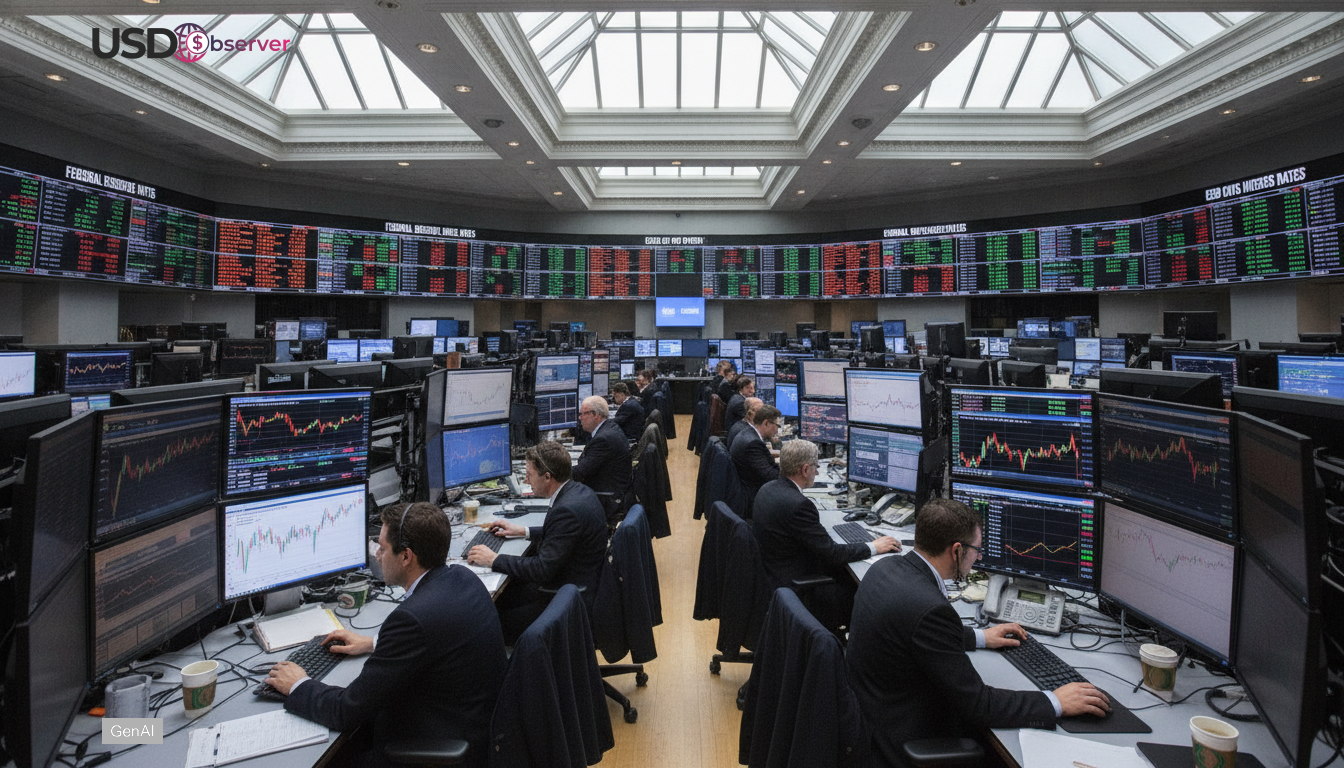
The global economy is becoming increasingly fragmented as growth paths, policy priorities, and geopolitical considerations diverge across regions. Differences in inflation trends, fiscal capacity, and monetary policy responses have reduced synchronization among major economies. This fragmentation is reshaping trade relationships and reinforcing the central role of the US dollar in global commerce.
As economies adapt to localized shocks and regional priorities, cross-border trade systems rely more heavily on established and trusted frameworks. In this environment, the dollar continues to serve as the primary medium for pricing, settlement, and financing. Its role is strengthened not by uniform global growth, but by the need for stability amid divergence.
Fragmented growth patterns reshape global trade
Macroeconomic fragmentation reflects uneven growth across regions. Some economies experience resilient demand and stable policy environments, while others face slower growth or fiscal constraints. These differences influence trade volumes, supply chains, and investment decisions, increasing complexity in cross-border transactions.
In fragmented conditions, businesses and governments prioritize predictability. Using a common currency for trade settlement reduces uncertainty related to exchange rate volatility and policy divergence. The dollar fulfills this role by offering liquidity, transparency, and global acceptance across markets.
Trade fragmentation also leads to more bilateral and regional trade arrangements. Even within these frameworks, the dollar often remains the preferred settlement currency. Its widespread use simplifies transactions across jurisdictions with varying economic conditions.
Dollar-based pricing supports trade stability
Pricing goods and services in dollars helps stabilize trade relationships during periods of macroeconomic divergence. When local currencies fluctuate due to uneven growth or policy shifts, dollar pricing reduces renegotiation risk and protects margins. This stability is particularly important for commodities and intermediate goods traded across multiple regions.
Dollar-based pricing also supports efficient risk management. Firms can hedge exposure more easily due to deep and liquid dollar markets. This capability lowers transaction costs and supports continued trade even when macroeconomic uncertainty rises.
For many economies, especially those integrated into global supply chains, dollar pricing aligns trade flows with financing structures. Trade finance instruments, insurance, and settlement systems are predominantly dollar-denominated, reinforcing its role as the backbone of global trade.
Financial infrastructure reinforces dollar use
Global financial infrastructure is closely aligned with the dollar. Payment systems, correspondent banking networks, and clearing mechanisms are designed around dollar transactions. In a fragmented macro environment, relying on established infrastructure reduces operational risk and execution delays.
Trade finance further strengthens this dynamic. Letters of credit, export financing, and working capital facilities are commonly structured in dollars. Access to these tools supports trade continuity even when regional financial conditions tighten.
Efforts to diversify trade currencies face practical constraints. Alternative systems often lack the scale, liquidity, or interoperability required for large-volume global trade. As a result, diversification tends to supplement rather than replace dollar-based systems.
Fragmentation increases demand for trusted settlement
As macroeconomic fragmentation persists, trust becomes a critical factor in trade systems. Counterparties seek settlement mechanisms that are widely accepted and insulated from localized shocks. The dollar benefits from its role in deep capital markets and transparent legal frameworks.
Geopolitical considerations also influence currency choice. In an uncertain global environment, market participants favor currencies with established track records and predictable governance. This preference reinforces dollar-centered trade even as economic blocs pursue greater autonomy.
Over time, fragmentation may encourage experimentation with alternative arrangements. However, the immediate need for reliability ensures continued reliance on the dollar for trade settlement and financing.
Conclusion
Macroeconomic fragmentation is reinforcing dollar-centered trade systems by increasing demand for stability, liquidity, and trusted settlement mechanisms. Uneven growth and policy divergence make a common trade currency more valuable, not less. In this environment, the dollar remains central to global trade, reflecting its practical advantages rather than resistance to change.