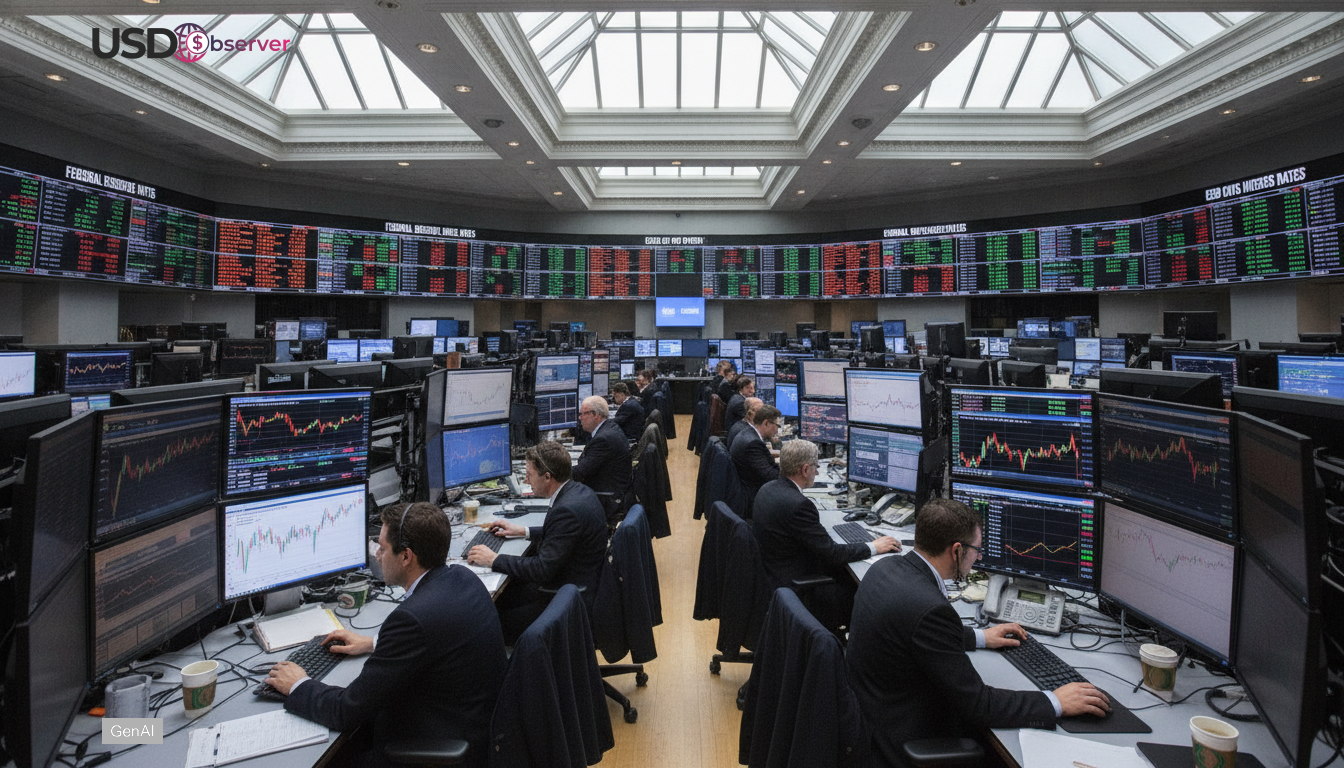
Global financial markets are showing notable shifts in how different asset classes move in relation to one another. Cross-asset correlations between equities, bonds, currencies, and alternative assets have become less stable, reflecting changes in macroeconomic conditions and policy frameworks. These shifts are prompting investors to reassess diversification assumptions that held during earlier market cycles.
For much of the past decade, asset prices were supported by accommodative monetary policy and ample liquidity. That environment produced relatively predictable correlation patterns across markets. As financial conditions tighten and policy priorities evolve, those relationships are adjusting, offering new signals about underlying global market dynamics.
Changing correlations reflect macro regime shifts
Cross-asset correlations often change when the macroeconomic regime shifts. Higher interest rates and tighter liquidity have altered how markets respond to economic data and policy signals. Assets that once moved together are now reacting differently to the same information, highlighting a more complex risk environment.
Bond and equity correlations illustrate this shift clearly. Periods when both asset classes decline simultaneously have become more frequent as higher yields affect valuations across markets. This challenges traditional portfolio structures that relied on bonds to offset equity risk.
Currency correlations have also evolved. Interest rate differentials and growth divergence now play a larger role in driving exchange rate movements. As a result, currency behavior provides additional insight into how global capital responds to policy and macroeconomic developments.
Implications for diversification strategies
Changing cross-asset correlations affect the effectiveness of diversification strategies. Portfolios designed under assumptions of stable relationships may experience higher volatility when correlations rise unexpectedly. Investors are increasingly focused on understanding the drivers behind correlation changes rather than relying solely on historical patterns.
Diversification now requires greater attention to macro sensitivity. Assets are evaluated based on how they respond to inflation, growth shocks, and policy changes. This approach emphasizes scenario analysis and stress testing to identify potential portfolio vulnerabilities.
Alternative assets are also reassessed in this context. Their role depends not only on return potential but on how they interact with traditional assets during periods of market stress. Shifting correlations encourage more dynamic and adaptive allocation frameworks.
Role of digital and alternative markets
Digital and alternative markets have introduced new dimensions to cross-asset correlations. As these markets mature, their interactions with traditional assets are becoming more visible. In some periods, digital assets show increased sensitivity to global liquidity conditions and risk sentiment.
This evolving behavior reflects greater integration with broader financial markets. As institutional participation grows, digital asset price movements increasingly respond to macro factors such as interest rates and policy expectations. This reduces isolation and strengthens cross-market linkages.
At the same time, correlation patterns remain fluid. Digital markets can still diverge from traditional assets under certain conditions, particularly when driven by sector-specific developments. Monitoring these relationships provides insight into the pace and depth of market integration.
Signals for global market participants
Shifting correlations serve as signals rather than anomalies. They indicate changes in how risks are transmitted across the financial system. Investors and policymakers use these signals to assess market resilience and identify emerging sources of stress.
For market participants, understanding correlation dynamics supports better risk management. Adjusting exposure based on evolving relationships helps reduce unintended concentration and improve portfolio robustness. This is especially important in periods of macro uncertainty.
Policymakers also monitor cross-asset behavior. Rising correlations across markets can amplify shocks, while diversification across assets can support stability. These observations inform assessments of financial conditions and systemic risk.
Conclusion
Cross-asset correlations are signaling changing global market dynamics shaped by higher rates, tighter liquidity, and evolving policy frameworks. As traditional relationships adjust, investors are rethinking diversification and risk management approaches. Understanding these shifts is essential for navigating a more complex and interconnected global financial environment.