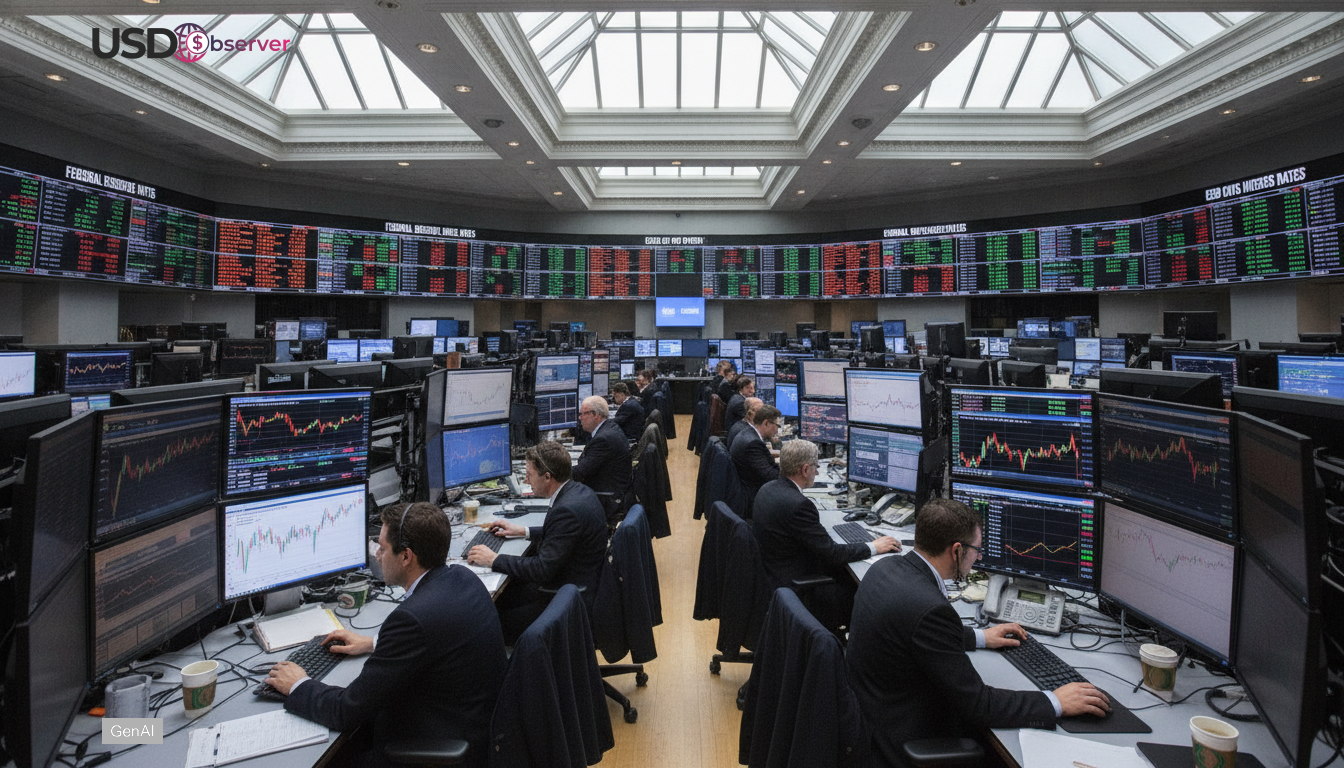
Global financial markets are showing signs of moderated risk appetite as investors navigate ongoing policy uncertainty. Shifts in monetary and fiscal guidance across major economies have made long term assumptions less certain. As a result, market participants are adjusting exposure with greater caution and selectivity.
This moderation does not reflect a broad retreat from markets but a recalibration of expectations. Investors are increasingly focused on preserving capital, managing volatility, and aligning portfolios with clearer policy signals. In an environment where clarity is limited, risk assessment has become more disciplined and incremental.
Policy uncertainty reshapes investor risk behavior
Uncertainty around policy direction is a key factor influencing current risk appetite. Central banks continue to balance inflation control with growth considerations, creating ambiguity around future interest rate paths. Investors respond by reducing exposure to assets that are highly sensitive to policy shifts.
Fiscal policy uncertainty also weighs on sentiment. Rising public debt levels and debates over budget priorities affect confidence in long term economic stability. These concerns prompt investors to demand higher risk premiums or shift toward more defensive positioning.
Trade and regulatory developments add another layer of complexity. Changes in trade relationships, industrial policy, and regulatory frameworks can alter earnings outlooks and capital flows. This reinforces a cautious approach as investors wait for clearer guidance before committing to higher risk strategies.
Equity markets reflect selective risk appetite
Equity markets are adjusting through greater differentiation across sectors and regions. Investors favor companies with stable earnings, strong balance sheets, and limited exposure to policy driven cost pressures. This preference reduces volatility in some segments while increasing it in others.
Growth oriented and highly leveraged companies face greater scrutiny. As financing conditions remain tight and policy clarity is limited, valuations for these firms are more sensitive to changes in expectations. This has contributed to uneven performance across equity markets.
Regional equity trends also reflect moderated risk appetite. Markets supported by consistent policy frameworks and credible institutions attract steadier investment. In contrast, regions facing political or policy uncertainty experience more cautious capital allocation.
Currency and rate markets signal caution
Currency markets provide clear signals of shifting risk appetite. Investors tend to favor currencies associated with stable policy environments and predictable monetary frameworks. This behavior supports demand for currencies linked to deeper financial markets and reliable liquidity.
Interest rate markets also reflect moderation in risk taking. Yield curves adjust as investors reassess the balance between inflation risks and growth prospects. Demand for shorter duration instruments often increases when policy uncertainty persists, limiting exposure to abrupt rate changes.
These adjustments influence global capital flows. Investors become more sensitive to policy communication and macro data, leading to quicker repositioning. This responsiveness contributes to market volatility but also reflects active risk management.
Portfolio strategies adapt to lingering uncertainty
Portfolio construction has evolved in response to moderated risk appetite. Diversification across asset classes, regions, and currencies has gained importance as a way to manage uncertainty. Investors prioritize flexibility to adjust exposures as conditions evolve.
Liquidity management is another focus area. Holding liquid assets allows investors to respond quickly to policy developments without incurring significant costs. This approach supports resilience during periods of uncertainty and reduces forced selling.
Risk management practices have also become more prominent. Hedging strategies and scenario analysis are increasingly used to protect portfolios against unexpected policy outcomes. These measures help stabilize returns while maintaining exposure to long term opportunities.
Conclusion
Risk appetite is moderating across markets as policy uncertainty continues to shape investor behavior. Rather than withdrawing from markets, participants are adopting more selective and disciplined strategies. This environment favors careful risk assessment, flexibility, and alignment with clearer policy signals as markets navigate an uncertain macro landscape.