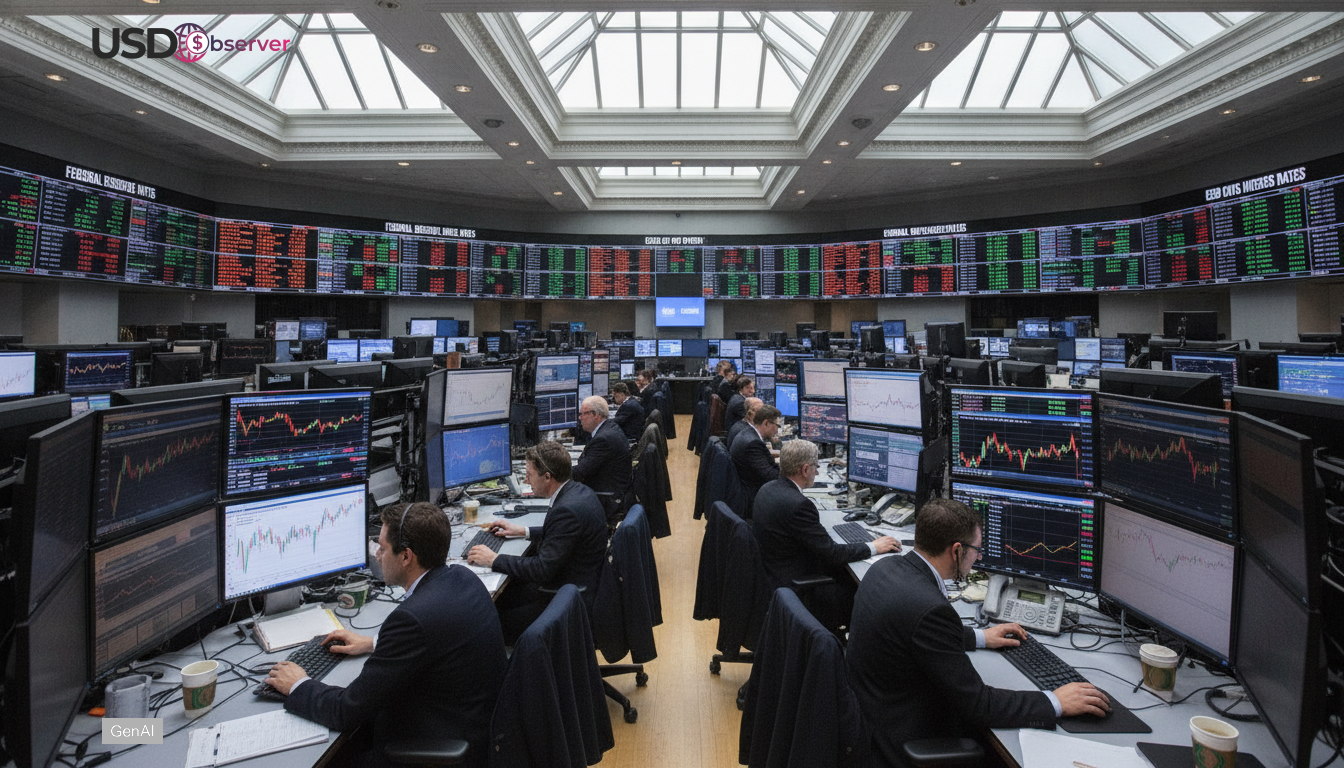
Global equity markets delivered a mixed performance this week as uncertainty surrounding monetary policy, economic resilience, and geopolitical tensions kept investors cautious. While some regions saw moderate gains driven by improved corporate earnings, others faced pressure from rising interest rate expectations and weakening demand signals. This divergence reflects a market environment still struggling to find a consistent narrative as policy makers assess the balance between inflation control and economic stability.
Investors are increasingly focused on forward guidance from major central banks, whose statements are shaping risk appetite across asset classes. With inflation not yet fully anchored and growth indicators softening in several economies, traders are adjusting portfolios to reflect a more defensive stance. Equity markets appear to be entering a phase where selective positioning, rather than broad risk exposure, is becoming the dominant strategy.
Policy uncertainty drives uneven global equity performance
The most significant force behind the mixed equity landscape is the uncertainty surrounding monetary policy paths. The Federal Reserve, European Central Bank, and Bank of England have all emphasized a cautious approach toward easing, signaling that rates may remain higher for longer than markets previously anticipated. This stance has sparked adjustments in equity valuations, particularly in rate-sensitive sectors such as technology, real estate, and consumer discretionary.
US markets have shown resilience, supported by strong earnings from large-cap firms and steady consumer spending. However, the potential for prolonged high borrowing costs continues to cap upside momentum. European equities have remained under pressure as growth continues to lag, while Asian markets have reacted to both domestic economic concerns and shifting global demand patterns. Investors are closely watching upcoming inflation releases and policy statements to gauge whether momentum may shift in the coming weeks.
Equity sector rotation reflects shifting investor sentiment
Sector performance has varied significantly as investors realign portfolios with the evolving macro outlook. Energy, financials, and healthcare have shown relative strength due to stable fundamentals and improved revenue visibility. In contrast, technology stocks have experienced renewed volatility as higher yields weigh on long-term valuation models. The rotation toward sectors with more predictable cash flows illustrates a broader search for stability amid ongoing policy uncertainty.
Markets are also reacting to corporate guidance, which has become increasingly cautious. Many companies have highlighted concerns related to input costs, global supply chain adjustments, and uneven consumer demand. This shift in tone has added to the market’s defensiveness, prompting traders to favor companies with strong balance sheets and disciplined capital management.
Rising bond yields challenge equity valuations worldwide
The continued rise in global bond yields has become a major headwind for equity markets, drawing capital away from risk assets and toward fixed-income alternatives. Higher yields increase the cost of capital, pressure corporate earnings projections, and reduce the relative attractiveness of equities. This dynamic has contributed to the more subdued performance seen across multiple regional indices.
Emerging markets have been particularly affected, as rising global yields amplify capital outflow pressures and create additional challenges for economies with large external financing needs. Countries with weaker fiscal positions are witnessing increased volatility, pushing investors to adopt a more conservative stance. Equity markets in these regions remain sensitive to global liquidity trends and policy developments from major central banks.
Geopolitical developments add another layer of uncertainty
Geopolitical tensions continue to influence market sentiment, contributing to fluctuations in risk appetite across global exchanges. Trade disputes, conflict zones, and shifting diplomatic priorities have introduced additional volatility, particularly in markets heavily dependent on global supply chains. Investors are pricing geopolitical risk premiums into certain sectors, especially those linked to energy, defense, and commodities.
Corporate strategies are also adapting to the geopolitical landscape. Companies are reassessing supply chain exposures, diversifying regional operations, and evaluating long-term risks associated with cross-border disruptions. These adjustments influence both earnings expectations and equity valuations, adding complexity to an already uncertain environment.
Conclusion
Global equity markets remain divided as policy uncertainty, rising yields, and geopolitical challenges shape investor behavior. While some sectors show resilience, the broader environment reflects cautious positioning as traders await clearer signals from economic data and central bank guidance. Until a more consistent macro narrative emerges, equity markets are likely to maintain their mixed and measured tone.