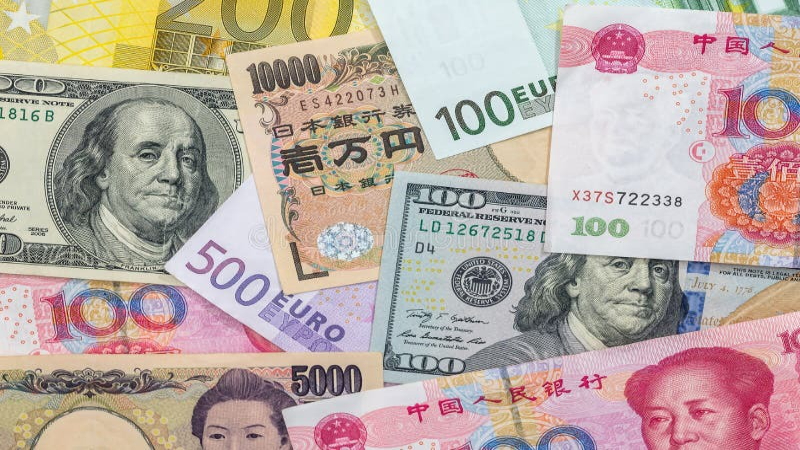
Global currency competition is intensifying as the dollar’s dominance faces renewed challenges from the euro, yen, and yuan. Each currency represents a distinct economic sphere with its own policy framework, financial depth, and international ambitions.
While the U.S. dollar remains the foundation of global liquidity, the evolving strategies of Europe, Japan, and China are shaping a new phase of monetary realignment that could redefine how global influence is measured in the years ahead.
The Euro’s Push for Strategic Autonomy
The euro remains the strongest rival to the dollar, supported by the depth of the European banking system and the scale of the European Union’s trade network. In recent years, policymakers have intensified efforts to expand the euro’s role in international transactions, aiming to insulate Europe from external financial shocks.
New initiatives to strengthen capital markets and harmonize fiscal policy have been designed to enhance the euro’s credibility. The European Central Bank continues to emphasize stability and transparency, offering the euro as a trusted reserve currency. However, limited fiscal integration across member states still constrains its global appeal. Investors view the euro as stable but not yet unified enough to fully rival the dollar in times of crisis.
Europe’s growing presence in energy trade, particularly through euro-denominated contracts for gas and renewables, may slowly expand its influence. Yet for the euro to capture a larger global share, deeper integration and consistent policy coordination across member economies will remain essential.
The Yen’s Fight to Stay Relevant
Japan’s yen has long served as a safe-haven currency, but its influence has eroded over the past decade. Persistent low inflation, negative interest rates, and subdued growth have reduced global demand for yen assets.
Despite this, Japan’s institutional investors and central bank still play a key role in global bond markets. The Bank of Japan’s policy adjustments in 2025, which allowed more flexibility in yield control, have slightly lifted investor confidence. Capital flows have begun to return as investors seek opportunities in Japan’s technology and renewable sectors.
However, the yen’s global presence depends heavily on risk sentiment. When global uncertainty rises, investors move into yen positions as a hedge, temporarily strengthening the currency. When markets stabilize, capital tends to flow back to higher-yielding assets, weakening the yen. Without structural reforms and higher growth potential, the yen risks losing further ground to more dynamic currencies.
Still, its reputation for stability and Japan’s strong external balance ensure that the yen remains a cornerstone of Asian financial stability, even if its global reach continues to decline.
The Yuan’s Bid for Monetary Influence
China’s yuan has advanced rapidly in global trade settlements and central bank reserves, driven by Beijing’s long-term strategy to internationalize its currency. The expansion of cross-border payment systems and the growing use of yuan in commodity trade are strengthening its regional role.
Several nations now settle a portion of energy and manufacturing imports in yuan, particularly in Asia, Africa, and the Middle East. This reflects China’s growing role in global supply chains and its ambition to challenge the dollar’s dominance in trade finance.
However, full convertibility and capital mobility remain significant obstacles. The Chinese financial system is still closely managed, with restrictions on capital flows and limited transparency in monetary operations. These structural limitations prevent the yuan from being a true reserve alternative. Global investors still prefer the dollar’s liquidity and legal protections.
Nevertheless, the yuan’s rise as a trade and settlement currency signals a gradual shift in economic gravity. The digital yuan, now used in pilot cross-border settlements, adds a new technological dimension that may accelerate its role in global payments.
Global Shifts and Market Implications
The competition among the euro, yen, and yuan reflects deeper geopolitical and economic realignments. Europe seeks strategic independence, Japan aims for renewed vitality, and China pursues monetary influence through trade integration.
Yet none of these currencies currently matches the dollar’s scale, liquidity, or institutional depth. Global investors continue to rely on the dollar for safe assets, debt issuance, and crisis hedging. Its dominance is not solely based on U.S. policy but on the strength of the financial ecosystem that surrounds it.
For emerging markets, the diversification of reserve currencies offers some benefits. It allows for reduced exposure to U.S. rate cycles and more flexibility in managing foreign reserves. However, fragmentation in the global monetary system also increases complexity and the risk of financial dislocation when crises occur.
As central banks diversify portfolios, gold and yuan allocations have grown modestly. Still, the dollar and euro together account for more than three-quarters of official reserves, underscoring that true monetary power remains concentrated in a few core economies.
The Future of Currency Power
Looking ahead, the balance of global currency influence will depend on credibility, openness, and trust. The euro’s path relies on deeper fiscal unity within the European Union. The yen’s future depends on Japan’s ability to revive growth and normalize policy. The yuan’s ascent will hinge on whether China embraces transparency and full market convertibility.
Each of these currencies brings strength to the global system, yet all remain tied to domestic political and institutional challenges. The competition will continue to evolve alongside digital finance, artificial intelligence, and changing global trade dynamics.
For now, the dollar remains the central pillar of stability, but the emerging contest among its challengers ensures that monetary leadership will become increasingly multipolar rather than absolute.
Conclusion
The global contest between the euro, yen, and yuan marks a defining moment in modern financial history. While none can yet displace the dollar, their combined evolution is reshaping how global influence is measured. The next decade will test whether these currencies can transform ambition into sustained power in an increasingly digital and interconnected world.