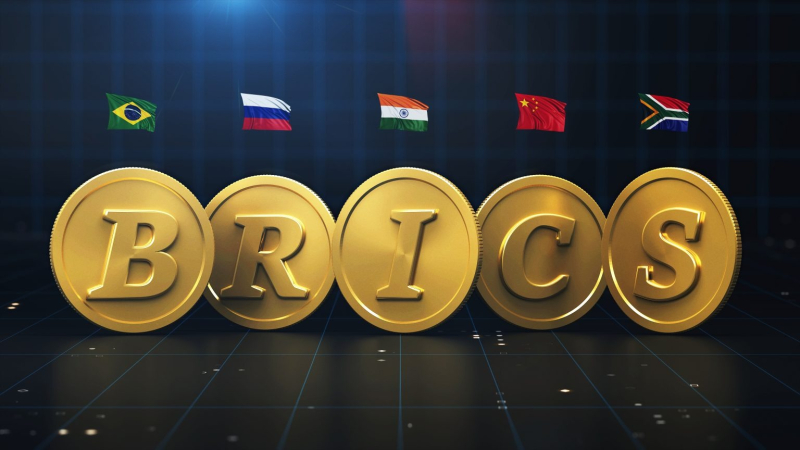
BRICS nations are accelerating efforts to reshape the global financial system through new settlement networks that lessen dependence on the U.S. dollar. This shift includes cross-border payment systems, bilateral currency-swap lines, and regional agreements aimed at increasing the use of local currencies in trade and investment.
Although the group’s ambitions are significant, experts stress that the dollar remains the backbone of global finance. BRICS efforts signal a push toward diversification rather than full replacement. The transformation underway is gradual but reflects a clear intention to create alternatives that provide more flexibility and financial security for emerging economies.
The Dollar’s Enduring Dominance
Even as these networks grow, the U.S. dollar continues to hold an unrivaled position in global trade and finance. It remains the preferred currency for cross-border payments, corporate borrowing, and foreign-exchange reserves. The size and transparency of U.S. capital markets provide a level of liquidity and trust that no other system currently matches.
Investors, corporations, and central banks continue to view dollar-denominated assets as safe and easily tradable. The dollar’s dominance is reinforced by habit and infrastructure: most global pricing benchmarks, from crude oil to semiconductors, remain denominated in dollars. This makes it deeply embedded in supply chains and global accounting systems.
While several countries have begun to diversify reserves toward the euro, yen, and yuan, the shifts are marginal. The dollar’s share of global reserves still exceeds fifty percent, reflecting both its utility and its stability. For emerging economies, dollar reserves remain vital for exchange-rate defense and market confidence.
Some analysts argue that the most realistic outcome is not de-dollarization but coexistence. Multiple settlement systems could evolve in parallel, but the dollar will continue to anchor the system due to its liquidity and institutional depth.
Regional Settlement Networks Gain Momentum
Over the past year, BRICS members have intensified cooperation to improve regional payment infrastructure. Russia and China have deepened financial links that enable direct settlements in rubles and yuan. India has launched small but symbolic initiatives that allow energy, fertilizer, and technology transactions to be settled in rupees instead of dollars.
China’s Cross-Border Interbank Payment System has expanded its role within Asia and parts of Africa. It provides a yuan-based channel for clearing and settlement outside of Western financial systems. Transaction volumes have risen steadily as more partner banks join the network.
Brazil and South Africa are advancing pilot projects to settle regional trade in local currencies. By reducing foreign-exchange conversion costs, they aim to make regional trade more efficient. These initiatives may appear small, but they reflect a broader goal of financial autonomy within the BRICS framework.
Regional coordination has also increased at the institutional level. Central banks are exploring shared liquidity mechanisms and local-currency bond markets to fund development. If successful, these steps could form the foundation of a parallel financial ecosystem operating alongside traditional dollar channels.
Strategic Push for Multipolar Finance
BRICS policymakers see diversification as both a strategic and economic priority. By conducting trade in their own currencies, member nations can insulate themselves from shifts in U.S. monetary policy and reduce exposure to sanctions or external shocks. This strategy also aligns with their long-term goal of increasing influence over global financial norms.
Local-currency settlements are gaining relevance in energy, mining, and technology sectors. Russia now conducts a majority of its exports to Asia in non-dollar currencies. China’s trade agreements increasingly reference yuan pricing. India has expanded rupee-based trade accounts to support exporters and importers in the Global South.
However, scaling these systems requires coordination and credibility. Market participants demand transparency, predictable regulations, and reliable clearing mechanisms before committing large transaction volumes. Without these elements, alternative networks will remain regionally confined.
Still, BRICS initiatives have opened the conversation about a more balanced global system. They have encouraged developing nations to explore currency diversification and financial cooperation that reduces exposure to dollar liquidity shocks.
A Gradual Path Toward Diversification
The evolution of settlement systems suggests that financial globalization is entering a new phase. Rather than relying on a single dominant currency, trade may gradually move toward a more multipolar structure. This process will be slow, uneven, and shaped by technological innovation and policy alignment.
Central-bank digital currencies could accelerate this trend by reducing transaction costs and facilitating real-time settlements between economies. As digital infrastructure improves, countries could process payments directly without routing through traditional intermediaries. Such systems could complement local-currency trade and strengthen regional linkages.
For now, the dollar remains the benchmark for stability, trust, and liquidity. Yet, the expansion of BRICS mechanisms signals that financial diversification is no longer a theoretical goal. It is becoming a gradual reality, shaped by practical reforms and regional cooperation.
Conclusion
The expansion of BRICS settlement systems highlights a long-term effort to rebalance global finance. The dollar’s dominance endures, but diversification is gathering quiet momentum. The world appears to be moving not toward a replacement of the dollar, but toward a more flexible and multipolar currency landscape that reflects shifting economic power.