The International Monetary Fund has issued a renewed warning that the rising strength of the U.S. dollar poses a real threat to global growth in 2025. While the world economy has shown surprising resilience after years of inflation and tightening cycles, the latest IMF outlook highlights that currency misalignments and financial fragmentation are quietly becoming the next major headwinds. A persistently strong dollar can slow recovery, inflate debt burdens, and disrupt global trade patterns, especially in emerging markets that remain deeply tied to the dollar system.
The IMF projects global growth at around 3.1 to 3.2 percent for 2025 stable compared to last year but well below pre-pandemic trends. The agency cautions that this moderate growth masks deep divergences between advanced economies, which are benefiting from easing inflation, and developing nations, which are suffering from weaker currencies, higher import prices, and mounting debt costs. For many of these economies, dollar appreciation is amplifying existing vulnerabilities rather than creating new ones. It is acting as a magnifier of imbalance, turning manageable risks into potential crises.
How a Strong Dollar Affects Trade and Global Demand
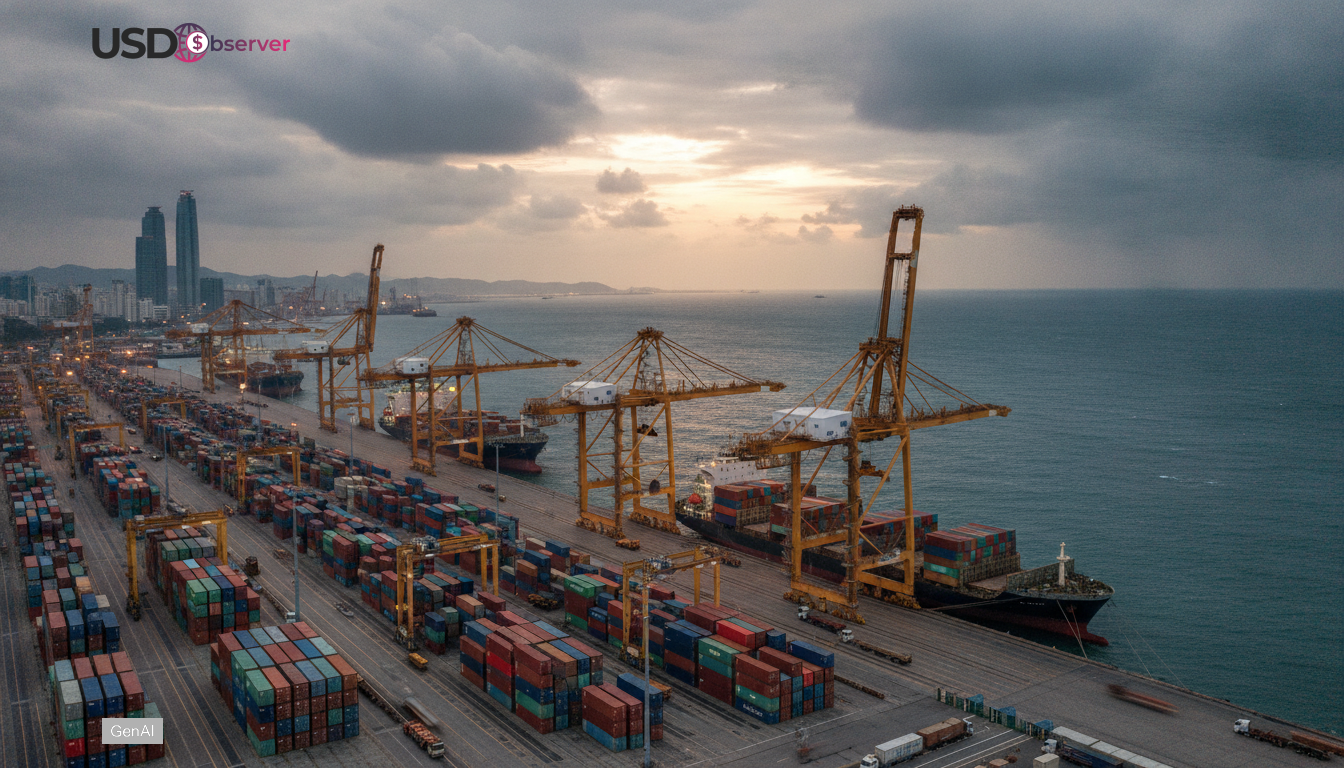
A strong U.S. dollar affects trade in multiple ways. When the dollar appreciates, it becomes more expensive for foreign buyers to purchase goods priced in dollars, such as oil, machinery, and agricultural commodities. This shift reduces global demand for U.S. goods and simultaneously raises the cost of dollar-denominated imports for other nations. Export-driven economies in Asia and Europe are finding it harder to maintain competitiveness as their currencies weaken against the dollar.
For developing nations, the challenge is even sharper. Many rely on exports of primary goods priced in dollars, such as copper, wheat, and crude oil. As their local currencies decline, import costs for fuel and machinery surge while export earnings fail to offset those increases. The result is shrinking trade surpluses or widening deficits. This dynamic pressures central banks to defend their currencies with limited reserves, often at the expense of domestic liquidity.
The IMF notes that global trade volumes have slowed since mid-2024, with several regions experiencing negative quarter-on-quarter growth. Supply chains are adjusting to geopolitical realignments, but currency distortions are adding friction to trade flows. Strong dollar cycles have historically correlated with global slowdowns, as seen in the early 1980s, 1997, and 2020. The present situation, the IMF warns, has similar features but with more interconnected debt and capital markets than ever before.
Debt Servicing and Capital Flow Pressures
Over 70 percent of global external debt is denominated in U.S. dollars. When the dollar strengthens, countries that borrow in dollars but earn in weaker local currencies face higher repayment costs. This mismatch can erode fiscal stability and reduce investment capacity. Governments that already allocate large shares of revenue to debt servicing must divert even more funds to meet obligations, leaving less for infrastructure, social spending, or development projects.
Corporates and banks are feeling similar pressure. For companies with foreign liabilities, the appreciation of the dollar raises costs and weakens balance sheets. Borrowing becomes more expensive, especially when investors demand higher risk premiums. If companies attempt to hedge through forward contracts, they face additional costs in thin or volatile currency markets. Smaller businesses, which lack access to hedging tools, are the first to feel liquidity strain when the local banking sector tightens credit.
Capital flows also react swiftly to dollar dynamics. As the Federal Reserve maintains relatively higher interest rates, global investors shift assets toward U.S. Treasury securities and money market instruments. This movement drains liquidity from emerging markets, pushing local yields higher and currencies lower. The IMF reports that over $90 billion in portfolio capital exited emerging economies during the last major bout of dollar strength. This outflow reduces the availability of funding for private investment and accelerates credit contraction.
The problem becomes cyclical. Weaker currencies force higher import prices, which feed inflation and require tighter domestic policy. The resulting slowdown curtails growth, erodes confidence, and triggers more capital flight. Without adequate reserves or access to international liquidity support, this feedback loop can quickly evolve into a balance-of-payments crisis.
Policy Dilemmas in a Dollar-Dominated System
For policymakers, a strong dollar creates a near-impossible balancing act. To defend their currency and prevent excessive depreciation, many central banks must raise interest rates even when domestic demand is weak. This measure supports the exchange rate but suppresses consumption, lending, and investment. Conversely, if they prioritize growth by lowering rates, they risk accelerating capital outflows and stoking inflation through higher import prices.
The IMF’s latest analysis suggests that countries with flexible exchange rates, credible monetary frameworks, and deep financial markets tend to manage these pressures better. However, economies with rigid pegs or weak policy credibility face larger adjustments. Fiscal discipline also matters. Highly indebted governments that depend on external financing are far more exposed to changes in global funding costs.
In this context, the IMF emphasizes that international coordination is essential. Expanded swap lines between central banks, regional financing arrangements, and multilateral support programs can help cushion the impact of dollar cycles. The institution has also encouraged countries to diversify trade invoicing and strengthen local-currency bond markets to reduce dollar dependence over the long term.
Global Growth Outlook Amid Currency Stress
If U.S. economic data continues to outperform, the dollar may remain elevated for most of the year. This scenario would likely keep global borrowing costs high and constrain trade recovery. The IMF estimates that a sustained 10 percent dollar appreciation can shave up to 0.4 percentage points off global GDP growth over the following year. For developing economies, the impact could be double that amount due to their heavier debt exposure and narrower fiscal capacity.
However, there are potential offsets. Declining inflation in the United States could allow the Federal Reserve to consider gradual rate reductions later in 2025, which might ease upward pressure on the dollar. Stronger growth in China and parts of Southeast Asia could also provide some relief by lifting trade volumes and stabilizing commodity demand. The IMF cautions, however, that these mitigating factors depend on confidence returning to global markets something that remains uncertain in the face of geopolitical risks and uneven recovery patterns.
In the meantime, many nations are reassessing reserve strategies. Some are increasing gold holdings or seeking to settle regional trade in local currencies to limit exposure to U.S. exchange rate fluctuations. Others are enhancing foreign exchange liquidity buffers through bilateral arrangements or access to multilateral credit lines. These efforts reflect a broader desire to achieve greater financial autonomy within a dollar-centric system.
Conclusion
The IMF’s warning about dollar strength in 2025 is not simply a forecast it is a reminder of the structural dependencies that define global finance. The dollar remains both a pillar of stability and a source of vulnerability. Its rise protects investors seeking safety but punishes economies carrying heavy foreign debt. It rewards capital inflows into U.S. assets while draining liquidity from countries that need it most.
As the year progresses, the balance between resilience and risk will depend on how policymakers respond. Economies that use reserves wisely, maintain fiscal discipline, and diversify funding sources stand a better chance of withstanding pressure. Those that rely solely on external support or repeated interventions may face tougher adjustments.
In the end, the IMF’s message is clear: global growth in 2025 will not be decided by domestic demand alone but by how the world manages the flow and cost of the U.S. dollar. The strength of one currency continues to shape the rhythm of the global economy and how nations adapt to it will determine the pace of recovery ahead.