Introduction
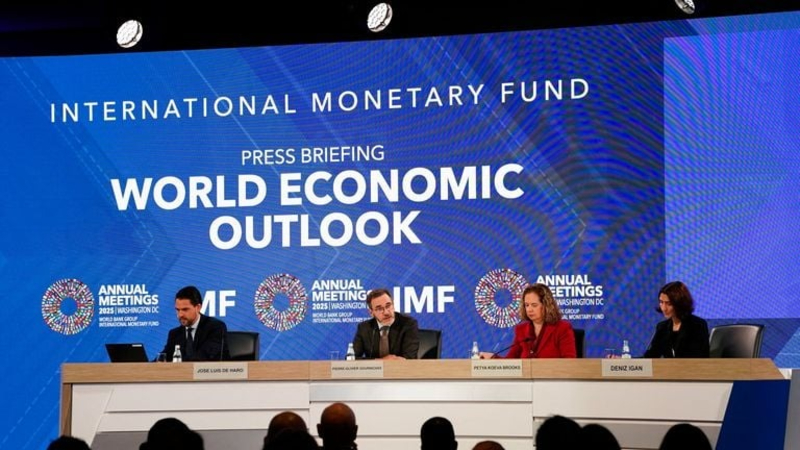
The International Monetary Fund has sounded a serious warning for global markets, cautioning that the risk of a disorderly correction is rising as asset prices stretch beyond what underlying fundamentals can justify. In its latest Global Financial Stability Report, the IMF highlighted that valuations in equities, bonds, and credit markets have reached levels increasingly disconnected from growth and earnings trends. It warned that overconfidence in central bank policy pivots, widening fiscal deficits, and a buildup of leverage across nonbank sectors have left markets vulnerable to sharp, simultaneous reversals. The tone of this warning is notably more urgent than in previous updates, signaling that policymakers are concerned about complacency in the face of mounting fragility.
For investors and policymakers alike, this warning hits at a critical time. Market participants have grown accustomed to low volatility and persistent liquidity, but that sense of stability may prove deceptive. A sudden change in sentiment could easily trigger a chain reaction across asset classes. For the U.S. dollar, which historically acts as the world’s safe-haven currency, the IMF’s caution places fresh focus on its dual role as both stabilizer and potential stress amplifier. How global capital reacts in the event of a correction could determine whether the dollar strengthens in flight-to-safety flows or weakens under systemic strain.
Overvaluation, Leverage, and Structural Vulnerabilities
The IMF’s concern begins with valuations that appear disconnected from economic fundamentals. Stock markets across major economies have surged to record highs, buoyed by enthusiasm around artificial intelligence, resilient corporate earnings, and expectations that central banks will soon begin easing monetary policy. Credit spreads have narrowed to levels last seen before the 2008 financial crisis, suggesting investors have grown too comfortable with risk. At the same time, speculative activity in areas such as private credit, real estate funds, and derivatives has increased, often financed by borrowed money. The Fund warns that these dynamics create the perfect conditions for an abrupt correction once market confidence falters.
Another structural concern lies in the shadow banking system, which includes hedge funds, insurance firms, and investment vehicles that operate outside traditional regulatory oversight. These institutions now play a much larger role in global credit markets, often using short-term funding to hold long-term or illiquid assets. Should interest rates rise unexpectedly or liquidity dry up, forced selling could spread losses through the broader financial system. The IMF’s analysis emphasizes that in an interconnected world, stress in one market can ripple across borders within hours. If investors rush simultaneously to secure dollar liquidity, the resulting surge in demand could destabilize exchange rates, credit conditions, and global trade flows.
The Dollar’s Dual Role in Market Corrections
Throughout history, the dollar has acted as both a refuge and a pressure point in times of financial stress. During periods of turmoil, global investors tend to flock to dollar-denominated assets such as U.S. Treasuries, seeking safety and liquidity. This pattern can initially strengthen the dollar, pushing other currencies lower and tightening global financial conditions. The IMF expects that in a disorderly correction scenario, this dynamic would likely reappear, at least in the early stages. As risk aversion rises, foreign investors often repatriate capital and unwind carry trades, fueling additional demand for dollars.
Yet the Fund also notes that the dollar’s dominance makes it uniquely exposed to feedback loops. If a correction were to spread into U.S. financial institutions or raise doubts about fiscal sustainability, confidence in dollar assets could falter. For example, a sharp drop in U.S. equities combined with funding stress could lead some investors to diversify into gold, the euro, or the Swiss franc. This tug-of-war between safe-haven inflows and domestic vulnerabilities defines the complexity of the dollar’s role. While history favors dollar strength during crises, the scale and speed of today’s financial markets could produce more volatile and less predictable outcomes than in previous cycles.
Policy Signals and Risk Management
The IMF’s warning comes with clear policy recommendations. It urges central banks to resist political and market pressure for premature easing, arguing that cutting rates too soon could reignite inflationary pressures and weaken financial resilience. Policymakers are advised to focus instead on maintaining clear communication and tightening oversight of nonbank financial institutions. The Fund stresses that regulators should address hidden leverage and improve transparency in derivatives exposures, as these remain key transmission channels for financial contagion. Strengthening liquidity buffers and refining macroprudential tools could help prevent localized problems from spreading globally.
For investors, the message is one of vigilance and preparation. Portfolio managers are encouraged to reassess assumptions about market stability and correlations that have held for much of the past decade. Hedging against extreme tail risks, maintaining higher cash buffers, and diversifying exposures across asset classes are all recommended strategies. The IMF also advises monitoring key indicators such as volatility indexes, credit-default-swap spreads, and dollar funding costs. Sudden spikes in these metrics often precede broader instability. The ability to respond quickly to changing conditions may determine who avoids losses when markets correct.
Conclusion
The IMF’s warning about a potential disorderly correction is more than just a technical concern; it is a reflection of the mounting imbalance between investor optimism and underlying reality. Years of abundant liquidity, fiscal stimulus, and market complacency have pushed valuations higher than fundamentals can sustain. If this environment begins to unwind, the consequences could ripple across borders and asset classes with unprecedented speed.
For the U.S. dollar, the coming period will test its role as both guardian and gauge of global stability. In the initial phase of a market downturn, the dollar is likely to strengthen as investors seek safety. But if volatility spreads into U.S. credit or funding markets, even the world’s reserve currency may face challenges. For now, the IMF’s warning stands as a reminder that risk never truly disappears it merely shifts locations. For USD Observer readers, the task ahead is clear: stay informed, watch the data, and understand that in the next correction, the dollar’s reaction will reveal much about the health of the global financial system itself.