By Dominic Frisby | Financial Writer
Introduction
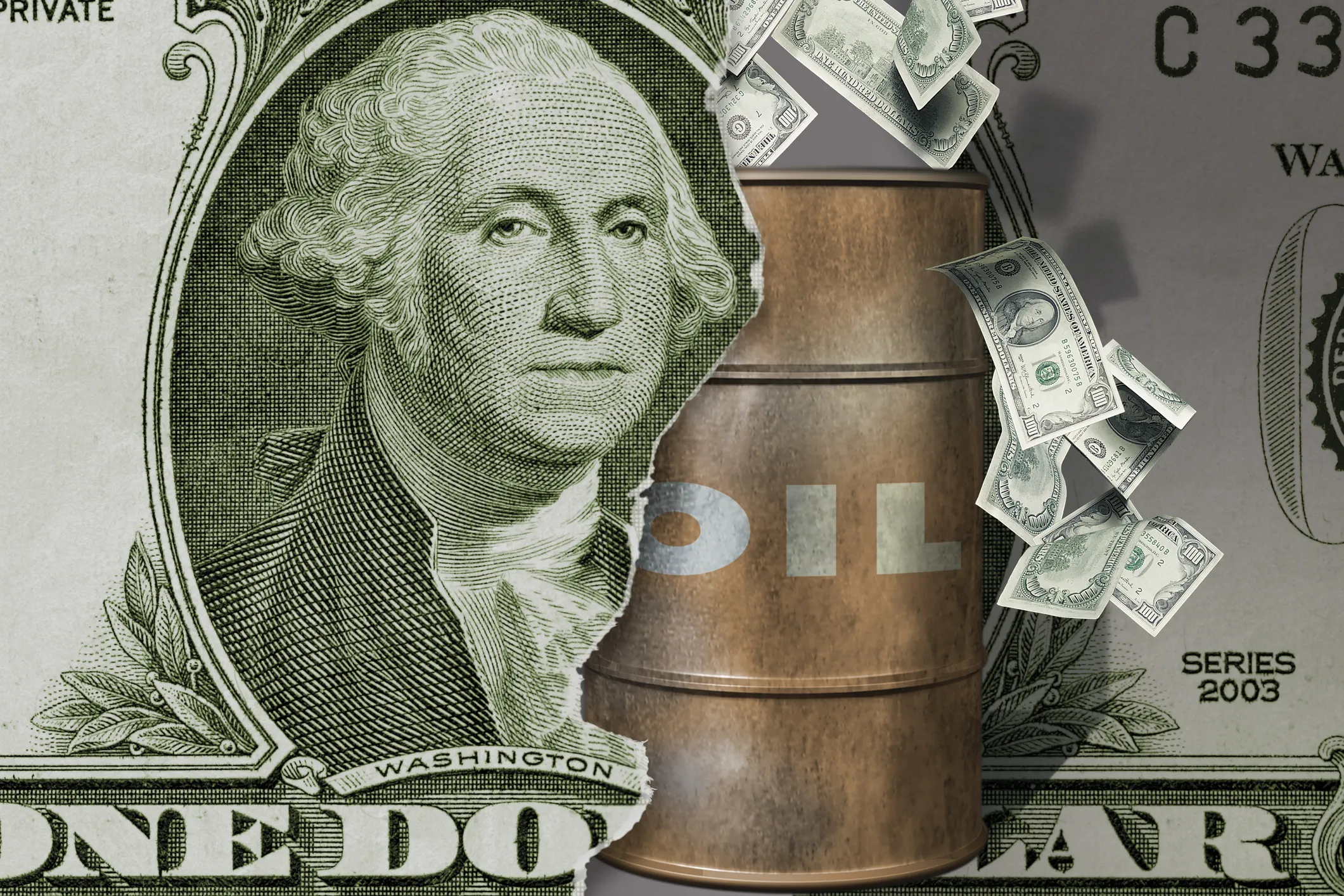
For decades, the “petrodollar system” has been a cornerstone of U.S. financial dominance. Since the 1970s, global oil trade has been priced and settled in dollars, ensuring structural demand for the greenback. Revenues from crude sales were recycled into U.S. Treasuries, reinforcing dollar liquidity and helping finance America’s deficits. Today, however, this system is undergoing a transformation. With OPEC+ exploring diversified settlement currencies, U.S. shale reshaping supply, and renewable energy altering long-term demand, analysts debate whether petrodollar flows are weakening. Yet in practice, the dollar remains deeply embedded in global energy trade. The emerging “Petrodollar 2.0” is less about abandonment and more about adaptation — with oil exporters recycling revenue differently, but still tethered to dollar markets.
Energy Trade Still Dollar-Denominated
Despite experiments with yuan, euros, or barter arrangements, the overwhelming majority of oil transactions remain dollar-based. In 2023, more than 80% of global crude trade was invoiced in USD. Even China, the largest importer, settles most of its purchases in dollars due to liquidity, transparency, and hedging needs. Petrodollar flows, therefore, continue to provide the greenback with structural support, even if the geopolitical rhetoric suggests alternatives.
MoM and YoY Data in Oil & FX
- Oil Prices: Brent crude averaged $85/bbl in 2023, down from $110 in 2022, cutting exporter revenues by nearly 20% YoY.
- Dollar Impact: Lower MoM oil receipts translated into reduced FX reserves accumulation in Saudi Arabia and the UAE, trimming their purchases of U.S. Treasuries.
- U.S. Balance of Payments: Shale exports surged 15% YoY in 2024, offsetting some external deficits and reinforcing dollar flows.
These MoM and YoY figures illustrate that while energy markets are shifting, dollar linkages remain firm.
External Pressures Reshaping Petrodollar Flows
- Climate Transition: The rise of renewable energy and EV adoption is projected to cut oil demand growth after 2030. This alters long-term petrodollar recycling but, for now, supports short-term surpluses reinvested in sovereign wealth funds.
- Geopolitics: Sanctions on Russia forced rerouted flows, but most crude still clears in dollars, as intermediaries hedge via USD liquidity.
- Crime & Governance: Corruption scandals in producer states often accelerate capital flight into dollar-denominated safe assets, ironically reinforcing USD demand.
Lessons for Traders
Petrodollar flows remain a critical driver of medium-term FX dynamics. Oil price cycles influence not only commodity currencies but also demand for Treasuries, shaping the dollar’s liquidity premium. Traders should watch MoM oil export receipts and YoY Treasury purchases by key exporters to gauge potential shifts. Even in a world of diversification rhetoric, the dollar’s liquidity advantage ensures its anchor role in energy finance.
Takeaway
The narrative of “de-dollarization” in energy trade is overstated. While Petrodollar 2.0 reflects diversification in sovereign wealth management and exploration of non-dollar settlements, the structural dominance of the greenback in energy trade persists. Oil exporters still channel surpluses into U.S. assets, directly or indirectly. For traders, the lesson is clear: until another currency matches the dollar’s liquidity, trust, and hedging infrastructure, the petrodollar system — in its adapted form — will continue to underpin global dollar demand.