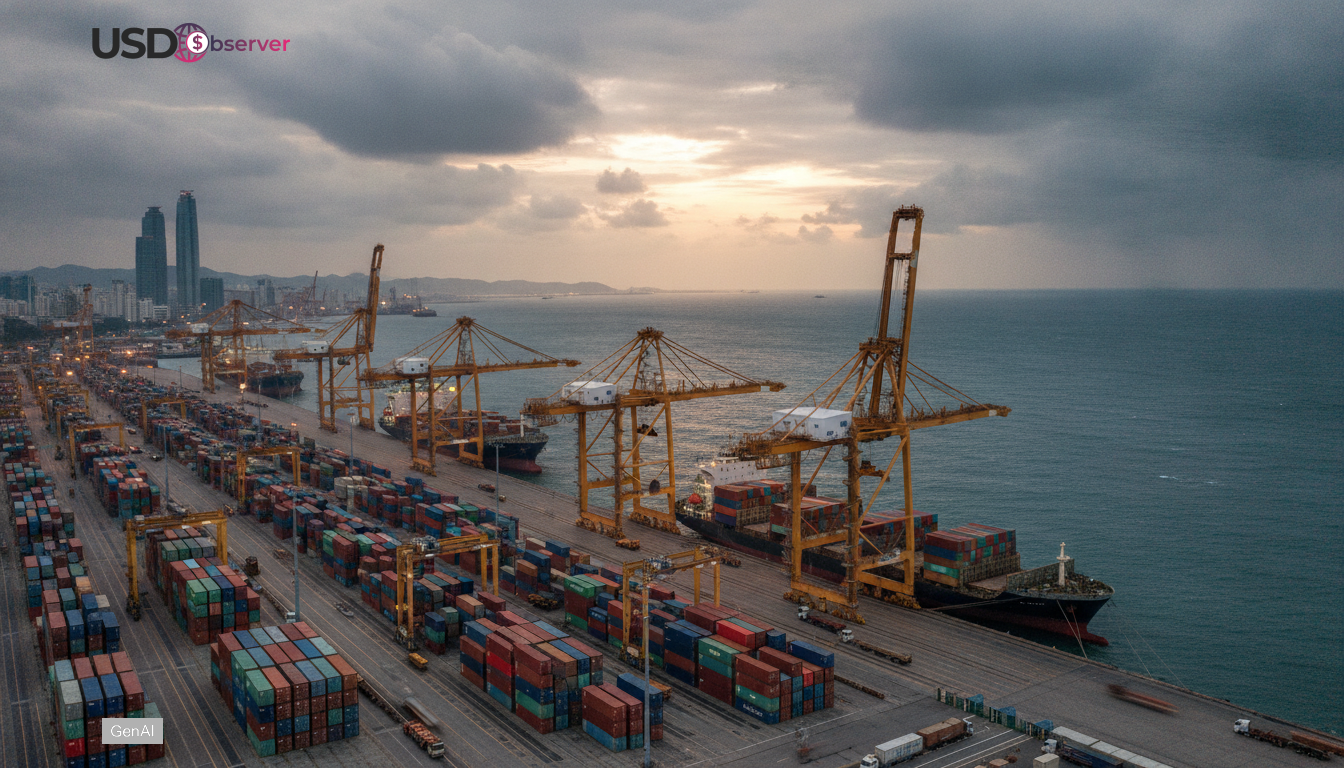
Wars, sanctions, and political shocks priced directly into the dollar’s safe-haven premium.
By Gabriele La Spada | Economist, Federal Reserve Bank of New York
The U.S. dollar’s role as the world’s reserve currency ensures that it is more than just a reflection of interest-rate policy and economic data. Geopolitical shocks — from wars to sanctions to trade disputes — frequently generate a “risk premium” in the dollar, shaping its trajectory independently of macro fundamentals.
Safe-Haven in Global Crises
In nearly every major geopolitical crisis of the last two decades, the dollar has rallied as investors sought safety. During the European debt crisis of 2011–12, the dollar rose even as U.S. fiscal debates created domestic uncertainty. The pattern repeated in 2014, when tensions in Ukraine and sanctions against Russia drove capital flows into U.S. assets.
The 2022 Russian invasion of Ukraine reinforced this role. The dollar strengthened sharply against both major and emerging-market currencies as investors scrambled for safe-haven assets. U.S. Treasuries and the dollar itself served as the primary outlets for capital fleeing geopolitical instability.
Sanctions and Financial Fragmentation
At the same time, the U.S. government’s use of financial sanctions has added a new layer to the dollar’s geopolitical premium. Sanctions on Russia’s central bank reserves and restricted access to SWIFT underscored the dollar’s centrality in global finance — but also spurred some countries to accelerate diversification efforts.
This dual effect means the dollar can rally in the short term as sanctions highlight its dominance, while long-term debates emerge over whether excessive weaponization of finance could gradually erode its reserve status.
Trade Wars and Risk Sentiment
The U.S.-China trade tensions of 2018–19 provide another case study. As tariffs escalated, global risk appetite declined, and the dollar benefited despite concerns over U.S. supply chains and export competitiveness. The episode illustrated how the greenback often strengthens in periods of uncertainty, regardless of whether the underlying event is U.S.-centric or global in nature.
Current Landscape
As of late 2024, geopolitical risks remain elevated. Conflicts in Eastern Europe and the Middle East, alongside tensions in the South China Sea, continue to weigh on markets. Each flare-up prompts renewed demand for dollars, reinforcing the currency’s safe-haven premium.
Yet structural questions linger. Central banks in Asia and the Middle East are gradually diversifying reserves into gold and alternative currencies. Still, the scale of dollar-denominated trade and the depth of U.S. financial markets mean alternatives remain limited.
Implications for Traders
For forex traders, the key is to recognize that geopolitics often overrides conventional macro drivers. A strong labor market or inflation data may set short-term trends, but sudden geopolitical escalations can rapidly shift flows into the dollar.
Monitoring geopolitical calendars — elections, sanctions decisions, or diplomatic flashpoints — has become as essential as tracking economic releases.
The bottom line: the dollar’s risk premium is alive and well. Until there is a credible alternative that can match the liquidity and security of U.S. assets, geopolitical stress will continue to translate into dollar strength.