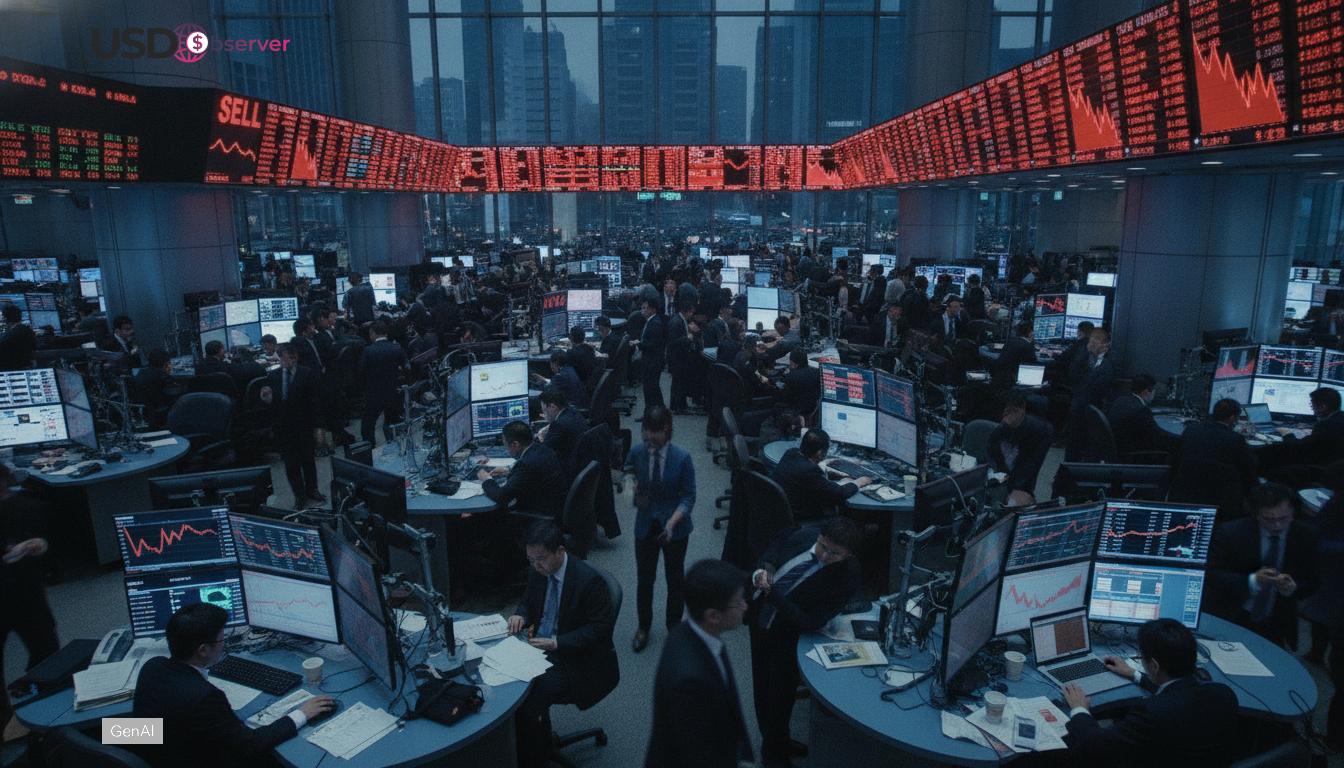
Asian stock markets slide as tech shares retreat
According to available reports, markets opened lower as a risk-off mood spread through tech-heavy benchmarks across Asian stock markets. In early dealing, market participants pointed to possible profit-taking after a strong run in megacap chip and platform names, while positioning appeared sensitive to rate expectations and upcoming earnings guidance. Early moves broadly followed weaker cues from US tech futures, which can prompt a shift toward cash and defensive sectors. Some market commentary also suggested liquidity was thin and that the decline may have quickened after widely watched technical levels gave way, potentially drawing in systematic or algorithmic selling. By mid-session, volatility looked higher in high-beta names and leadership narrowed, leaving the region cautious ahead of the next macro catalyst.
South Korea and the Kospi drive regional risk tone
As indicated by market commentary, South Korea remained a focal point because semiconductors carry heavy index weight and often influence regional risk sentiment. The Korean market weakened as large chipmakers fell, a move that investors attributed to softer confidence around memory pricing expectations and a more selective view on AI-related capex. For context on how funding conditions can shift risk appetite, some traders also monitored https://tethernews.com/stablecoin-boom-risks-flagged-by-global-banking-watchdog/ while noting how that tech-led pressure also fed back into Asian stock markets as investors adjusted hedges via index futures and options, according to market participants. Currency desks also watched the won for signs that offshore positioning was turning more cautious and whether the move could spill into broader EM FX trades, reportedly according to market watchers in Seoul.
Regional performance splits across Asia
Across Asia, performance was uneven as investors differentiated between tech-heavy exchanges and markets with more value, commodity, and domestic-demand exposure. Japan and Taiwan tracked the semiconductor tape closely, while some Southeast Asian bourses appeared steadier on local consumption narratives, according to market commentary. For a related view on liquidity and FX market plumbing, some desks referenced Stablecoin USD shifts reshape crypto and forex liquidity when discussing short-term funding and hedging demand, as cross-asset correlations also mattered, with bond yields and energy prices often mentioned as secondary inputs into intraday rotations. Broader Asian stock markets remained sensitive to changes in US rate expectations, which can alter discount rates for growth stocks.
How investors hedged the drawdown
Portfolio managers generally appeared to trim crowded exposures and increase hedges rather than make wholesale strategic shifts, as indicated by market participants. Brokers said client flows favored quality balance sheets, near-term cash flows, and dividend support, while caution stayed elevated for richly valued growth. Some also cited Middle East conflict: rates, oil, and inflation outlook as a reason to rebuild protection as volatility rose, and investors tied the mood to uncertainty around global rates and geopolitics, themes that can tighten financial conditions quickly. For headline risk affecting individual sectors, traders also tracked Chinese tycoon sentenced to 30 years in US jail. The dominant behavior described by market participants was de-risking while waiting for clearer earnings signals.
Near-term outlook for Asian stock markets
Next moves may hinge on whether chip and software leaders can stabilize and whether upcoming guidance supports current valuation ranges across Asian stock markets. Strategists indicated that a faster rebound would typically require calmer US tech trading and evidence that demand for key components remains resilient, particularly in memory and advanced packaging. Regional equities may stay highly reactive to central bank messaging and inflation prints that influence discount rates and risk premia. Traders said they would watch for follow-through in futures, sector-rotation data, and market breadth before adding risk. In the near term, market participants noted that rallies could meet supply until participation improves, while defensives and higher-dividend names may remain relative safe harbors.