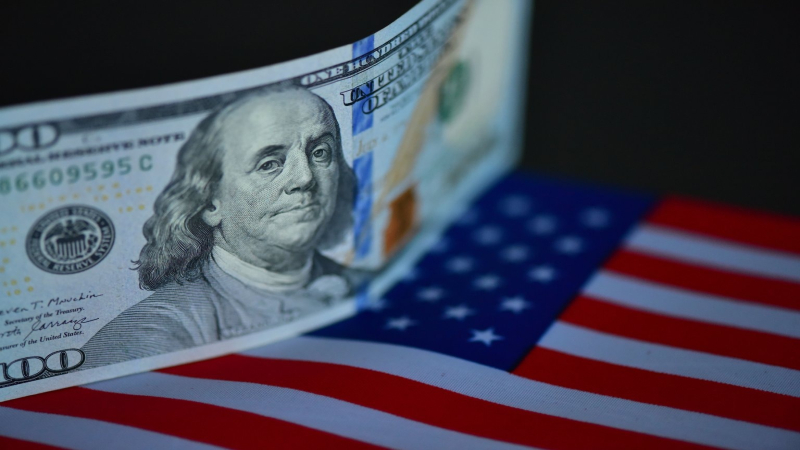
As 2025 comes to an end, financial markets have increasingly shifted their focus toward monetary easing in 2026. Rate cut expectations have become a central theme across FX and bond markets, leading many participants to anticipate a softer US dollar. Historically, such transitions have often weakened the currency, especially when policy cycles turn.
Yet the dollar has remained resilient. Instead of declining, it has held firm across major pairs, reflecting forces that extend beyond rate forecasts. This outcome highlights how the USD is now shaped by structural demand, fiscal dynamics, and global risk behavior rather than policy expectations alone.
Structural Demand Is Outweighing Rate Expectations
The most important driver behind the dollar’s strength is persistent structural demand. The US remains the core of the global financial system, offering unmatched liquidity, legal clarity, and market depth. These qualities attract capital even when growth moderates and interest rate differentials narrow.
Global trade invoicing, debt issuance, and financial settlement continue to rely heavily on the dollar. Corporations and sovereign borrowers require dollar liquidity to service obligations, creating ongoing demand that does not fade simply because rate cuts are expected. This baseline demand reduces the currency’s sensitivity to forward guidance.
Year-end portfolio adjustments further reinforce this pattern. As institutions rebalance and prioritize liquidity, exposure to dollar assets often increases. These flows can counter speculative selling and keep the USD supported during periods when sentiment might suggest weakness.
Fiscal Expansion Is Reinforcing Dollar Liquidity
US fiscal dynamics have quietly contributed to dollar stability. Increased government borrowing has expanded the supply of Treasury securities, which remain the most liquid and widely held safe assets globally. While higher deficits raise long-term considerations, they also deepen the dollar-based financial ecosystem in the short term.
Foreign participation in Treasury markets brings associated currency hedging activity. These hedges generate consistent demand in forward and swap markets, supporting the dollar independently of spot price movements. This mechanism helps explain why the USD can stay firm even as yields ease.
Rather than undermining confidence immediately, fiscal expansion has strengthened the dollar’s functional role. As long as US debt markets remain liquid and accessible, this dynamic continues to underpin demand.
Funding Markets Are Driving the Signal Beneath the Surface
Spot FX often fails to capture the full picture. Dollar funding markets, including cross-currency swaps and offshore lending, exert significant influence on currency behavior. In late 2025, these markets reflected steady demand for dollar funding across regions.
Banks, corporates, and governments continue to rely on dollar liquidity to refinance debt and manage cash flows. This functional dependence creates structural demand that persists regardless of speculative positioning. When funding conditions tighten even slightly, they reinforce the dollar’s central role.
Because these forces operate beneath headline narratives, they are frequently underestimated. However, they play a critical role in explaining why the dollar has resisted downside pressure.
Global Risk Allocation Still Favors the Dollar
Global risk conditions remain uneven. While inflation has moderated, concerns around geopolitics, debt sustainability, and uneven growth continue to influence capital allocation. In such an environment, investors favor assets that offer liquidity and institutional stability.
The dollar benefits from this preference without requiring a full risk-off event. Even moderate uncertainty can shift flows toward USD assets, particularly when alternatives lack comparable depth. This defensive quality has become a defining feature of recent cycles.
As long as global risks remain asymmetric, the dollar’s role as a default anchor continues to support demand.
Final Outlook for the Dollar Heading Into 2026
The dollar’s year-end resilience suggests that 2026 will not be driven solely by rate cuts. Structural demand, fiscal mechanics, funding conditions, and risk allocation are likely to play a greater role in shaping currency outcomes than headline policy expectations.
For traders and analysts, the key takeaway is to look beyond the rate narrative. The USD is increasingly behaving as a system currency rather than a policy trade, and understanding that shift will be essential for navigating FX markets in the year ahead.