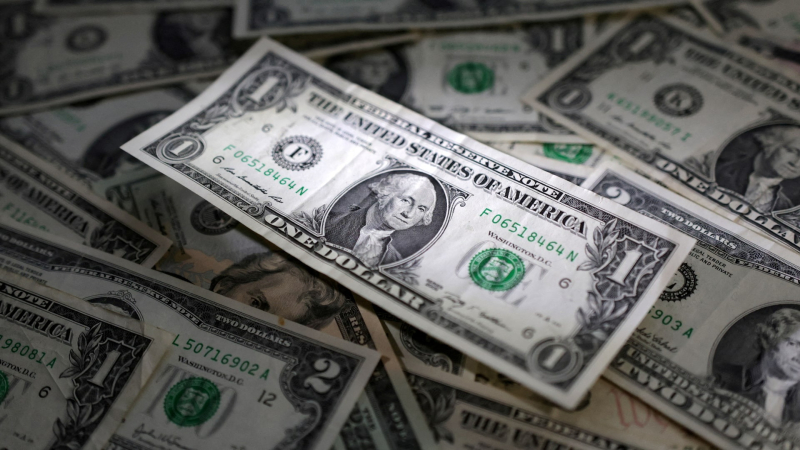
The U.S. dollar has resumed its downward trend after a period of relative stability, reviving debate over whether Washington is prepared to move beyond rhetoric in addressing long-standing concerns about currency overvaluation. Early-year calm in foreign exchange markets had led many investors to believe the dollar’s sharp decline in early 2025 had run its course, supported by firm U.S. growth and resilient asset markets. That assumption has been challenged in recent sessions as currency movements across Asia and Europe have accelerated. Renewed pressure on the Japanese yen, coupled with diplomatic engagement between Tokyo and Washington, has reignited speculation that U.S. authorities may tolerate or even encourage further dollar weakness as part of a broader trade and industrial reset. Even absent confirmed intervention, market sensitivity to official signals has increased markedly.
Currency moves have broadened well beyond Japan, with rebounds in the South Korean won and notable strength in the Chinese yuan and Australian dollar, both reaching multi-year highs. In Europe, the euro has climbed to levels not seen in nearly five years, while the Swiss franc has touched decade peaks. These shifts have pushed the dollar index to its weakest point since early 2022, extending a correction that began last year. Despite this decline, measures of the dollar’s real effective exchange rate suggest only a partial reversal of the long appreciation cycle that dominated the previous decade. The scale and speed of recent moves underscore how quickly sentiment can change in global currency markets, particularly when policy intentions are perceived as ambiguous or politically influenced.
Attention has increasingly turned to the possibility that a weaker dollar could be viewed within Washington as a tool to address persistent trade imbalances. Advisers close to the administration have previously argued that tariffs and exchange rate competitiveness should work in tandem to support domestic industry. However, translating that view into practice carries substantial risk. Global foreign exchange markets process trillions of dollars in daily turnover, making them highly responsive but difficult to steer without unintended consequences. Any perception of coordinated efforts to weaken the dollar could provoke defensive responses from trading partners, particularly in Europe and Asia, where stronger currencies may conflict with domestic economic priorities and fragile growth conditions.
The most significant concern surrounding sustained dollar weakness lies in its implications for global capital flows and financial stability. Foreign ownership of U.S. assets has expanded to unprecedented levels, leaving international investors heavily exposed to currency swings. A sharp depreciation could erode returns on U.S. stocks and bonds, potentially unsettling portfolios that have benefited from years of dollar strength. Such dynamics would complicate the policy calculus for the Federal Reserve, which is already balancing inflation risks linked to trade policy with pressure to ease monetary conditions. Against this backdrop, renewed dollar softness may support certain trade objectives but also heighten volatility across asset classes, reinforcing the appeal of hedges such as gold amid growing geopolitical and financial uncertainty.