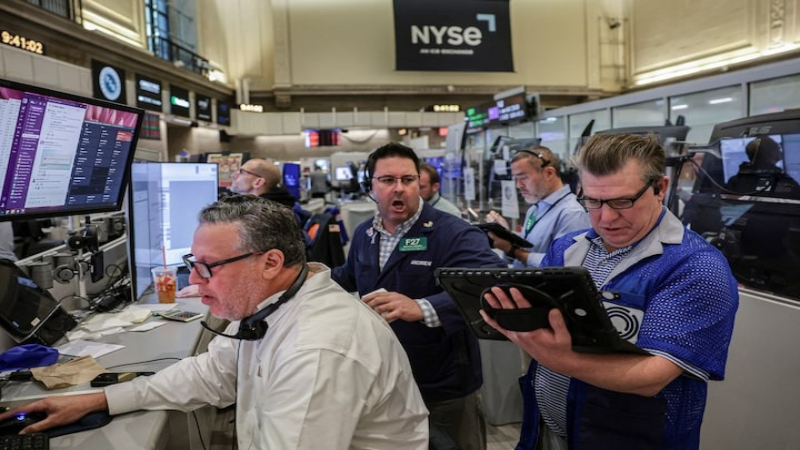
U.S. equities regained momentum on Friday as traders took advantage of earlier declines, stepping in to buy stocks that had led the recent pullback despite diminishing hopes for a Federal Reserve rate cut next month. The rebound followed a weak session across Asia and Europe, where concerns over higher global yields and fading policy support pressured major benchmarks. Investors in the United States appeared more willing to look past hawkish remarks from Federal Reserve officials, interpreting the broad decline earlier in the week as an opportunity to reenter positions in technology and growth names. Rising Treasury yields reflected both resilience in parts of the domestic economy and recalibrated expectations for December, which now show a reduced probability of further easing. The recalibration comes after more than a month without standard economic data due to the prolonged government shutdown, leaving markets reliant on commentary rather than confirmed indicators as they position for year end.
The shift in sentiment was visible as the Nasdaq and S&P 500 reversed early losses, supported by renewed strength in several large technology stocks. Dip buying remained a dominant behavior, fueled by a belief that high performing sectors tend to regain traction once selling pressure stabilizes. Traders cited the strong rally from April lows as a factor behind the instinct to accumulate shares after declines, with Nvidia and other major AI-linked companies serving as key drivers of the broader recovery. Market participants are closely watching upcoming earnings from Nvidia and major retailers, which are expected to provide fresh insight into consumer demand and the durability of the AI investment cycle. The rebound in U.S. equities contrasted sharply with declines in Asian markets, where weaker Chinese data and rising bond yields pushed indexes into deeper losses, reflecting a more cautious global backdrop.
Treasury markets also experienced renewed movement as yields climbed, interrupting earlier declines triggered by investors rotating into safer assets during Thursday’s volatility. The increase in yields aligned with remarks from policymakers signaling unease about inflation pressures and skepticism over the timing of future cuts. Despite the uncertain environment, bond traders appear to be adjusting to the likelihood that upcoming data releases may not offer the clarity markets are accustomed to, given the prolonged lapse in official reporting. Rising U.S. yields also influenced global currency flows, with the dollar edging higher against the Swiss franc and euro, while gaining modestly as investors reassessed risk appetite. The movement in currencies highlighted the interconnected nature of rate expectations and global capital positioning, particularly as foreign markets contend with their own policy-driven volatility.
Commodities traded with notable cross-currents as gold retreated sharply on the back of rising yields, while crude oil prices rose after supply concerns resurfaced following the temporary halt of exports from a major Russian port. Bitcoin extended its decline amid broader risk aversion, contrasting with a modest rise in ethereum. Across Europe, major indexes closed lower as uncertainty surrounding the United Kingdom’s budget added another layer of stress for markets already dealing with shifting monetary expectations. The divergence in performance underscored the extent to which U.S. equities remain more resilient than their global counterparts, supported by liquidity, strong corporate earnings expectations, and a persistent bias toward buying dips. As traders look ahead to the release of delayed U.S. economic data, positioning is likely to remain sensitive to any signals that reset expectations around inflation, growth and the Federal Reserve’s path into early 2026.