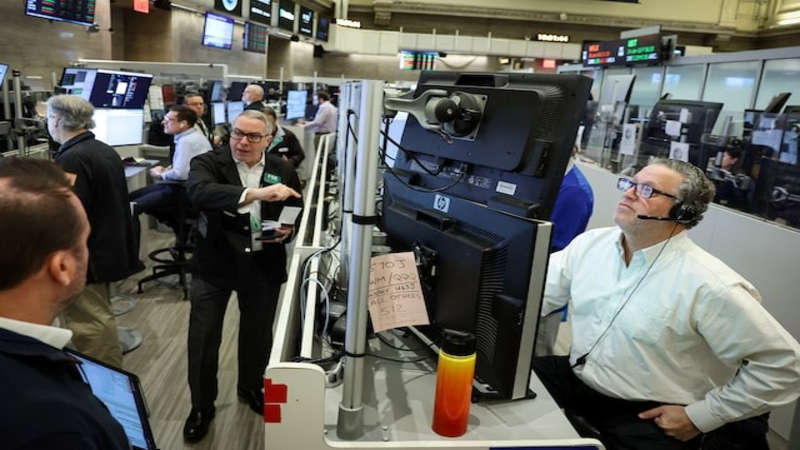
Wall Street opened the session with a noticeably calmer tone as investors stepped back from aggressive positioning following two days of strong gains. Major indexes struggled to find direction, reflecting a market that remains confident but increasingly selective. The Dow drifted lower while the S&P 500 hovered near record territory and the Nasdaq edged higher, supported by residual interest in technology-linked names. The shift in mood was driven less by earnings or corporate developments and more by a reassessment of macro signals that had previously fueled optimism. With equity benchmarks already priced for strength, traders appeared unwilling to extend the rally without fresh confirmation that economic momentum remains intact. The pause suggested markets are transitioning from momentum-driven buying toward a more data-dependent phase.
Labor data played a central role in shaping sentiment, particularly reports indicating softer-than-expected private payroll growth and a sharper decline in job openings. While not signaling outright weakness, the numbers introduced enough uncertainty to slow risk-taking. Investors interpreted the data as reinforcing the view that economic growth is cooling gradually rather than stalling, a scenario that complicates expectations for policy easing. The upcoming nonfarm payrolls report has taken on added significance, with markets reluctant to commit capital ahead of a clearer signal on employment conditions. This caution highlights how sensitive asset prices have become to labor indicators as traders recalibrate assumptions about interest rates, liquidity conditions, and the durability of the expansion.
Sector-level moves reinforced the theme of consolidation rather than rotation. Healthcare stocks continued to attract inflows, pushing the sector to fresh highs as defensive growth remained in favor. In contrast, materials and memory-chip related names retreated after sharp advances, reflecting profit-taking rather than a shift in fundamentals. Technology enthusiasm linked to artificial intelligence showed signs of cooling, not collapsing, as investors reassessed valuations after a rapid run-up. Market breadth leaned negative, with declining stocks outnumbering advancers, underscoring that gains are becoming more concentrated. The internal dynamics suggested that while headline indexes remain resilient, participation is narrowing as traders focus on balance sheet strength and earnings visibility.
Broader macro considerations also lingered in the background, adding to the cautious tone. Geopolitical developments tied to energy flows and policy signals out of Washington continued to inject uncertainty into global markets. Despite these factors, equities remain well supported by strong starts to the year and lingering confidence in economic resilience. The current pause appears less like a reversal and more like a reassessment, as investors weigh whether early-year strength can persist without clearer confirmation from data. Markets are signaling patience, with liquidity still present but increasingly disciplined as participants wait for validation before extending risk exposure.