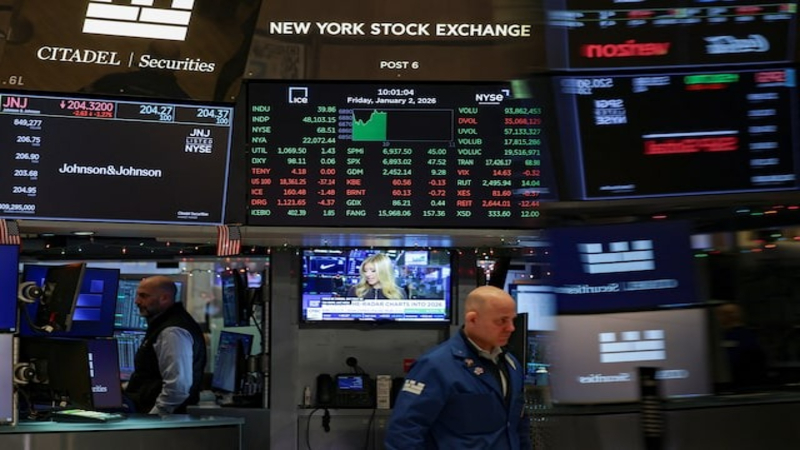
U.S. equity markets opened higher as investors rotated back into technology shares while energy stocks rallied in response to heightened geopolitical tension in Venezuela. Early gains reflected a market tone that remains constructive despite elevated political risk, with traders framing recent events as sector specific rather than systemic. Buying interest returned to large cap technology names after recent softness, helping lift broader indexes at the opening bell. At the same time, oil related equities drew fresh inflows as expectations rose for tighter geopolitical control over future Venezuelan energy assets. The response suggested that investors continue to differentiate between localized political shocks and events capable of materially altering global growth or liquidity conditions. While volatility picked up modestly in select sectors, overall market breadth pointed to confidence that near term earnings momentum and rate expectations remain the dominant drivers of positioning rather than headline risk alone.
Energy stocks outperformed early in the session as traders reassessed the long term implications of U.S. intervention in Venezuela’s oil sector. Although Venezuela currently represents a small share of global crude supply, the prospect of future production recovery under U.S. aligned governance has altered risk perceptions across the energy complex. Shares of major oil producers and service firms rose as investors priced in optionality tied to potential infrastructure investment and access to reserves over time. This rotation occurred even as crude prices themselves moved only modestly, underscoring that equity markets are reacting more to strategic implications than immediate supply disruption. The divergence between energy equities and spot oil pricing highlights a familiar pattern where markets discount execution risk while selectively rewarding sectors seen as beneficiaries of policy driven shifts. For now, energy is being treated as a geopolitical hedge rather than a pure commodity trade.
Broader equity sentiment was supported by a rebound in technology stocks, which had recently lagged amid profit taking and positioning adjustments at the start of the year. Investors appeared willing to reengage with growth assets as the Venezuela episode failed to trigger a broad risk off move. This reinforces the view that markets remain anchored to expectations around interest rates, earnings resilience, and capital flows rather than reacting reflexively to geopolitical developments. Defensive assets saw limited inflows, and there was no material disruption in funding markets, signaling confidence that spillover risks remain contained. The calm response also reflects growing familiarity with abrupt policy actions under the current U.S. administration, where sharp announcements are increasingly met with selective sector rotation instead of indiscriminate selling. In this environment, volatility tends to cluster around specific industries rather than spreading across asset classes.
Still, the episode serves as an early reminder that 2026 may test investor assumptions around geopolitical normalization. While markets have thus far absorbed the Venezuela shock without stress, the durability of this confidence remains an open question should similar actions occur elsewhere. For now, U.S. equities continue to trade as though geopolitical risk is a background condition rather than a primary catalyst. That framing favors active allocation over defensive positioning, rewarding investors who can identify second order effects rather than headline reactions. The opening tone on Wall Street suggests that risk appetite remains intact, but it also highlights how quickly markets can grow comfortable with extraordinary developments when liquidity is ample and macro conditions are stable.