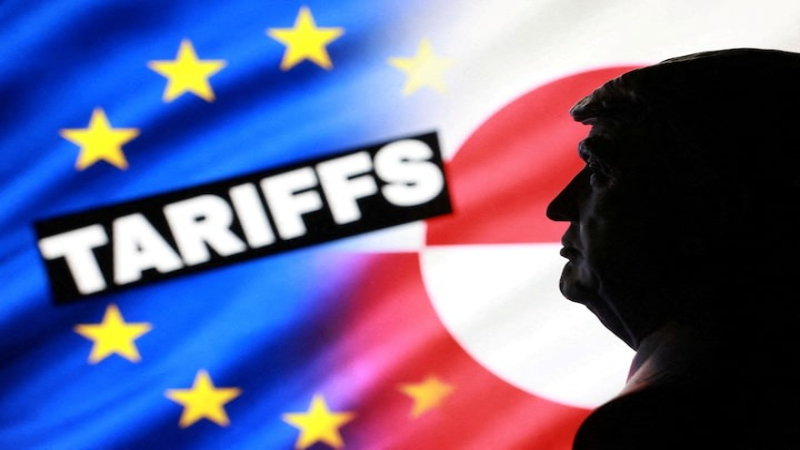
Financial markets experienced a sharp rise in volatility as renewed tariff threats unsettled investor confidence and triggered a broad reassessment of risk. Equity markets, long-dated U.S. Treasuries, and the dollar all came under pressure as investors reacted to the prospect of escalating trade tensions between the United States and Europe. Measures of market stress moved higher after weeks of relative calm, reflecting how quickly sentiment can shift when policy uncertainty reenters the picture. The move was driven less by immediate economic data and more by concern that trade disputes could undermine growth, disrupt capital flows, and complicate monetary policy expectations. As risk appetite faded, investors rotated toward defensive positioning, highlighting the fragile balance that has supported asset prices in recent months.
Equity volatility gauges climbed to their highest levels in weeks, signaling rising demand for protection against further downside. While the increase did not yet indicate extreme stress, it marked a meaningful change in tone following a period of subdued market movement. Analysts noted that the reaction was consistent with past episodes of geopolitical or trade-related uncertainty, where investors reduce exposure to equities and reassess portfolio risk. At the same time, the selloff across multiple asset classes suggested that markets were responding to a broader macro signal rather than a single isolated event. The repricing underscored how sensitive valuations remain to policy-driven shocks, particularly when they carry implications for global trade and fiscal stability.
Currency markets also reflected the shift in sentiment as the dollar weakened against major peers, reversing its recent safe-haven appeal. Despite the pickup in volatility, expectations for sustained turbulence remain relatively muted by historical standards, leaving room for further movement should uncertainty persist. Analysts pointed out that prolonged calm earlier in the year may have amplified the perceived severity of recent moves, even as overall conditions remain far from crisis levels. Still, the episode serves as a reminder that markets are increasingly reactive to political developments that threaten established trade relationships. With investors awaiting clarity on tariffs, economic data, and central bank signals, volatility is likely to remain elevated as markets navigate a landscape shaped as much by policy risk as by fundamentals.