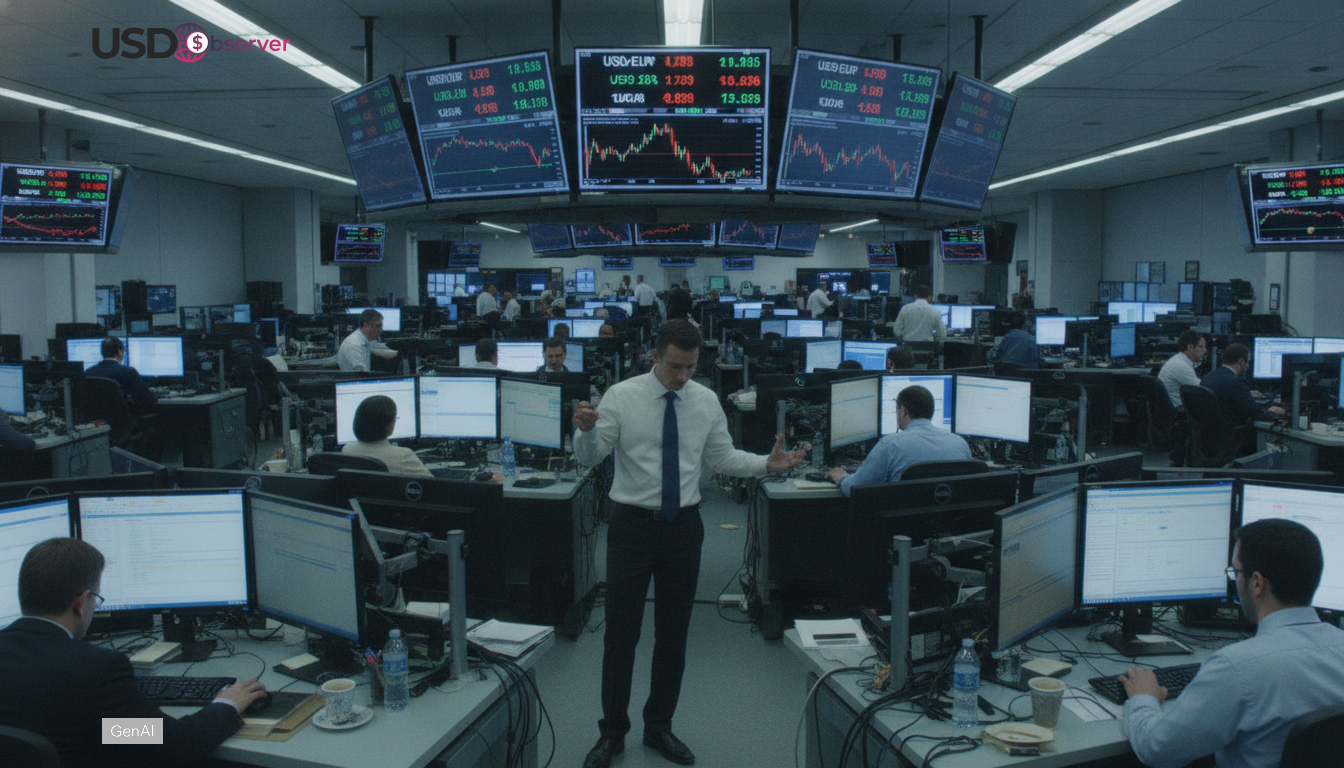
USD Strength and 2026 Forex Market Setup
USD strength in 2026 is shaping how traders price major currency pairs because rate differentials and risk positioning can dominate day-to-day flows. In 2024 and 2025, repeated repricing of Federal Reserve expectations kept front-end rates volatile, and that sensitivity can carry into 2026, shaping USD strength across liquidity windows. Intraday reversals are often treated by market participants as signals about funding conditions and hedging demand rather than random noise. When liquidity thins and volatility rises, the dollar index often reacts quickly as collateral demand reportedly increases. Many desks track real-time spreads in swaps, futures, and options skews to gauge whether the next move is driven by growth risk or policy expectations.
Key Drivers of USD Strength in 2026
Policy risk is not limited to central banks. According to reports from the BBC, a UK zero-hours crackdown could cost firms up to £2.9bn a year, and that estimate might influence hiring plans and GBP sensitivity to growth headlines, potentially supporting the US dollar during risk-off periods. It can also include labor market rules and compliance changes that alter corporate costs and growth expectations, alongside inflation context that traders watch in releases covered in Consumer Price Index Cools as Food and Fuel Ease. A parallel narrative is unfolding in digital-dollar plumbing: some analysts argue that stablecoin liquidity can amplify short-term funding demand, as described in Bank of England tests cross-border payments with stablecoins.
Risk Events, Liquidity, and Positioning in FX
Cross-border shocks can feed into FX primarily through volatility and funding, not only through trade flows. UK policy headlines have also mattered, with BBC reporting on the zero hours crackdown cost estimate reinforcing how quickly earnings and employment channels can shift. When markets reprice recession odds or geopolitical risk, implied ranges can widen and systematic strategies often reduce exposure, which can create demand for dollars as margin and collateral are settled. This is one reason the dollar index can firm even when US data is mixed. In crypto-adjacent liquidity, Tether USDT Burn: 1.75B Tokens Removed, Liquidity Shifts reported that 1.75B tokens were removed, and traders sometimes watch such shifts in dollar proxies for potential spillovers into broader funding conditions.
USD vs EUR, GBP, JPY: What to Watch
Relative performance depends on how each economy transmits policy into real activity. The euro can be sensitive to energy and manufacturing swings, while sterling can react to labor and services-sector developments, leaving room for the dollar index to outperform during risk-off bursts. For a deeper look at how positioning and volatility interact, see Dollar index volatility: drivers and market impacts. Comparing USD with JPY is often about yield-curve settings, because changes in Japanese policy can reportedly switch carry trades on or off quickly and alter correlation patterns. Another useful cross-market input is how commodities and geopolitical risks affect Europe, including Gold price oil surge impact: Iran risk hits UK growth, since energy shocks can change relative growth expectations and FX hedging needs.
USD Strength Outlook for 2026 and Trade Implications
Forecasts for 2026 are increasingly framed by strategists as conditional ranges rather than single point targets. The main question is how quickly disinflation translates into easing and whether that shifts interest-rate differentials enough to weaken the dollar index. If global growth stabilizes, safe-haven demand can fade and volatility risk premia can compress, potentially reducing the advantage of holding dollars for liquidity. If growth disappoints outside the US, relative resilience could keep the dollar supported via capital flows and ongoing collateral needs, especially around key macro releases and central bank meetings in 2026. Traders are preparing for regime changes, watching whether forward curves steepen, whether hedging costs rise, and whether funding spreads tighten or widen into key macro releases and central bank meetings—factors that can influence USD strength through 2026.