Introduction
The U.S. dollar (USD) is more than just America’s currency—it is the lifeblood of the global financial system. Roughly 60% of global foreign exchange reserves and 40% of international trade invoicing are denominated in USD. For this reason, changes in USD liquidity—the availability of dollars in the global system—have far-reaching consequences across currencies, commodities, and capital markets.
For traders and analysts, understanding USD liquidity cycles is not an academic exercise; it is the foundation of anticipating capital flows, currency volatility, and global market trends.
What Are USD Liquidity Cycles?
USD liquidity refers to how easily dollars circulate through the global economy. The cycle is shaped by:
- Federal Reserve monetary policy – interest rates, balance sheet expansion (QE), or contraction (QT).
- Global demand for safe assets – especially U.S. Treasuries.
- Cross-border banking and trade finance – dollar lending and settlement in international trade.
When liquidity is abundant, dollars are easily available, borrowing costs are low, and risk assets (stocks, EM currencies, crypto) tend to rally. When liquidity tightens, the opposite occurs: funding costs rise, capital retreats to the U.S., and USD strengthens.
Phases of USD Liquidity Cycles
- Expansion (Loose Dollar Environment)
- Fed cuts rates or engages in QE.
- Global investors borrow cheaply in dollars, searching for higher yields abroad.
- Emerging market currencies strengthen as capital inflows rise.
- Example: 2009–2013 QE era fueled a strong EM and commodity boom.
- Tightening (Strong Dollar Environment)
- Fed raises rates or reduces its balance sheet.
- Global funding costs increase, making USD scarce.
- EM currencies and high-beta assets weaken sharply.
- Example: 2013 Taper Tantrum and 2022 Fed hikes saw USD surge against almost all global peers.
- Crisis-Driven Liquidity Crunch
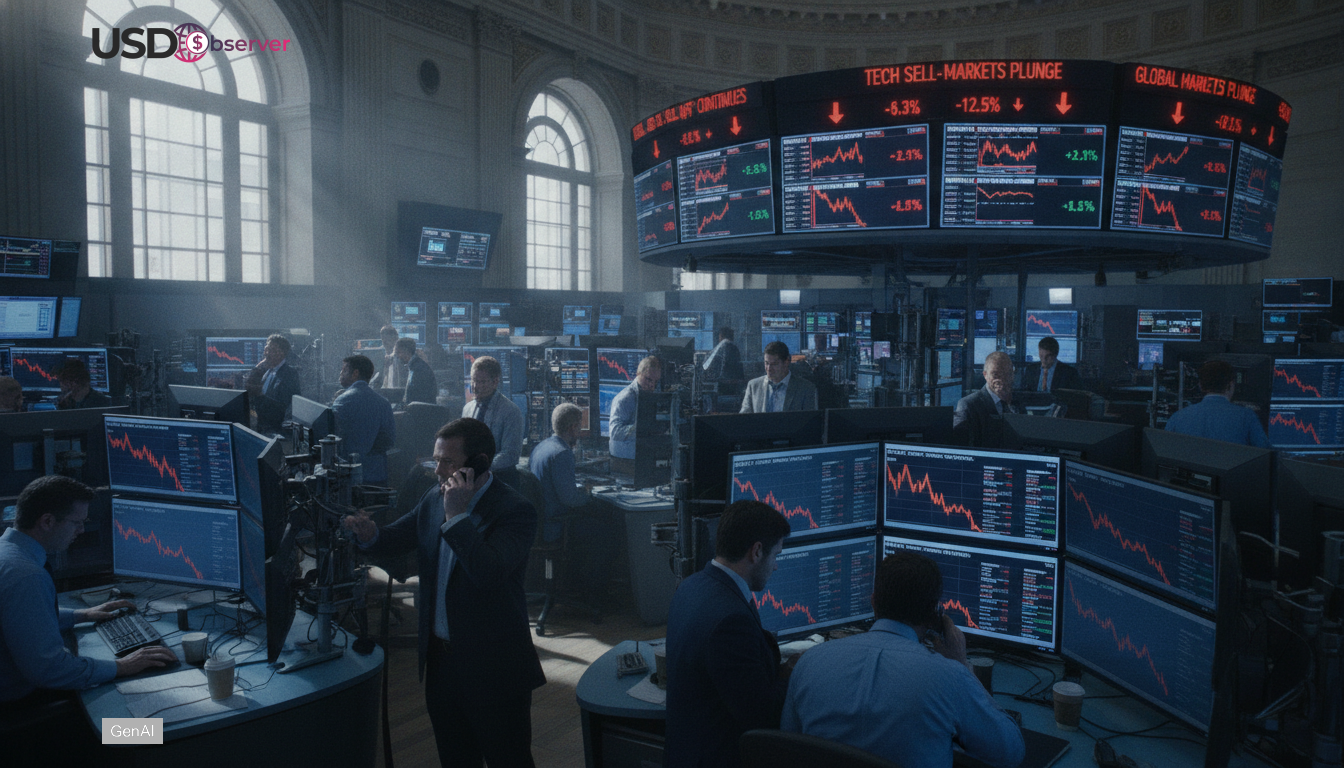
- In global stress (COVID-19, 2008 GFC), demand for USD spikes as a safe-haven.
- The Fed often steps in with swap lines to ease global shortages.
- Example: In March 2020, dollar shortage sent DXY soaring before the Fed intervened.
Why USD Liquidity Matters for Global Currencies
- Emerging Market Currencies (EM FX)
- Highly vulnerable since much of their debt is dollar-denominated.
- When liquidity tightens, servicing this debt becomes costlier, leading to capital flight and weaker currencies (TRY, BRL, PKR, ZAR).
- Major Pairs (EUR/USD, USD/JPY, GBP/USD)
- Liquidity shifts can tilt balance in favor of USD.
- For example, USD/JPY rises when U.S. yields are high and liquidity tightens, as investors exit low-yielding yen.
- Commodity-Linked Currencies (AUD, CAD, NOK)
- Commodities are priced in USD.
- Abundant liquidity = rising commodity demand, supporting these currencies.
- Tight liquidity = commodity slowdown and weaker AUD/CAD.
Key Indicators to Track USD Liquidity
Forex traders and analysts use several proxies to measure liquidity conditions:
- DXY (Dollar Index): Broad measure of USD strength.
- U.S. Treasury Yields: Rising yields usually mean tighter liquidity.
- Fed Balance Sheet Size: Expansion = loose liquidity, contraction = tightening.
- Cross-Currency Basis Swaps: Signals demand/supply mismatch in USD funding.
- Global Bank Lending Reports (BIS): Show flow of dollars through international banks.
Historical Lessons
- 1997 Asian Financial Crisis: Tight USD liquidity triggered currency collapses in Thailand, Indonesia, and South Korea.
- 2008 Global Financial Crisis: Massive USD shortage forced the Fed to launch swap lines, stabilizing global markets.
- 2022 Fed Rate Hikes: One of the sharpest USD rallies in decades, pushing DXY above 110 and pressuring EM currencies.
Each cycle shows that when dollars are scarce, the world suffers; when dollars are abundant, risk assets thrive.
Looking Ahead: USD Liquidity in 2025
The current backdrop suggests a mixed liquidity environment:
- The Fed remains cautious due to lingering inflation, keeping rates relatively high.
- At the same time, slower growth could push policymakers to inject liquidity later in the year.
- For traders, this means volatility across USD pairs will remain elevated.
Key scenarios:
- Sustained Tight Liquidity → Strong USD vs EM FX, weaker commodities, pressure on risky assets.
- Gradual Liquidity Easing → Relief rally in EM and commodity currencies, modest USD correction.
- Crisis-Driven Spike in Demand → Short-term USD surge as global investors rush for safety.
Conclusion
USD liquidity cycles are the hidden currents that move global currencies. Whether you are trading EUR/USD, monitoring EM risks, or analyzing commodities, the availability—or scarcity—of dollars will always define the playing field.
For forex traders, the lesson is clear:
- Watch the Fed.
- Track liquidity indicators.
- Align positions with the stage of the liquidity cycle.
In a world where the U.S. dollar is king, liquidity is power—and understanding its cycles is the ultimate edge.