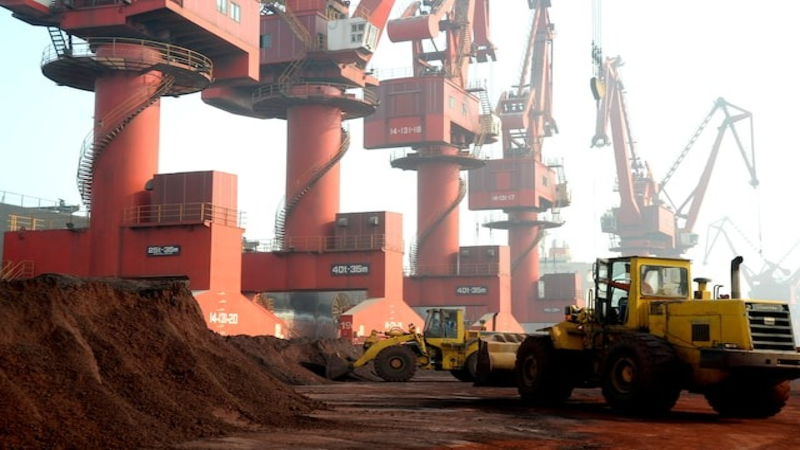
The United States is pressing major economies to accelerate efforts to reduce dependence on China for critical minerals, arguing that current progress falls short of the urgency required by geopolitical and industrial realities. U.S. officials say supply chain security for rare earths and related materials has become a strategic priority that can no longer move at a gradual pace. With demand rising from defense systems, advanced manufacturing, and energy transition technologies, policymakers are increasingly concerned that existing dependencies leave economies exposed to political leverage and export controls. The renewed push reflects frustration that commitments made at earlier high level meetings have not translated into sufficient concrete action, despite repeated warnings about concentration risks in global mineral supply chains.
Washington’s message to partners centers on speed and coordination rather than new declarations. While several advanced economies acknowledge the vulnerability created by China’s dominant role in refining and processing key minerals, implementation has lagged due to cost, permitting hurdles, and fragmented approaches. The United States is positioning itself as a convenor willing to share plans and move ahead with those prepared to act, rather than waiting for universal consensus. Officials emphasize that supply diversification requires parallel efforts across mining, processing, financing, and strategic reserves, all of which take time but must be launched decisively to have an impact later this decade.
China’s central role in the critical minerals ecosystem remains the core driver of concern. The country controls a significant share of global refining capacity across rare earths, lithium, cobalt, graphite, and other inputs essential to modern economies. That dominance has given Beijing leverage during periods of political tension, prompting fears that supply disruptions could ripple through industries from semiconductors to renewable energy. Recent signs of tighter export controls have reinforced the sense that reliance carries not just economic risk but strategic exposure. For many governments, the challenge lies in balancing near term costs against longer term resilience, especially when alternative supply chains are more expensive and slower to develop.
The United States is urging allies to follow its lead in pursuing domestic production and partnerships with resource rich countries, arguing that diversification is achievable with sustained investment and policy support. Recent agreements aimed at building project pipelines and strategic stockpiles are presented as early steps rather than final solutions. Interest from Europe and parts of Asia suggests growing recognition that mineral security is becoming a pillar of economic policy alongside trade and energy. Still, officials concede that progress remains uneven and incomplete. As global competition for resources intensifies, the pace of action may determine which economies can insulate themselves from future shocks.