The U.S. labor market is showing signs of gradual cooling as hiring momentum slows and wage growth eases. Job creation remains positive but has clearly lost pace compared with the robust gains of the previous two years. The trend suggests that the Federal Reserve’s policy tightening is filtering through the economy as intended.
This moderation poses a delicate challenge for policymakers who must maintain progress on inflation without undermining employment. For now, the labor market remains stable but increasingly vulnerable to shifting interest-rate conditions and global demand pressures.
Job Growth Moderates Amid Economic Adjustment
Recent labor data show that hiring has become more uneven across industries. Healthcare, professional services, and public administration continue to expand steadily, while construction and manufacturing activity are losing momentum. Monthly payroll gains have slowed to an average of about 140,000 jobs, a notable decline from the 2024–2025 pace.
The unemployment rate has edged up modestly, reflecting an increase in labor-force participation as more workers return to the job market. Wage growth has cooled to around 3.8 percent, signaling that the earlier post-pandemic surge in earnings is finally stabilizing.
For the Federal Reserve, these shifts indicate that labor conditions are normalizing rather than collapsing. A steady slowdown supports the goal of restoring balance between demand and supply in the job market without triggering broad layoffs.
Wage Trends and Inflation Dynamics
The moderation in wage pressures has helped reduce the risk of a renewed inflation surge. However, service-sector prices remain sticky, and housing-related costs continue to influence inflation expectations. This combination keeps the Fed on alert.
Businesses are focusing on productivity gains and cost control rather than hiring aggressively. The shift toward efficiency helps contain inflation but could weigh on disposable income and consumer confidence if the trend persists.
Policymakers now face a narrow path. A sharp slowdown could stall consumption and investment, while insufficient tightening might allow inflation expectations to reaccelerate. The next few months will determine whether the current balance can hold.
Powell’s Balancing Act and Market Expectations
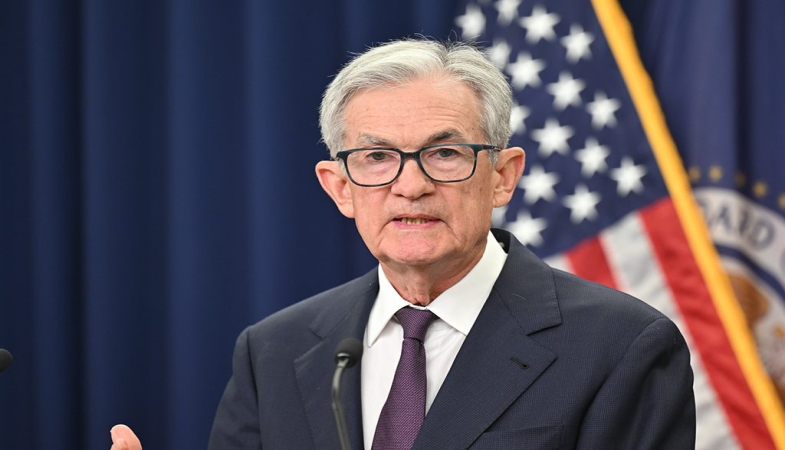
Federal Reserve Chair Jerome Powell has repeatedly emphasized that policy decisions will remain guided by data rather than forecasts. In recent remarks, Powell noted that while inflation has improved, it “has not yet reached a level consistent with the Committee’s longer-run goal.” He reiterated that maintaining restrictive rates for a sustained period is necessary to ensure price stability.
Financial markets, however, continue to debate when rate adjustments might begin. Investors expect a gradual easing later in 2026 if inflation continues to decline and labor conditions soften further. Powell has cautioned against premature optimism, stressing that “the worst outcome would be to stop too soon and lose the progress we have made.”
Bond markets reflect that caution. Treasury yields remain elevated as investors price in uncertainty around the timing of policy shifts. Equities have fluctuated as traders assess whether the Fed can successfully engineer a soft landing. Meanwhile, the dollar has held firm, supported by the perception that U.S. policy will stay tighter than its global peers.
Employment, Productivity, and Structural Shifts
The cooling labor market also highlights deeper structural changes underway in the U.S. economy. Technological adoption and automation are reshaping hiring patterns, especially in logistics, retail, and manufacturing. While this improves productivity, it limits traditional employment growth in several sectors.
At the same time, labor participation among prime-age workers remains strong, suggesting that the slowdown is driven more by business caution than by worker shortages. Productivity gains have provided a cushion, helping to sustain output growth even as hiring slows.
Economists view this trend as a positive sign for long-term stability. A labor market that expands moderately but efficiently aligns with the Fed’s vision of noninflationary growth. However, persistent wage inequality and regional disparities could create policy challenges if the benefits of this adjustment remain uneven.
Fiscal Policy and Broader Economic Context
Fiscal conditions are also influencing the labor outlook. Federal and state infrastructure programs are still generating demand for skilled labor, even as higher borrowing costs restrain private investment. The government’s spending commitments, particularly on green energy and public works, continue to support employment in targeted sectors.
However, rising interest expenses on national debt have limited fiscal flexibility. Policymakers face the difficult task of sustaining growth initiatives while managing fiscal consolidation. Powell has acknowledged this tension, noting that “monetary policy works best when it is complemented by a sustainable fiscal path.”
The combination of firm rates and elevated debt service underscores the complexity of managing both price and employment stability. Markets remain attentive to signals from Washington as election-year dynamics add another layer of uncertainty.
Conclusion
The U.S. labor market’s measured slowdown confirms that the Federal Reserve’s strategy is working, but also that its margin for error is shrinking. Powell’s insistence on patience reflects the central bank’s desire to secure lasting disinflation without damaging employment.
As 2026 unfolds, the challenge will be maintaining credibility and flexibility while steering the economy toward a soft landing. For now, the balance between policy caution and market confidence defines the next phase of the U.S. recovery.