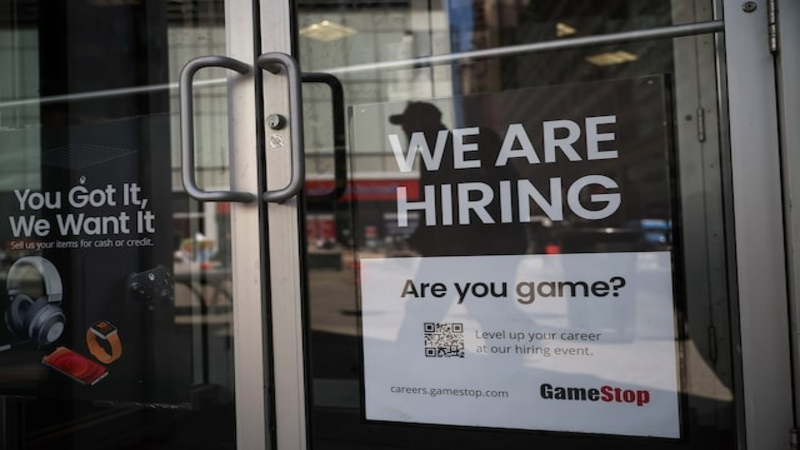
U.S. job growth slowed more than expected in December, reinforcing market confidence that the Federal Reserve will keep interest rates unchanged at its upcoming policy meeting. Payroll gains eased as businesses showed greater caution around hiring, reflecting uncertainty tied to trade policy, technology investment shifts, and broader cost pressures. Despite the softer headline number, the unemployment rate edged lower, signaling that labor market conditions remain relatively stable even as momentum cools. For markets, the combination of slower hiring and steady employment levels supports the view that monetary policy has reached a holding phase rather than the start of an aggressive easing cycle. The data adds to evidence that economic activity is decelerating in an orderly way rather than slipping into abrupt weakness.
Market reaction to the report reflected that balance. Equity futures firmed as investors interpreted the figures as reducing the risk of near term tightening while preserving the prospect of policy support later in the year. Treasury yields initially rose before settling back, indicating limited concern about overheating or renewed inflation pressure. In currency markets, the dollar pared gains as traders adjusted expectations around rate differentials. The response underscored that the labor market, while losing speed, is not deteriorating fast enough to force immediate action from policymakers. Instead, the data appears to validate a wait and see approach, where officials can observe how prior rate cuts filter through the economy.
Economists pointed to mixed signals beneath the surface of the report. Slower payroll growth and a contracting labor force suggest underlying softness, while steady wage gains continue to support household income. Some analysts cautioned that the drop in unemployment may partly reflect workers leaving the labor force rather than stronger hiring demand. Others described the report as balanced, neither strong enough to delay future easing indefinitely nor weak enough to justify an immediate cut. From a policy perspective, the figures give the central bank flexibility to remain patient while monitoring inflation, productivity trends, and corporate investment behavior.
Looking ahead, attention is shifting toward how slowing employment growth interacts with earnings, consumption, and financial conditions in early 2026. A cooler labor market reduces inflationary pressure but also raises questions about profit margins and growth sustainability. For now, the data supports expectations that the Federal Reserve will pause this month, keeping rates steady as it evaluates incoming information. The report reinforces a broader market narrative that the U.S. economy is transitioning into a slower, more fragile phase where stability matters more than speed, and where policy decisions will be guided by confirmation rather than urgency.