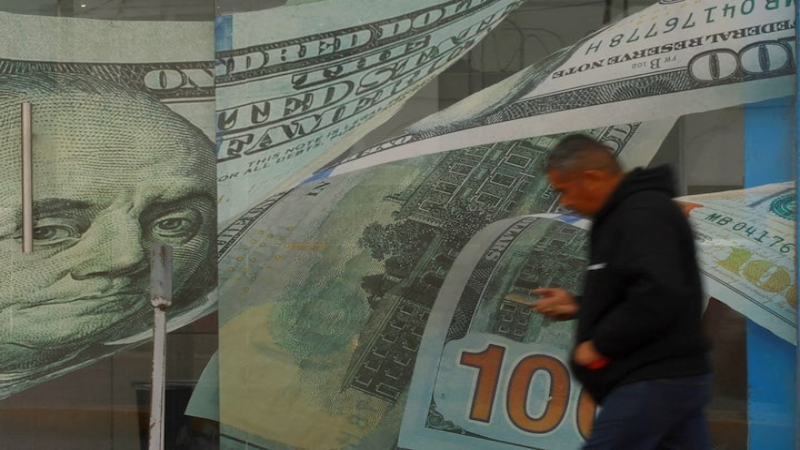
The U.S. dollar may be poised for a near term rebound after four consecutive months of declines, as shifting investor positioning and a steadier domestic outlook begin to counter earlier bearish sentiment. Currency markets have spent much of the past quarter leaning against the greenback, but several strategists now argue that the pressure weighing on the dollar is starting to ease.
The dollar index, which tracks the U.S. currency against a basket of major trading partners, has remained below the 100 level since late last year and recently touched multi year lows. Losses have been broad based, with notable weakness against higher yielding currencies such as the Australian dollar and even against the Japanese yen. Expectations for Federal Reserve rate cuts, combined with strong gains in the euro and lingering political uncertainty in Washington, had reinforced the downward trend.
However, signs of resilience in U.S. growth and consumer spending are beginning to alter the narrative. Business confidence indicators have stabilized, and foreign demand for U.S. equities and fixed income assets remains firm. Investors are also recalibrating their assumptions about policy direction ahead of upcoming midterm elections, with some expecting a less confrontational tone on trade and fiscal matters. A more predictable environment typically supports the dollar by reducing risk premiums attached to U.S. assets.
Derivatives markets suggest that positioning is gradually shifting. Earlier in the year, currency options activity reflected strong demand for protection against further dollar declines. Risk reversals in euro and sterling contracts showed a clear bias toward dollar weakness. More recently, those imbalances have narrowed, indicating that traders are scaling back extreme bearish bets. Increased interest in options structures designed to profit from stable trading ranges also signals that expectations for sharp dollar depreciation are moderating.
The nomination of Kevin Warsh to lead the Federal Reserve has added another dimension to market sentiment. Some analysts view his reputation as supportive of price stability and institutional independence as reassuring for investors concerned about aggressive monetary easing. While policy direction will ultimately depend on economic data, the perception of continuity at the central bank has tempered fears of rapid balance sheet expansion or political interference.
A dollar rebound would have implications beyond foreign exchange markets. A stronger U.S. currency can weigh on commodity prices denominated in dollars and influence capital flows into emerging markets. Multinational corporations may face translation effects on overseas earnings, while global investors would need to reassess hedging strategies for cross border portfolios.
Not all market participants are convinced that a sustained rally is imminent. Some strategists argue that structural forces, including narrowing interest rate differentials and ongoing diversification away from dollar assets, could limit upside. Still, after months of persistent weakness, even a modest stabilization would represent a meaningful shift in momentum for the world’s reserve currency.