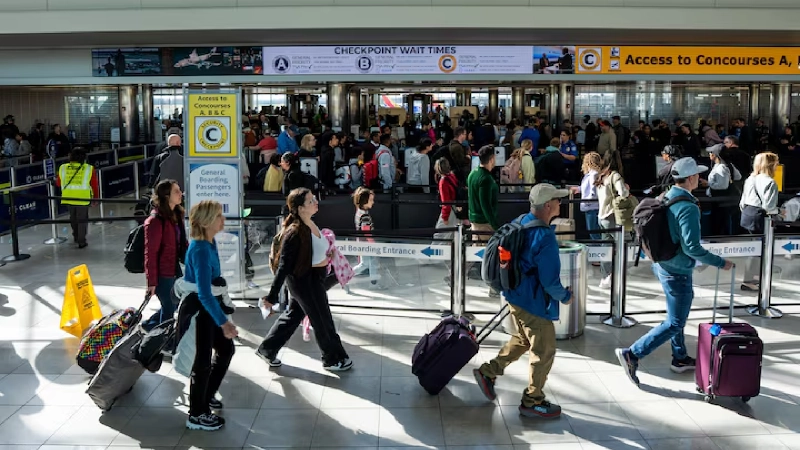
Operations at major U.S. airports have begun returning to normal after weeks of severe disruption caused by unpaid Transportation Security Administration staff during a prolonged government shutdown. The crisis led to unprecedented delays and long security lines, affecting millions of travelers across key hubs. Conditions improved rapidly after Donald Trump signed an emergency directive to ensure TSA workers received their salaries, restoring workforce availability and stabilizing airport operations. Authorities reported significantly shorter wait times as staffing levels improved across multiple major airports.
Airports in cities including New York, Houston, Baltimore and New Orleans reported a sharp decline in security wait times, with lines that had previously stretched for hours now returning to manageable levels. At the peak of the disruption, some travelers faced delays exceeding four hours, marking one of the most severe operational challenges in the history of the Transportation Security Administration. The improvement followed the distribution of overdue paychecks, with many employees confirming receipt of payments early in the week, encouraging a return to regular attendance.
The staffing crisis had intensified in recent weeks as absentee rates surged due to unpaid wages. Reports indicated that more than 12 percent of TSA workers were absent at one point, with significantly higher rates at some major airports. Hundreds of security officers also resigned during the shutdown, adding pressure to an already strained system. The combination of high absenteeism and increased travel demand created bottlenecks that disrupted flight schedules and raised concerns about both efficiency and security at airports nationwide.
Government intervention played a key role in restoring stability, as additional personnel were deployed to assist with screening operations during the peak of the disruption. Hundreds of immigration and homeland security officers were temporarily assigned to airports to help manage passenger flow and maintain security standards. Officials indicated that these reinforcements would remain in place until operations are fully stabilized, ensuring that any residual backlog is addressed as travel volumes continue to rise during the busy spring break period.
The shutdown itself stemmed from political disagreements in Congress over funding for the Department of Homeland Security and broader immigration policy issues. Negotiations between lawmakers have yet to produce a long term resolution, although temporary measures have eased immediate operational concerns. The situation highlights how policy disputes can have direct and immediate impacts on critical infrastructure, particularly in sectors that rely heavily on federal staffing and coordination.
With travel demand increasing and passenger volumes expected to remain elevated, airport authorities are focusing on maintaining service levels and preventing a recurrence of disruptions. Early signs suggest that operations are stabilizing, but officials continue to monitor staffing levels closely to ensure consistency. As the broader funding debate continues in Washington, the experience has underscored the importance of workforce stability in maintaining efficient and secure transportation systems across the United States.