Introduction
The United States government shutdown, now extending into its second week, is inflicting growing damage on the world’s largest economy. In a revised report, the U.S. Treasury Department estimated that the prolonged closure could drain up to $15 billion from the economy each week, rather than each day as was initially misstated in an earlier communication. The figure, while lower than the first announcement, remains staggering. It captures the combined cost of lost federal output, delayed contracts, consumer spending disruptions, and shaken investor confidence.
Markets have reacted nervously to the updated figures, with analysts warning that even a short-term shutdown could significantly slow quarterly growth. The Treasury’s analysis suggests that roughly 0.1 to 0.2 percentage points of GDP could be lost every week of the impasse if agencies remain shuttered. Meanwhile, pressure is building on lawmakers in Washington to resolve the budget standoff before the economic drag deepens. Investors are also weighing the long-term credibility of the United States as a fiscal anchor amid repeated episodes of political gridlock that strain global financial stability.
Origins of the Estimate and Official Correction
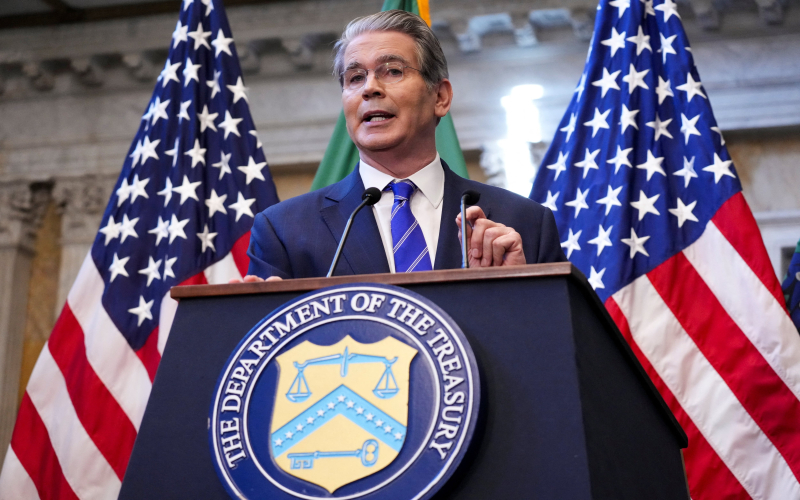
The Treasury’s communication initially sparked confusion when Treasury Secretary Scott Bessent cited a figure of $15 billion per day, prompting headlines that sent ripples through financial media. Within hours, Treasury officials corrected the record, clarifying that the loss projection was on a weekly basis, not daily. The misstatement may have been an internal oversight, but it also reflected the growing urgency inside the department to convey the real scale of damage a prolonged shutdown can cause.
According to revised analysis by the White House Council of Economic Advisers, the estimate incorporates the cumulative cost of halted government services, contract delays, wage interruptions for furloughed federal workers, and downstream effects on local economies. While the correction eased initial shock, it did not soften the substance of the warning. Even a $15 billion weekly loss represents a meaningful hit to economic growth and underscores how political standoffs now translate into immediate fiscal and market volatility. Secretary Bessent reiterated that the shutdown is already “cutting into the muscle” of the economy, emphasizing that each passing week compounds the strain.
Immediate Economic Impacts Across Sectors
The economic fallout from the government shutdown extends far beyond Washington. Thousands of federal workers have been furloughed without pay, and government contractors are reporting project delays and cash flow disruptions. Industries tied to federal spending defense, construction, and technology have seen procurement activity grind to a halt. Each day of inactivity reduces production and employment in sectors that depend on public investment.
The ripple effects are also visible in consumer sentiment. With federal employees facing delayed paychecks and uncertainty over future income, household spending in affected regions has begun to slow. Retailers and service providers near federal hubs such as Washington, D.C., and Virginia have reported noticeable drops in foot traffic and discretionary spending. The hospitality and travel sectors, which often depend on government-related travel and events, have seen cancellations rise. Economists warn that if the shutdown continues through the month, the drag on consumption could bleed into the broader economy, weakening what was already a fragile recovery.
Debt, Deficits, and Fiscal Fragility
The timing of this shutdown is particularly damaging because it coincides with efforts by the Treasury to maintain fiscal discipline under the Fiscal 2025 budget framework. The Treasury had projected that the deficit could narrow modestly from last year’s $1.833 trillion, but the shutdown threatens that progress. Every week of suspended operations delays revenue collection, slows tax enforcement, and interrupts capital projects that were expected to generate economic returns.
Credit analysts are warning that the longer the standoff continues, the more likely it is that the U.S. could face another debate over its creditworthiness. While a debt default is not imminent, the perception of fiscal dysfunction could weigh on investor confidence in Treasury securities. Rising borrowing costs, combined with lost output, could make debt stabilization efforts more difficult in the medium term. In addition, the shutdown disrupts critical Treasury functions such as bond auctions and data releases that financial markets rely on to price risk accurately.
Global and Market Spillovers
Financial markets are increasingly sensitive to Washington’s political turbulence. The U.S. dollar has weakened modestly since the shutdown began, partly due to growing expectations of slower economic growth and a more dovish Federal Reserve. A prolonged shutdown would likely add to that weakness as global investors reallocate capital toward perceived safe-haven currencies such as the yen or Swiss franc. Meanwhile, equity markets have shown signs of strain, with sectors tied to government activity such as defense, aerospace, and infrastructure leading declines.
The global impact of U.S. fiscal uncertainty cannot be understated. Emerging market currencies and sovereign bonds often react sharply to signs of U.S. instability because they depend on the dollar’s liquidity and predictability. If foreign investors begin to doubt the reliability of U.S. policymaking, capital outflows could accelerate from vulnerable markets, triggering secondary volatility worldwide. Analysts at major banks warn that continued dysfunction in Washington risks undermining the dollar’s symbolic role as a stabilizing global anchor.
Policy and Political Outlook
From a policy standpoint, the Treasury’s revised figures were intended not only to correct the record but also to increase pressure on lawmakers to resolve the impasse quickly. Secretary Bessent’s appeal for bipartisan cooperation reflects the mounting frustration within financial and business circles that view political brinkmanship as increasingly irresponsible. Negotiations over the Fiscal 2025 budget remain deadlocked over spending priorities and fiscal targets. Both parties have accused the other of jeopardizing national credibility for political leverage.
If the shutdown continues into late October, the economic and social toll could multiply. Key public services such as food safety inspections, housing assistance, and federal research grants are already being curtailed. Financial markets will also begin to price in the risk that the government’s temporary closure could become a semi-recurring event one that undermines long-term investment confidence in the United States. For global partners and investors, this repeated pattern of fiscal gridlock raises uncomfortable questions about policy consistency and reliability.
Conclusion
The Treasury’s warning that the government shutdown could cost the U.S. economy up to $15 billion per week highlights the tangible consequences of political inaction. What began as a budget dispute has now evolved into a potential drag on economic growth, financial stability, and global confidence. The revised estimate may have corrected a numerical error, but it underscores an even deeper truth: repeated fiscal standoffs are eroding America’s credibility at home and abroad.
Every week that passes without resolution compounds the economic toll, strains households, and weakens market confidence. Restoring normal operations will not instantly reverse the damage. It will take sustained policy coordination and fiscal clarity to rebuild confidence in both Washington’s governance and the resilience of the U.S. economy. Until then, markets and citizens alike will remain caught in a cycle of uncertainty, waiting for Congress to break the deadlock that has once again put politics ahead of prosperity.