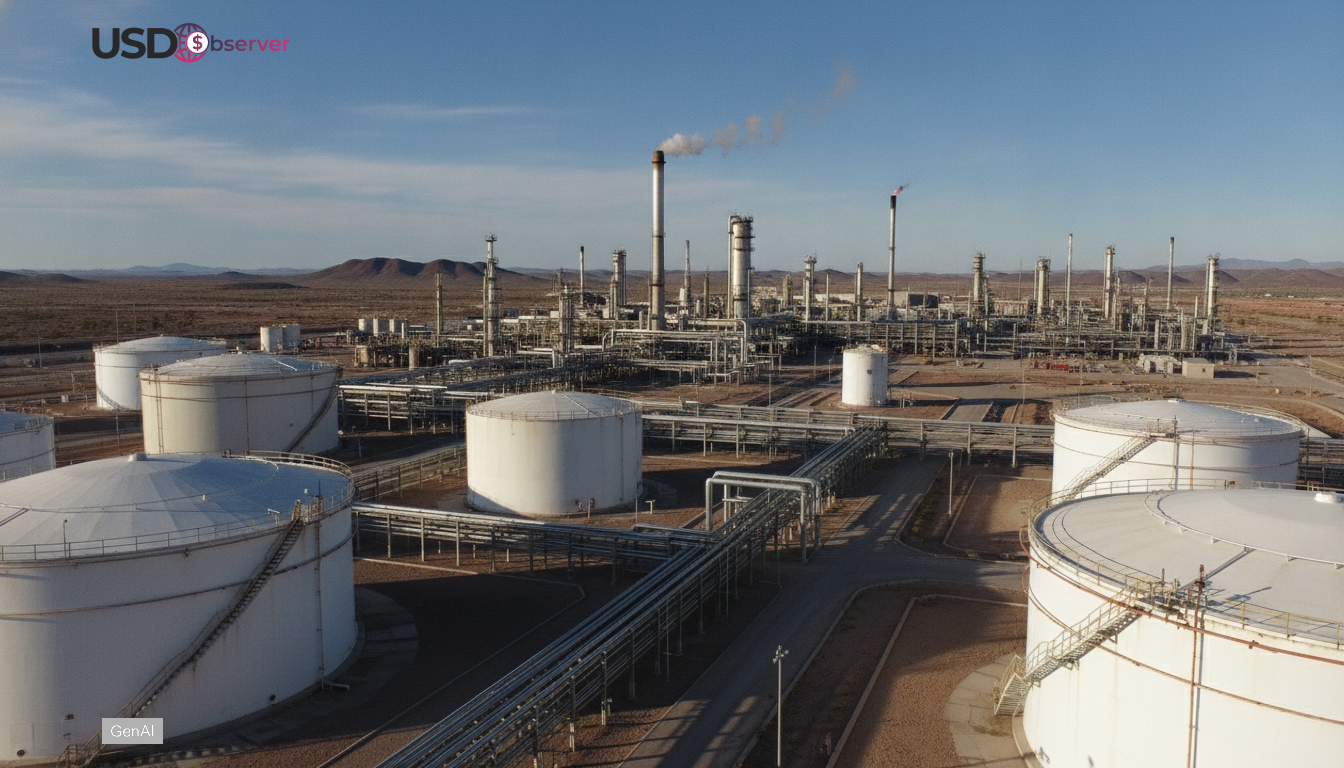
Shale’s resilience and its influence on U.S. energy independence and USD flows.
By Laura Shin | Journalist & Author of The Cryptopians
The U.S. shale revolution has transformed America from a major oil importer into one of the world’s leading producers. But shale’s economics — especially the breakeven price at which drilling is profitable — continue to play an outsized role in both global oil markets and the U.S. dollar. As oil prices fluctuate, the health of the shale industry shapes everything from trade balances to capital flows, with ripple effects across currency markets.
Shale’s Rise and Its Global Impact
Over the past 15 years, U.S. shale producers have unlocked vast reserves through hydraulic fracturing and horizontal drilling. Production surged from under 6 million barrels per day in 2010 to more than 12 million barrels per day today, fundamentally altering global energy dynamics.
This shift reduced U.S. reliance on foreign oil, improving the current account balance and strengthening the dollar’s resilience to energy price spikes. At the same time, shale added a new source of supply flexibility to global oil markets, often capping price rallies.
The Breakeven Factor
Shale’s importance lies in its breakeven levels — the oil price at which producers can drill profitably. These vary by region, with the Permian Basin in Texas often cited as the most competitive, with breakevens near $40–50 per barrel. Other basins require higher prices, sometimes above $60.
When oil trades well above breakevens, U.S. output expands, improving trade flows and attracting investment. This tends to support the dollar, particularly against commodity importers. When oil falls near or below breakevens, production slows, revenues shrink, and the dollar may lose some of its energy-linked strength.
Recent Episodes
In 2014–16, oil prices collapsed from over $100 to under $30 per barrel, pushing many shale producers to the brink. The U.S. dollar strengthened during that period, but more as a reflection of Fed policy divergence than shale economics.
In 2020, the pandemic crash again drove oil below breakevens, but shale output rebounded quickly once prices recovered. By 2022, oil’s surge above $100 created windfalls for U.S. producers, helping improve the trade balance and reinforcing dollar strength amid Fed tightening.
Current Landscape
As of late 2024, oil prices hover near $85–90, comfortably above most shale breakevens. U.S. production remains robust, though capital discipline has replaced the “growth at all costs” mentality of the past. Investors demand profitability, not just higher volumes, meaning output growth is steady but measured.
For the dollar, shale’s profitability at current prices means the U.S. continues to benefit from strong energy exports, offsetting its large fiscal deficits. This dynamic has contributed to the dollar’s resilience even as other fundamentals might suggest weakness.
Implications for Traders
For forex markets, shale breakevens act as a soft floor for U.S. competitiveness in energy exports. Traders should monitor oil price levels relative to shale economics, rig counts, and capital spending trends.
The key takeaway: shale is not just an oil story. It is also a dollar story. As long as prices stay above breakevens, U.S. energy exports will support the greenback — reinforcing its status as both an energy and a financial superpower.