Turkey’s largest industrial companies are cautiously looking toward 2026 as a potential turning point after years of pressure from high inflation, elevated borrowing costs, and weakened demand. Major manufacturers across electronics, appliances, and heavy industry have struggled under tight monetary policy introduced to rein in runaway prices, which sharply raised financing expenses and constrained domestic consumption. A strong local currency further eroded export competitiveness, compounding challenges for firms already facing subdued demand from key overseas markets. While inflation and interest rates remain high, both have begun to trend lower, offering tentative hope that the worst of the adjustment phase may be nearing an end. Executives and analysts broadly expect conditions to remain difficult in the near term, with meaningful relief more likely to emerge toward the latter part of next year.
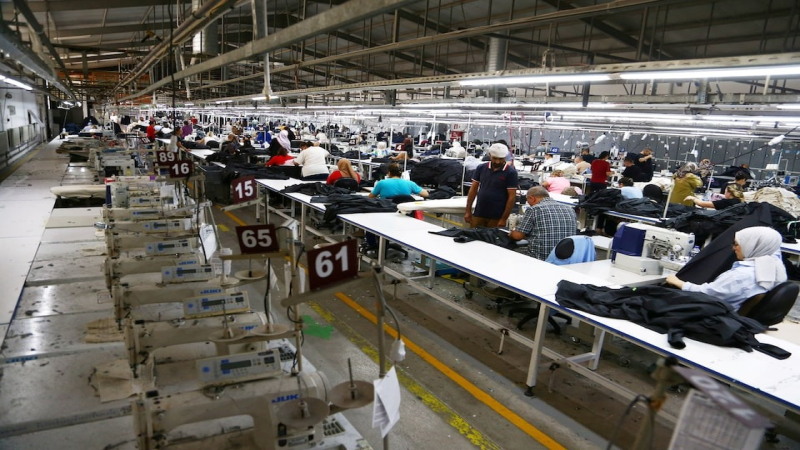
Industrial performance has been hit hard by the policy shift that followed years of loose credit and currency depreciation. More than half of companies in Turkey’s industrial equity index reported losses over the past year, underscoring the depth of the downturn. Employment has also suffered, with hundreds of thousands of manufacturing jobs lost over recent years as firms cut costs and scaled back production. High interest rates sharply increased debt servicing burdens, while stabilized exchange rates removed a key buffer exporters had previously relied on. As a result, profitability deteriorated even for market leaders, highlighting how the transition to tighter financial conditions has reshaped the operating environment for Turkish industry.
Looking ahead, expectations hinge largely on the pace and depth of monetary easing. Policymakers have begun cutting rates, and further reductions are anticipated if inflation continues to cool. Industrial leaders say borrowing costs must fall substantially to restore investment and support refinancing efforts, particularly for heavily leveraged firms. Lower rates are also expected to gradually revive domestic demand, which contracted as households struggled with rising living costs. However, weak external demand, especially from Europe and Asia, remains a key risk. Even with improving financial conditions at home, export oriented manufacturers may face continued margin pressure if global growth remains subdued.
Political and economic uncertainty continues to cloud the outlook, with inflation still far above long term targets and elections looming in the coming years. While government forecasts point to a sharp decline in inflation by 2026, many analysts view those projections as optimistic. Businesses emphasize that predictability will be as important as lower rates, arguing that stable policy and clearer guidance are needed to rebuild confidence. For now, Turkey’s industrial sector appears set for a slow and uneven recovery path, with 2026 increasingly seen as a year of transition rather than a rapid rebound.