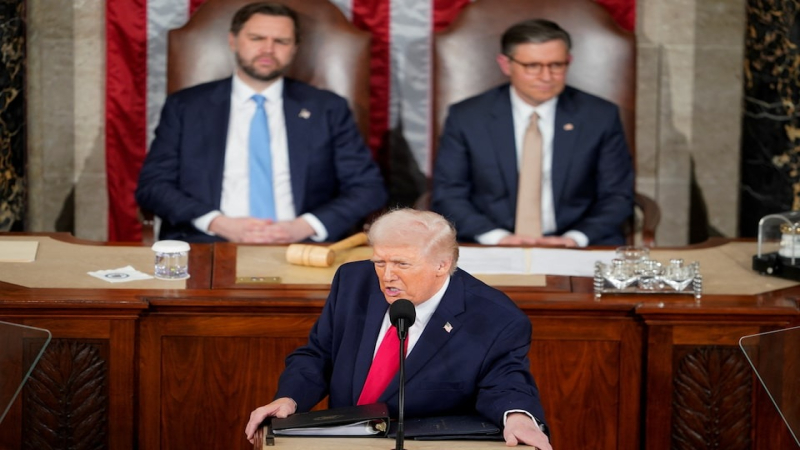
President Donald Trump has introduced a new retirement savings proposal aimed at expanding access for millions of Americans who lack employer sponsored plans. Announced during his State of the Union address, the initiative seeks to provide workers without workplace retirement options a federally supported vehicle while offering matching contributions of up to 1,000 dollars annually.
The proposal addresses a long standing retirement savings gap in the United States. Research shows that roughly half of American workers between the ages of 21 and 64 have less than 1,000 dollars saved for retirement. Even among those with access to employer sponsored plans such as 401 k accounts, many balances remain far below levels considered sufficient for long term financial security.
Nearly 54 million workers do not have access to any employer provided retirement plan, and approximately 63 million lack an employer match component. Financial advisors frequently describe contribution matching as one of the most effective incentives for long term savings, as matched funds compound over time and accelerate portfolio growth.
Under the new framework, workers without access to employer sponsored plans would be enrolled in an account modeled after the federal Thrift Savings Plan, which currently serves government employees. These accounts would offer a range of low cost index funds designed to simplify investment decisions and reduce administrative expenses.
The federal government would match worker contributions up to 1,000 dollars per year, not only for participants in the new plan but also for individuals enrolled in existing employer plans that do not currently offer matching contributions. Expanding the size of the match or modifying eligibility thresholds would require congressional approval.
The initiative builds on prior bipartisan efforts to strengthen retirement preparedness. Legislative reforms enacted in 2022 under the previous administration introduced a government match for certain low to moderate income savers beginning next year. The new proposal expands the concept to a broader segment of the workforce.
Despite broad support for improving retirement access, significant questions remain. Policymakers will need to clarify funding sources, administrative oversight and eligibility criteria. With the federal budget deficit already elevated, the long term fiscal cost of matching contributions may face scrutiny during congressional negotiations.
Social Security remains the primary source of retirement income for many Americans, yet projections indicate that the program’s reserves could be depleted by 2033. While payroll taxes would continue to fund a portion of benefits, they would cover less than full scheduled payments without reforms. The new savings initiative does not directly address Social Security’s structural funding gap.
Financial planners note that participation rates depend heavily on simplicity and automation. Lower income households facing student loan obligations, housing costs and inflation pressures may struggle to contribute even with a federal match incentive.
Markets are watching the proposal for potential implications on household savings patterns and long term capital flows, particularly if new contributions expand demand for equity and bond index funds.