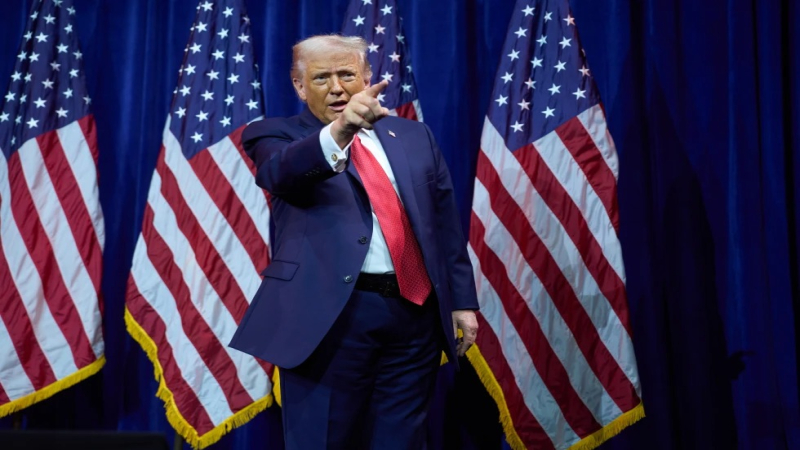
President Donald Trump said he has instructed his representatives to purchase 200 billion dollars in mortgage backed securities, signaling a direct and unconventional intervention aimed at lowering borrowing costs in the US housing market. The announcement, delivered through a social media post, framed the move as a way to push mortgage rates lower, reduce monthly payments, and improve housing affordability, which has emerged as a politically sensitive issue early in his second term. The statement immediately drew market attention because of its scale and the lack of detail around execution, funding sources, and legal authority. Housing affordability has become a growing concern for households facing elevated prices and high interest rates, making the proposal politically resonant even as questions remain about feasibility and broader economic consequences.
According to the administration, government sponsored mortgage finance firms are expected to carry out the bond purchases. However, publicly available disclosures show that the combined cash position of these entities is far below the level cited in Trump’s statement, raising uncertainty about how such a program would be financed. Analysts note that unlike the central bank, which can create reserves to fund large scale asset purchases, government owned mortgage institutions operate under capital and liquidity constraints. Any attempt to mobilize funds on this scale would likely require reallocating resources, issuing debt, or receiving additional government backing. The lack of clarification has fueled debate among investors and policymakers about whether the announcement represents a concrete policy initiative or a negotiating signal aimed at influencing market expectations.
The proposal echoes tactics used during the pandemic period, when large scale bond purchases were employed to stabilize financial markets and compress borrowing costs. In that case, central bank intervention helped anchor mortgage rates and support housing demand during a period of extreme uncertainty. Replicating those effects outside a central banking framework is far more complex, particularly in an environment where inflation risks and fiscal pressures remain part of the policy debate. Critics argue that large scale purchases could distort market pricing and complicate monetary policy transmission, while supporters see the move as a targeted response to affordability pressures that have persisted despite easing inflation in other areas of the economy.
From a market perspective, the announcement adds another layer of uncertainty to an already complex policy backdrop. Mortgage rates, housing activity, and bond yields are all sensitive to expectations around government intervention and fiscal expansion. If pursued, the plan could influence investor perceptions of credit risk, government balance sheets, and the boundary between fiscal and monetary tools. Currency and rates markets will be watching closely for signals on implementation, particularly as the administration has also pressed for faster interest rate cuts. Until details emerge, investors are likely to treat the announcement cautiously, balancing the potential for near term stimulus against longer term questions around funding, governance, and policy coherence.