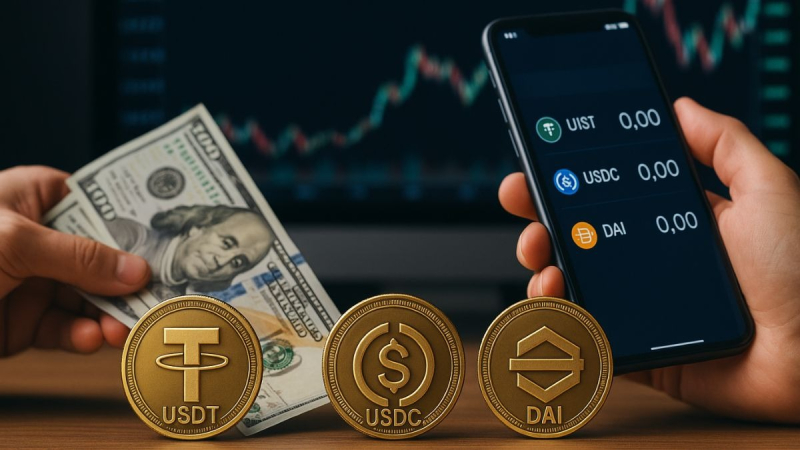
Stablecoins were once viewed as a narrow tool used mainly inside crypto markets to facilitate trading. That perception is quickly becoming outdated. By late 2025, stablecoins are playing a visible role in traditional financial plumbing, particularly in the US Treasury market. Their growth is no longer just a technology story, but a macro liquidity story.
As stablecoin balances expand, their backing assets matter more. Large portions of these digital dollars are invested in short dated government securities. This creates a direct channel between crypto infrastructure and Treasury demand, blurring the line between digital finance and sovereign funding. Markets are beginning to recognize stablecoins as a variable that can influence liquidity and rates rather than a sideshow.
Stablecoins Have Become Structural Treasury Buyers
The most important shift is that stablecoin issuers now represent a meaningful source of demand for US Treasuries. To maintain price stability and liquidity, issuers hold highly liquid assets, with Treasuries playing a central role. As stablecoin supply grows, so does the pool of funds allocated to government securities.
This demand is not speculative. It is structural. Stablecoins need safe and liquid backing regardless of market sentiment. That makes their Treasury holdings more persistent than many traditional investors, especially during periods of volatility.
For the Treasury market, this introduces a new class of buyer whose behavior is tied to digital adoption rather than macro cycles alone.
Why Stablecoin Growth Matters for Liquidity
Stablecoin expansion affects liquidity conditions in subtle but important ways. When demand for stablecoins rises, issuers must acquire more Treasuries, supporting demand at the short end of the curve. When usage slows, that demand can stabilize rather than reverse sharply.
This dynamic can smooth some funding pressures but also create new sensitivities. Treasury demand becomes linked to activity in payments, trading, and digital finance. Events in crypto markets can now have indirect effects on government funding dynamics.
Liquidity planners and policymakers must account for this linkage. Stablecoins connect two ecosystems that were once largely separate.
The Difference Between Speculative and Functional Demand
Unlike hedge funds or fast money accounts, stablecoin issuers are not positioning based on yield expectations. Their objective is stability, liquidity, and regulatory compliance. This changes how their Treasury demand behaves across cycles.
Because holdings are driven by operational needs, they do not unwind rapidly during market stress. In some cases, they can act as a stabilizing force by maintaining demand when other buyers step back.
However, this also means that changes in stablecoin regulation or usage could have outsized effects. Shifts in compliance rules or user behavior directly influence Treasury allocation decisions.
Why This Is No Longer Just a Crypto Story
The growing intersection between stablecoins and Treasuries elevates stablecoins into the macro conversation. Their scale now matters for funding markets, money supply interpretation, and liquidity transmission.
For traditional investors, ignoring stablecoins risks missing an emerging driver of short term rate dynamics. For policymakers, it raises questions about oversight, transparency, and systemic importance.
Stablecoins are no longer confined to digital exchanges. They sit at the crossroads of payments, reserves, and sovereign debt markets.
Risks and Constraints to Watch
While stablecoin demand can support Treasuries, it also introduces concentration risk. A large share of issuance backed by similar assets creates sensitivity to confidence and regulation. Sudden shifts in trust or policy could alter demand patterns quickly.
Transparency and asset quality remain critical. Markets will watch how reserves are managed and disclosed. Confidence in backing determines whether stablecoins remain a stable source of Treasury demand.
These risks do not negate their role, but they define its limits.
What This Means Going Forward
Looking ahead, stablecoins are likely to remain embedded in funding markets as long as digital dollar usage expands. Their influence will grow alongside adoption in payments and settlement.
Treasury markets, in turn, must adapt to a buyer base that includes technology driven issuers. This evolution reflects broader financial integration rather than temporary experimentation.
Understanding stablecoins now requires macro awareness, not just crypto expertise.
Conclusion
Stablecoins have evolved from a crypto utility into a factor influencing the US Treasury market. Their demand for government securities links digital finance directly to sovereign funding and liquidity conditions. As adoption grows, stablecoins will continue to shape markets far beyond their original niche.