Introduction
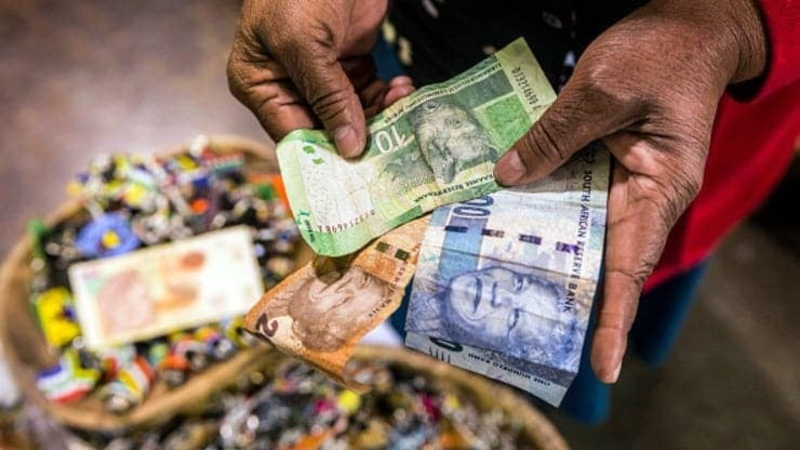
The South African rand began the trading day on a stable note, holding close to 17.34 per U.S. dollar as global investors grappled with renewed trade tensions between the United States and China. The combination of cautious global sentiment, shifting capital flows, and softening demand for risky assets has created a delicate balance in currency markets. While the dollar faces pressure from geopolitical uncertainty and policy speculation, the rand’s resilience signals that investors are adopting a more nuanced approach to emerging markets rather than resorting to broad risk aversion.
Unlike several of its emerging market peers, the rand has managed to resist sharp depreciation in the face of volatile U.S. yields and global commodity swings. This stability reflects a mixture of domestic support, improved fiscal communication from South African policymakers, and a lack of immediate catalysts for panic. Yet, traders remain wary that this steadiness could prove temporary if tensions between the world’s two largest economies escalate further or if global market sentiment deteriorates sharply. The coming weeks could therefore test the rand’s ability to stay resilient amid heightened global uncertainty.
Global Pressures and the Rand’s Response
The broader context surrounding the rand’s steadiness is the increasingly tense trade environment between the United States and China. In recent days, Washington criticized Beijing’s decision to expand export controls on key rare earth materials that are crucial for the production of electric vehicles, semiconductors, and advanced defense technologies. China, in turn, has accused the U.S. of weaponizing trade policy and attempting to restrict its economic growth. This tit-for-tat escalation has unsettled global investors who fear the rekindling of a full-blown trade war reminiscent of the disruptions witnessed in 2018 and 2019.
The rand’s reaction to this backdrop has been measured. Typically, risk-sensitive currencies like the rand weaken sharply during episodes of heightened global tension, but this time, the sell-off has been contained. One reason is that commodity prices, including gold and platinum, both key South African exports, have held firm as investors seek safe-haven assets. Rising gold prices tend to support the rand because they improve South Africa’s trade balance and increase export revenues. Furthermore, the country’s current account position has remained relatively stable, which gives the rand some insulation against external shocks even when global capital flows turn defensive.
Domestic Market Indicators and Sentiment
Domestically, the South African economy has shown a cautious but tangible improvement in investor confidence. Bond markets have remained steady, with the yield on the benchmark 2035 government bond easing slightly to around 9.01%, indicating sustained demand for local debt instruments. The Johannesburg Stock Exchange’s Top-40 index also recorded mild gains, reflecting that some investors are willing to hold local equities despite global headwinds. These movements suggest that South African assets are still viewed as relatively attractive compared to other emerging markets, particularly due to high real yields and transparent monetary policy communication from the South African Reserve Bank (SARB).
Market analysts have noted that the rand’s relative stability also reflects a balance between domestic economic fundamentals and cautious optimism about inflation moderation. South Africa’s consumer price inflation remains near the midpoint of the SARB’s target range, allowing policymakers some room to maintain interest rate stability. Meanwhile, improved fiscal discipline and revenue collection have reduced fears of sudden sovereign downgrades. Collectively, these factors help maintain confidence among investors holding rand-denominated assets, limiting capital flight even when global volatility rises.
Comparative Currency Dynamics
When compared to other emerging market currencies, the rand’s performance stands out for its resilience. Over the same period, several Asian and Latin American currencies have weakened more significantly against the U.S. dollar due to stronger capital outflows and domestic fragilities. For instance, the Mexican peso and Indonesian rupiah both experienced sharper declines as traders moved funds toward safer assets. In contrast, the rand’s ability to maintain its footing demonstrates that South African markets are not being lumped into a broader sell-off narrative.
This relative stability also reflects how investors differentiate among emerging markets based on policy credibility and macroeconomic fundamentals. South Africa’s active engagement with international investors and commitment to transparent monetary management have helped it earn a reputation for predictability in times of uncertainty. However, this does not mean the rand is risk-free. Its correlation with global commodity cycles and sensitivity to dollar strength remain key vulnerabilities. Should the dollar rebound sharply or global risk appetite decline, the rand could quickly give back recent gains.
Outlook and Strategic Considerations
The outlook for the rand will depend on how the geopolitical and monetary landscape evolves in the coming weeks. If U.S. China tensions persist or worsen, investor appetite for risk could weaken, potentially leading to renewed pressure on emerging market currencies. At the same time, expectations that the Federal Reserve might cut interest rates later this year could provide a counterbalance by reducing the dollar’s relative appeal. These opposing forces may result in a period of range-bound trading for the rand, with temporary fluctuations driven by headlines and data releases rather than fundamental shifts.
From a strategic perspective, portfolio managers and corporate treasurers are likely to maintain a cautious stance. Many firms are adopting partial hedging strategies to guard against sudden rand depreciation while keeping some exposure to potential upside if global conditions stabilize. For South Africa, maintaining macroeconomic discipline, managing debt sustainably, and keeping inflation under control will remain essential in attracting long-term capital flows. Meanwhile, traders will be closely watching trade developments, Chinese growth data, and any changes in U.S. monetary guidance for signs of potential breakout trends.
Conclusion
The South African rand’s ability to hold steady amid a backdrop of U.S.-China tensions and dollar volatility highlights both the progress made in strengthening domestic financial fundamentals and the precarious balance that emerging markets must maintain in uncertain times. While the global environment remains fraught with risk, South Africa’s stability, disciplined monetary policy, and robust commodity sector offer a measure of protection.
Still, this period of calm should not be mistaken for immunity. External shocks, policy missteps, or a renewed surge in risk aversion could quickly upset the current balance. The rand’s performance in the weeks ahead will serve as a barometer of investor confidence in both South Africa’s economic direction and the resilience of emerging markets amid great-power competition. For now, steadiness is a victory, but sustaining it will require vigilance, prudence, and continued confidence in domestic policymaking.