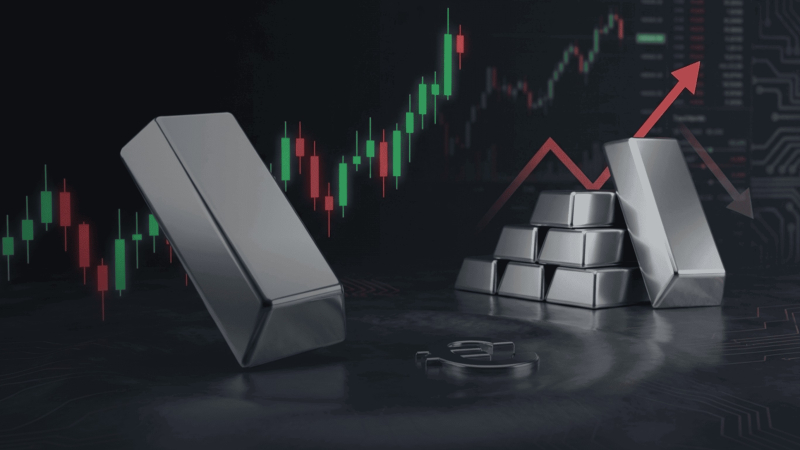
Precious metals markets in 2025 were often discussed through the lens of gold, leaving other metals overlooked. Yet silver, platinum, and palladium followed a different path shaped less by macro hedging and more by industrial constraints. These metals sit at the intersection of commodities and manufacturing, making their price behavior distinct from purely monetary assets.
For FX traders, this distinction matters. Industrial metals respond to supply bottlenecks, technology shifts, and sector specific demand rather than currency narratives alone. In 2025, tightening conditions in key industrial segments supported prices even when broader macro signals were mixed.
Why Industrial Demand Drives These Metals
Silver, platinum, and palladium derive a significant share of demand from industrial use. Applications range from electronics and solar technology to automotive catalysts and specialized manufacturing. This ties their pricing more closely to production cycles than to inflation hedging.
In 2025, demand from technology and clean energy sectors remained resilient. Even as global growth moderated, targeted investment continued. This sustained consumption at a time when supply growth remained limited.
As a result, industrial demand provided a floor for prices independent of broader commodity trends.
Supply Constraints Are More Structural Than Cyclical
Unlike some commodities, supply for these metals is concentrated and inflexible. Mining output responds slowly to price signals, and geopolitical or operational disruptions can have lasting effects.
In recent years, underinvestment and declining ore grades limited supply expansion. Recycling provided some relief but could not fully offset constraints. This created a structurally tight market.
These conditions reduce sensitivity to short term macro swings and increase the importance of physical availability.
Why FX Signals Often Miss the Trade
FX traders tend to focus on commodities through currency correlations. While these relationships matter for oil or gold, they are less reliable for industrial metals. Currency moves do not directly resolve supply shortages or expand production capacity.
In 2025, periods of dollar strength or weakness had limited impact on silver, platinum, and palladium compared with supply and demand dynamics. Traders relying solely on FX signals risked missing underlying pressure building in these markets.
This disconnect explains why the trade remained underappreciated outside commodity focused strategies.
Technology and Energy Transitions Add Complexity
Long term shifts toward electrification and cleaner energy continue to reshape demand. Silver benefits from solar and electronics growth, while platinum and palladium are tied to evolving automotive technologies.
These transitions create uneven demand patterns. Some applications expand while others face substitution risk. This complexity requires metal specific analysis rather than broad commodity assumptions.
Such nuances further separate these markets from traditional FX driven frameworks.
Implications for Cross Asset Analysis
Ignoring industrial tightness can lead to incomplete macro views. These metals influence producer margins, trade balances, and sector performance. Their pricing can signal stress or expansion within specific industries.
For FX markets, these signals may appear indirectly through trade flows or corporate earnings rather than currency correlations. Understanding these linkages enhances cross asset insight.
The industrial metals trade therefore sits at the edge of FX awareness but remains relevant.
Conclusion
Silver, platinum, and palladium demonstrated in 2025 that industrial tightness can support prices regardless of FX narratives. Supply constraints and sector specific demand drove performance more than currency moves. For traders looking beyond traditional correlations, these metals offer insight into structural forces shaping the global economy.