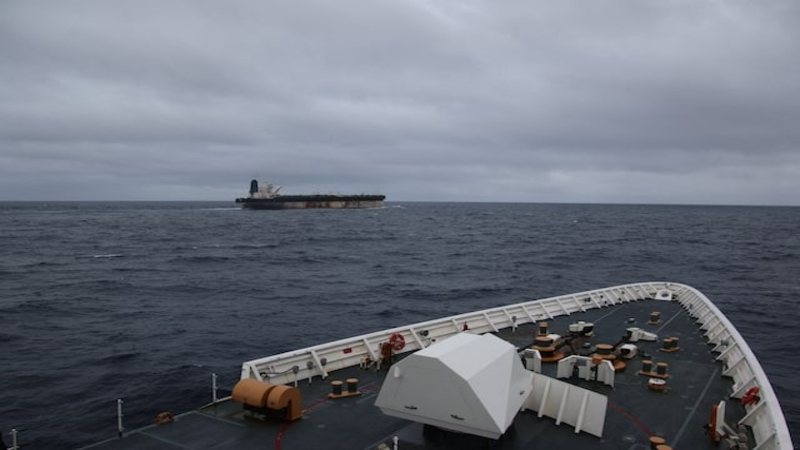
Russia sharply criticized the United States after the seizure of a Russian flagged oil tanker in the Atlantic, framing the move as a breach of international maritime law and a dangerous escalation in global energy enforcement. Officials said contact with the vessel was lost after US forces boarded it during an operation tied to efforts to restrict Venezuelan oil exports. The incident injected fresh tension into already fragile relations between Moscow and Washington, reviving concerns about the security of commercial shipping routes. Russian authorities argued that freedom of navigation on the high seas remains protected under international conventions, warning that unilateral enforcement actions undermine established legal norms. The seizure drew immediate diplomatic backlash, highlighting how energy flows and sanctions enforcement are increasingly intersecting with military posture and foreign policy risk.
Russian officials demanded assurances regarding the safety and swift return of the vessel’s crew, emphasizing humanitarian obligations alongside legal objections. Senior lawmakers described the operation in stark terms, portraying it as an unlawful use of force rather than a regulatory action. The tanker had previously evaded a maritime blockade aimed at sanctioned oil shipments, placing it squarely within a broader pressure campaign tied to Venezuela. The US action followed dramatic political developments in Caracas, further complicating the geopolitical context. For Moscow, the incident represented not only a challenge to maritime law but also a strategic setback, as it coincided with the loss of a key regional ally. The response underscored how closely Russia is watching enforcement actions that affect its commercial and strategic interests abroad.
US officials said the operation involved coordination between military and coast guard assets and was carried out without direct confrontation. While Russian naval units were reportedly in the wider area, no clashes were reported, limiting immediate escalation. Still, the presence of military forces from both sides in proximity highlighted the thin margin separating enforcement actions from broader incidents. Relations between the two countries have fluctuated in recent years, shaped by conflict, diplomacy, and shifting priorities under the leadership of Donald Trump and Vladimir Putin. The tanker seizure added a new layer of friction, reinforcing how sanctions, energy security, and maritime operations are increasingly intertwined.
Beyond bilateral tensions, the incident carries implications for global energy markets and shipping risk. Commercial operators are closely watching how enforcement actions evolve, particularly as sanctions regimes grow more complex and politically charged. The seizure raised questions about the boundaries of jurisdiction and the risks faced by vessels operating near contested enforcement zones. For markets, the episode underscored how geopolitical actions can disrupt energy logistics even without direct supply outages. As global powers assert influence over trade routes and resources, the rules governing maritime conduct are being tested. The tanker incident serves as a reminder that energy security is no longer just an economic issue, but a strategic one shaping diplomacy, markets, and military posture.