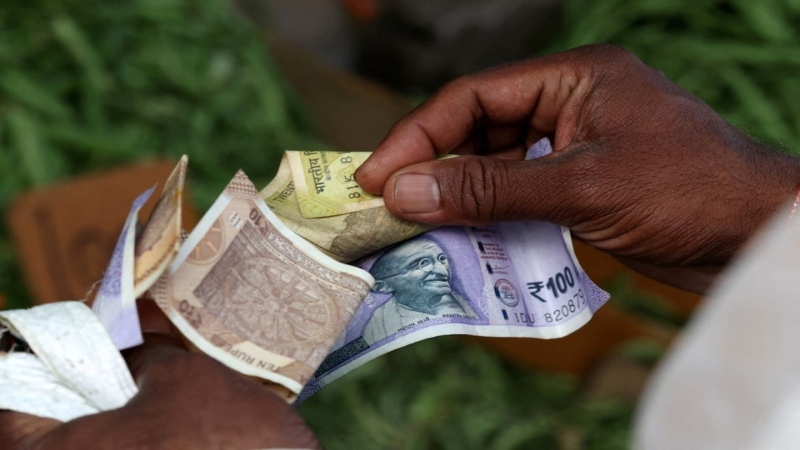
The Indian rupee’s latest decline reflects a broader shift in regional currency sentiment as the dollar holds firm ahead of a key Federal Reserve policy outcome. The currency closed near 90.07 against the dollar after soft equity performance in Mumbai and continued foreign investor outflows pressured domestic assets. Portfolio exits now exceed seventeen billion dollars this year, and that withdrawal pattern has increased sensitivity to USD movements across emerging markets. While intermittent dollar selling by state backed banks prevented a sharper intraday fall, traders noted that the rupee’s adjustment into a new trading band signals a more durable structural shift. This matters for USD watchers because India’s currency is often viewed as a barometer of broader risk appetite in Asia, and its underperformance reinforces the narrative that the dollar remains resilient despite easing expectations priced into global rate markets.
Regional currencies also traded defensively as the Indonesian rupiah led losses and market participants waited for clarity on the Federal Reserve’s rate path. The dollar index hovered close to ninety nine, and analysts suggested that expectations for nearly one hundred basis points of future easing may be overly optimistic given ongoing US economic strength. This environment has pushed investors toward safer USD positioning, which in turn amplifies pressure on emerging market currencies that are experiencing capital outflows. India’s equity benchmarks declined nearly one percent on the day, elevating concerns that elevated US yields and global uncertainty could extend the negative trend. For USD focused analysts, this cross current illustrates how global macro positioning can reinforce dollar demand even without strong intraday catalysts.
The rupee’s year to date performance remains the weakest in Asia with a five percent decline despite a positive domestic growth narrative and improving sentiment from foreign brokerages. Analysts argue that the currency’s recovery prospects hinge partly on the outcome of US India trade discussions scheduled this week. A constructive outcome could encourage inflows, but failure to make progress may leave the rupee exposed to further USD strength, especially if the Federal Reserve signals a slower easing trajectory. For USD markets, the interaction of portfolio flows, policy expectations, and regional equity volatility provides valuable insight into the durability of dollar momentum going into the final weeks of the year. The rupee story therefore carries wider implications for traders assessing whether the dollar’s current steadiness represents consolidation or the early stage of another broad based strengthening cycle.