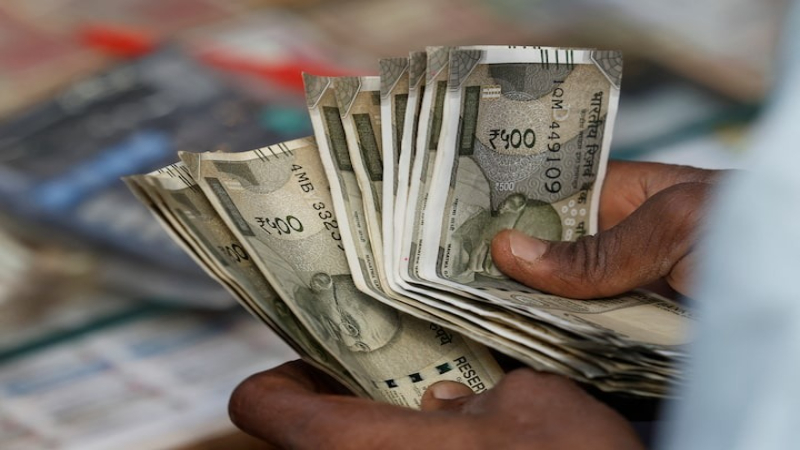
The Indian rupee ended the session nearly unchanged as steady foreign portfolio inflows and selective dollar selling from major state-run banks helped counter broader risk-off sentiment across Asia. The currency settled close to 88.60 per dollar, reflecting a measured response to global equity weakness and pressure on regional currencies that declined across the board. Asian stocks slipped sharply as investors positioned cautiously ahead of upcoming US data releases and major earnings that could shift expectations around Federal Reserve policy. Despite the broader regional downturn, Indian equities showed relative resilience, with key benchmarks closing only marginally lower. Traders pointed to a balanced flow environment, where both inflows and outflows shaped intraday moves, while periodic intervention by local banks helped prevent deeper volatility. Market participants suggested the rupee would likely remain in a tight band unless monetary authorities adjust their defense of key levels or diplomacy yields progress in ongoing trade negotiations between New Delhi and Washington.
A growing divergence between India’s domestic market performance and global risk sentiment has highlighted the interaction between foreign flows, export headwinds and broader monetary expectations. Weak merchandise exports to the United States pushed India’s trade deficit to a record level, intensifying concerns that the current account gap could widen further in the coming fiscal year. Economists have noted that a depreciation cycle could eventually function as an automatic stabiliser, particularly as tightened trade conditions and previously implemented tariffs continue weighing on export competitiveness. The rupee’s modest one percent decline following tariff adjustments underscores the pressure exporters face as they navigate a challenging external environment. Investors are monitoring the Reserve Bank of India’s reaction to mounting external imbalances, especially as its targeted interventions indicate a preference for stability over allowing natural depreciation. Market analysts suggest the central bank remains focused on limiting excessive volatility rather than enforcing a directional bias, a stance consistent with broader regional currency management strategies.
The US dollar retained firm footing as investors awaited a cluster of economic indicators that could reshape expectations surrounding the Federal Reserve’s path forward. The dollar index stabilised around 99.5 while rate-cut probabilities for the coming month slipped notably, indicating shifting market conviction about the timing of policy easing. With global equities under pressure and risk appetite fading, the dollar remained supported by safe-haven demand as well as economic resilience in the United States. For emerging markets such as India, this combination of steady dollar strength and uncertain global growth conditions is likely to anchor foreign exchange dynamics in the near term. Market participants expect the rupee to oscillate within a defined range unless a significant external catalyst emerges, whether through policy surprise, geopolitical progress or improved trade performance. Given current conditions, price action suggests traders remain cautious yet broadly aligned with a stable-range outlook for the currency.