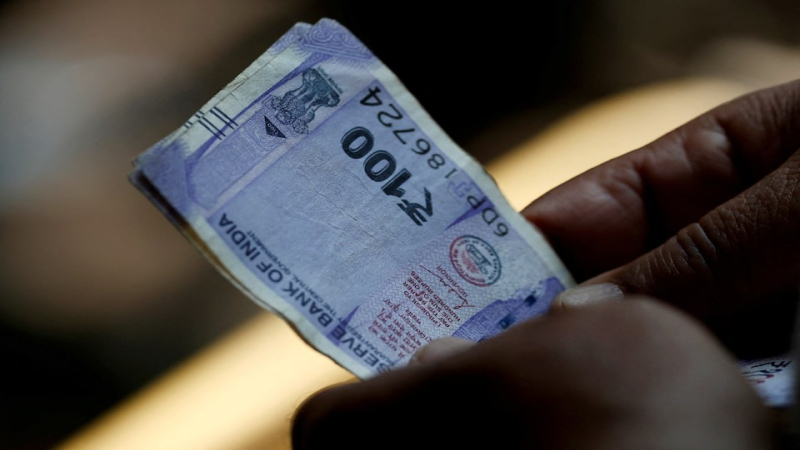
The Indian rupee extended its slide past the 90 mark, reaching a fresh record low as weak foreign flows, a widening trade deficit and delayed trade negotiations with the United States continued to weigh on the currency. The move reflected a sixth straight session of depreciation, underscoring a deeper divergence between India’s strong domestic growth indicators and persistent external pressures. Despite India’s robust GDP performance, reduced portfolio inflows and softer foreign direct investment have heightened reliance on importer driven dollar demand, placing sustained upward pressure on the dollar rupee pair. The currency has now lost more than five percent this year, marking its sharpest annual decline since 2022 and positioning it as the weakest performer in Asia. Market participants note that the depreciation trend has accelerated in the absence of decisive central bank intervention, with traders increasingly responding to price momentum and speculative positioning that reinforces the upward trajectory of the pair.
The rupee’s decline has been complicated by the broader macro backdrop facing India, which includes rising trade deficits that touched record levels in October and a deteriorating balance of payments outlook. Overseas investors have withdrawn roughly seventeen billion dollars from local equities this year, while muted overseas borrowing and declining FDI have further weakened the supply of foreign currency. Analysts highlight that without progress on the long stalled U.S. India trade agreement, pressure on the rupee is likely to persist in the near term. Expectations among major banks suggest the pair could remain in the 92 to 93 range in the coming quarter absent policy support. Domestic policymakers have downplayed concerns, emphasizing the lack of inflationary spillover and anticipating a potential recovery in 2026. However, the combination of structural external weaknesses and fading foreign investor confidence continues to challenge the currency’s stability.
Signs of speculative buildup have intensified as non deliverable forward points and near term hedging costs surged to multi month highs. The sharp rise in forward premiums points to growing conviction among traders that the dollar rupee trend remains firmly upward unless stronger intervention emerges. Importer hedging has increased alongside expectations of continued depreciation, pushing far forward yields to their highest levels since January. Observers note that the central bank’s light touch approach has emboldened speculative activity, creating additional pressure at a time when global dollar strength and macro uncertainty across Asia are influencing capital flows. As the rupee weakens, the broader implication for global currency markets is the extent to which USD resilience continues to strain emerging market FX conditions, particularly in economies facing widening external imbalances. With the currency near record lows, upcoming trade developments and policy signals will be critical in determining whether India can stabilize the rupee or whether extended weakness becomes a defining factor into the next year.