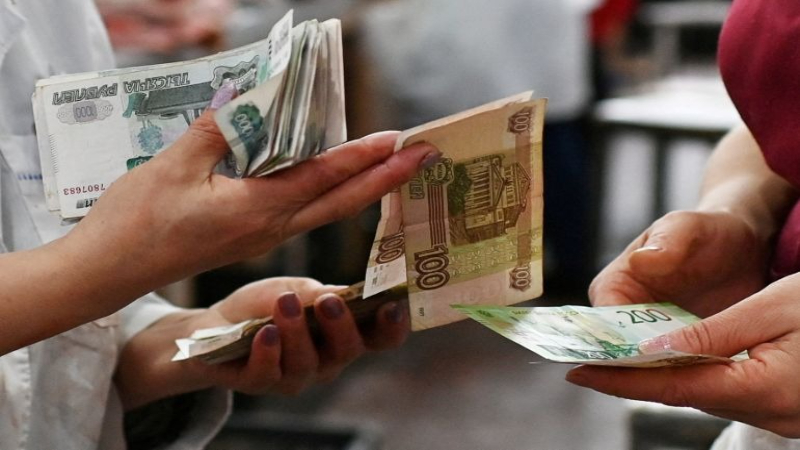
The Russian rouble entered 2025 under heavy policy management, with currency sales playing a central role in stabilizing the exchange rate amid sanctions, restricted capital flows, and shifting trade dynamics. As the year progressed, that framework began to change. Authorities gradually reduced the scale of foreign currency sales, signaling a recalibration of how much direct support the rouble would receive.
This shift matters because the rouble is no longer operating under the same assumptions that defined earlier periods of stress. With reduced intervention, the market is being asked to absorb more of the adjustment process. That transition is laying the groundwork for a new USD RUB regime, one that is less tightly managed and more sensitive to fiscal flows, energy revenues, and liquidity conditions.
Reduced FX Sales Mark a Policy Inflection Point
The most important development has been the dialing back of routine foreign exchange sales. These operations had acted as a steady anchor for the rouble, smoothing volatility and limiting downside pressure during periods of weak external inflows. By reducing sales, authorities signaled greater tolerance for currency flexibility.
This does not represent a shift toward a free floating currency. Instead, it reflects confidence that existing buffers can absorb moderate swings without destabilizing inflation or financial conditions. The change also suggests that policymakers are prioritizing reserve preservation and balance sheet management over maintaining a tightly defined exchange range.
For markets, this inflection point introduces a different risk profile. The rouble is no longer protected by the same predictable flow of support, making price discovery more responsive to underlying fundamentals.
Fiscal Flows and Energy Revenues Take Center Stage
With FX sales scaled back, fiscal dynamics have gained importance. Energy export revenues, tax collection schedules, and government spending cycles now exert greater influence on currency behavior. When export inflows are strong, the rouble benefits more directly. When they soften, there is less automatic cushioning from policy sales.
This shift increases the sensitivity of USD RUB to commodity prices and seasonal fiscal patterns. Market participants are paying closer attention to revenue timing and budget execution rather than relying on intervention as the primary stabilizer.
Over time, this can create more frequent but shallower moves in the exchange rate. Volatility may rise modestly, but it becomes more informative, reflecting real economic forces rather than purely administrative controls.
Liquidity Conditions Are Repricing Currency Risk
Another effect of reduced FX sales is its interaction with domestic liquidity. Currency operations often serve as a tool for managing rouble liquidity. As these operations diminish, liquidity management relies more heavily on conventional instruments, altering short term funding conditions.
This adjustment feeds back into currency pricing. When liquidity tightens, pressure on the rouble can build more quickly. When liquidity eases, the currency may strengthen without immediate policy offset. The result is a market that responds faster to internal financial conditions.
For traders, this means USD RUB is increasingly a function of liquidity signals rather than solely a reflection of administrative guidance. The regime is evolving from rigid stabilization toward managed responsiveness.
Implications for USD RUB Positioning Into 2026
Looking ahead, the new regime suggests a wider but still controlled trading environment. Large one directional bets may remain risky given the continued presence of policy oversight, but the absence of heavy routine sales increases two way opportunities.
Risk management becomes more important. Participants will need to track fiscal calendars, energy price trends, and liquidity indicators more closely. The rouble may not experience dramatic swings, but its path is likely to be less predictable than during periods of heavy support.
This transition also reduces the signaling power of intervention itself. Instead of focusing on official actions, markets will increasingly interpret macro data and flow information as primary drivers.
Conclusion
Russia’s decision to scale back FX sales marks a subtle but meaningful shift in rouble management. By allowing the currency to absorb more market forces, authorities are setting up a new USD RUB regime that is more responsive to fiscal flows, energy revenues, and liquidity conditions. The rouble remains managed, but the era of heavy automatic support is clearly fading.