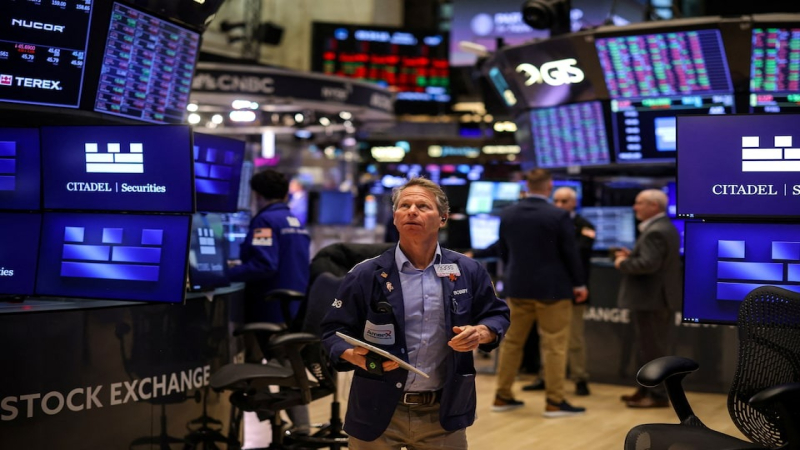
Wall Street slipped as rising Treasury yields and fresh signs of weakening US manufacturing activity led traders to reassess risk positioning ahead of an important month for monetary policy. Equity declines were led by crypto exposed stocks, which faced sharp losses as bitcoin fell below eighty five thousand dollars and erased a significant portion of the sector’s recent gains. The downturn in digital assets, combined with cautious readings from the ISM manufacturing survey, reinforced a narrative of cooling underlying momentum within the broader US economy. Investors are also responding to an expanding set of rate cut expectations as December approaches, with the bond market continuing to price a high probability of easing despite mixed communication from policymakers. For currency markets, the shifting dynamic between Treasury yields, weakening manufacturing data, and renewed speculation over future Federal Reserve leadership has contributed to a more divided outlook for the dollar. The volatility in equities has supported short term defensive flows, yet the overall tone remains dependent on how policymakers interpret the recent data disruptions caused by the government shutdown.
The decline in major indexes reflected a market caught between weakening growth indicators and growing conviction that the Federal Reserve may respond with a quarter point reduction at its upcoming meeting. Traders now assign nearly an eighty eight percent chance of a rate cut, more than doubling the odds from late last month. However, policy uncertainty persists as analysts discuss the possibility that the cut could be delivered with a hawkish tone, signaling caution about accelerating easing in early 2026. This uncertainty gained further complexity after reports that White House adviser Kevin Hassett is considered a leading candidate to succeed the current Federal Reserve chair, intensifying debate around whether upcoming leadership changes could influence the longer term path for rates. Manufacturing data showing shrinking new orders and rising input costs has added pressure to the macro narrative, reflecting lingering tariff driven cost burdens that continue to shape industrial sentiment. These factors are creating a layered environment for the dollar, which has struggled to regain momentum after its weakest weekly performance in four months.
Market volatility extended across multiple asset classes as traders looked ahead to the release of delayed PCE inflation data, a key gauge that could guide policymakers’ tone during December’s meeting. With yields rising and equities retreating, investors are balancing defensive positioning with expectations that monetary easing may provide some relief to growth sensitive sectors. Crypto related equities experienced some of the sharpest losses, highlighting sensitivity in areas tied to speculative risk appetite during periods of tightening financial conditions. Meanwhile, Tesla and other large cap names saw declines as sector specific headwinds added to broader caution. The interplay between equity weakness, rising yields, and shifting rate expectations continues to influence currency markets as analysts evaluate how the dollar may react once clarity emerges from the Federal Reserve. The coming days are expected to offer crucial signals for traders as they assess whether current economic softness will generate sustained pressure on the dollar or stabilize once policy uncertainty diminishes.